


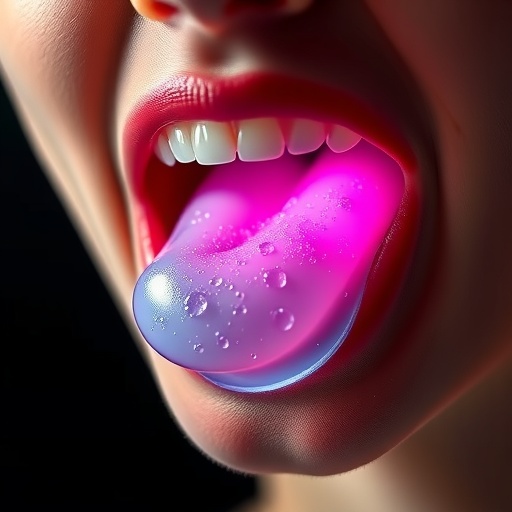
In a groundbreaking advancement poised to revolutionize oral medicine and regenerative therapies, a team of researchers led by Fang, S. and Zhou, Q. has unveiled a novel dual-step photo-induced self-assembled hydrogel with exceptional capabilities for promoting endogenous oral mucosal wound healing. Published in the prestigious journal Light: Science & Applications, this pioneering study introduces a sophisticated biomaterial that harnesses light-triggered assembly mechanisms to facilitate rapid, natural tissue repair within the challenging environment of the oral cavity.
Wound healing in oral mucosa presents unique hurdles due to constant mechanical stresses, frequent microbial exposure, and a moist, enzyme-rich environment that often impedes conventional treatments. Addressing this, the newly developed hydrogel leverages a dual-step photochemical process enabling precision-controlled assembly, enhancing the hydrogel’s structural stability and bioactivity exactly where and when it is needed. This spatiotemporal regulation ensures optimal integration with native tissues, fostering an ideal milieu for cellular migration and proliferation vital for successful regeneration.
Underlying this technology is an innovative photoinitiator system that triggers sequential crosslinking of hydrogel precursors upon exposure to specific wavelengths of light. The first photochemical step initiates rapid gelation, forming a robust yet malleable matrix conforming snugly to the wound site. Subsequent light activation promotes secondary crosslinking, reinforcing the hydrogel’s mechanical properties and modulating its degradation profile to match the healing timeline of oral mucosal tissues.
Integral to the hydrogel’s function is its intrinsic bioactivity tailored to the oral mucosa’s endogenous healing pathways. By facilitating a conducive microenvironment for resident stem cells and immune modulators, this biomaterial transitions the wound from inflammatory stages toward tissue regeneration without triggering excessive fibrosis or scarring. The hydrogel’s architecture also supports angiogenesis and re-epithelialization, critical processes for restoring mucosal barrier integrity.
Importantly, the researchers placed substantial emphasis on ensuring the hydrogel’s biocompatibility and minimal cytotoxicity, crucial factors for clinical translation. Extensive in vitro assays demonstrated that the photo-induced gel did not provoke adverse cellular responses while maintaining its functional properties under oral physiological conditions. This robustness highlights its potential for real-world applications ranging from surgical sites to chronic ulcer management within the mouth.
The dual-step self-assembly mechanism also permits on-demand customization. Practitioners can finely tune aspects like gelation time and mechanical stiffness by modulating light exposure parameters, granting unprecedented control throughout the treatment process. This adaptability could allow personalized therapies matching the severity and location of the mucosal injury, a significant leap beyond one-size-fits-all approaches currently prevalent in wound care.
Beyond healing efficacy, this hydrogel platform integrates the convenience of non-invasive, light-mediated activation. Unlike traditional drug delivery systems or surgical implants, the hydrogel’s formation and reinforcement can be precisely orchestrated externally without additional invasive interventions. This feature opens avenues for outpatient or even at-home treatments, potentially enhancing patient compliance and reducing healthcare burdens.
From a materials science perspective, the study delineates the molecular design of the hydrogel’s building blocks, underscoring the importance of photo-responsive moieties and hydrophilic polymer backbones. Such chemistries endow the hydrogel with desirable swelling behavior and permeability, facilitating nutrient exchange and waste removal at the wound interface, thus accelerating healing kinetics and tissue integration.
The researchers bolstered their findings with rigorous in vivo experimentation using relevant animal models simulating human oral injuries. These studies verified the hydrogel’s efficacy in accelerating mucosal closure and restoring functional tissue architecture significantly faster than control treatments. Histological analyses aided in confirming minimal inflammatory infiltration and enhanced collagen alignment within regenerated tissues, markers of superior wound quality.
Another vital dimension explored pertains to the hydrogel’s antimicrobial properties inherent to its design. By incorporating photo-triggered reactive oxygen species generators at controlled doses, the biomaterial can combat opportunistic pathogens colonizing the damaged mucosa without relying on conventional antibiotics. This feature is particularly pertinent given escalating antibiotic resistance concerns in clinical care.
The paper also appreciably discusses potential integration of bioactive agents within the hydrogel matrix, such as growth factors, peptides, or nucleic acid therapeutics, which could further amplify wound healing cascades. The light-activated assembly offers a platform for temporal release kinetics, enabling synergistic therapies that dynamically respond to wound progression stages.
From a broader perspective, the implications of this innovative hydrogel extend beyond oral mucosal applications. The fundamental principles of dual-step photo-induced self-assembly and in situ biomaterial formation could be translated to diverse tissue engineering fields, including skin, cornea, and vascular wound repair. This modular approach affords a versatile toolkit adaptable to various anatomical sites and pathological conditions.
In conclusion, Fang and colleagues’ study stands as a testament to the intersection of photochemistry, biomaterials engineering, and regenerative medicine, ushering in a new era of smart wound therapeutics. By marrying precise light-based control with biocompatible, functional hydrogels optimized for the oral environment, this technology presents a transformative solution poised to improve patient outcomes dramatically.
As clinical trials and further optimization proceed, the prospect of seamlessly self-assembling biomaterials activated by harmless light sources brings the vision of accelerated, scarless oral wound healing closer to reality. The convergence of detailed molecular design, rigorous biological validation, and forward-thinking application strategies makes this dual-step photo-induced self-assembled hydrogel a flagship innovation for contemporary and future biomedical interventions.
This research not only broadens our understanding of photogenerated material systems but also sets a high standard for interdisciplinary collaborations addressing unmet medical needs. The promise held by self-regulated, photo-responsive hydrogels exemplifies how the synergy of optical sciences and tissue engineering can usher in therapies hitherto deemed unattainable.
Cite Scienmag News
Denise Maddox. (May 15, 2025). Dual-Step Photo Hydrogel Heals Oral Mucosal Wounds. Scienmag. https://scienmag.com/dual-step-photo-hydrogel-heals-oral-mucosal-wounds/
Denise Maddox. "Dual-Step Photo Hydrogel Heals Oral Mucosal Wounds." Scienmag, 15 May 2025, https://scienmag.com/dual-step-photo-hydrogel-heals-oral-mucosal-wounds/. Accessed 5 September 2026.
Denise Maddox. "Dual-Step Photo Hydrogel Heals Oral Mucosal Wounds." Scienmag. May 15, 2025. https://scienmag.com/dual-step-photo-hydrogel-heals-oral-mucosal-wounds/


