


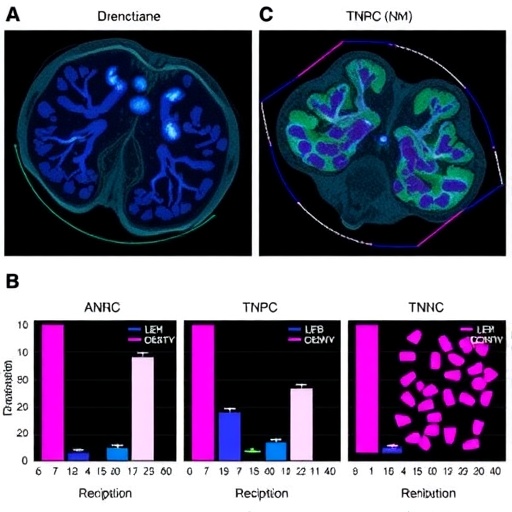
In an era where triple-negative breast cancer (TNBC) continues to challenge oncologists due to its aggressive nature and resistance to conventional therapies, a new study unveils promising therapeutic avenues that may transform patient outcomes. Researchers Selimoglu, Ayvaz, and Bolat have leveraged the power of combining a BH3 mimetic with a dual PI3K/mTOR inhibitor to counteract gemcitabine resistance in TNBC, offering a beacon of hope for tackling one of the most recalcitrant forms of cancer.
TNBC represents a formidable subset of breast cancers characterized by the absence of estrogen receptor, progesterone receptor, and HER2 expression, which deprives clinicians of the traditional hormonal and targeted therapies that benefit other breast cancer types. The standard chemotherapeutic agent gemcitabine often encounters resistance, severely compromising treatment efficacy. Against this backdrop, the newly reported dual-targeting strategy aims to dismantle TNBC’s multifaceted defense mechanisms at the molecular level.
The study intricately explores the apoptotic pathways modulated by BH3 mimetics. These small molecules mimic the activity of pro-apoptotic BH3-only proteins, which are pivotal in tipping the balance towards programmed cell death. Cancer cells frequently subvert this apoptotic machinery through overexpression of anti-apoptotic BCL-2 family proteins, promoting survival despite cytotoxic insults. The introduction of BH3 mimetics serves to neutralize these anti-apoptotic shields, reinstating apoptosis and sensitizing cancer cells to therapy.
Beyond apoptosis, the PI3K/mTOR signaling cascade is a central regulator of cell growth, proliferation, and survival pathways, frequently hyperactivated in TNBC. Targeting this axis with dual inhibitors disrupts cancer cell metabolism and growth signals, rendering cells more vulnerable. The combination therapy examined capitalizes on this dual assault by simultaneously curbing aberrant survival signals while reigniting intrinsic death pathways.
Through meticulous cellular and molecular assays, this research elucidates the synergistic effects achieved by merging BH3 mimetic-induced apoptosis with PI3K/mTOR pathway suppression. Importantly, the combined treatment re-sensitized gemcitabine-resistant TNBC cell lines, triggering marked reductions in proliferation and survival. The findings convey a nuanced understanding of resistance mechanisms and present a viable therapeutic strategy to circumvent them.
Significantly, the study documents the downregulation of key anti-apoptotic proteins as a consequence of BH3 mimetic action, which diminishes the cancer cells’ ability to evade gemcitabine’s cytotoxicity. Concurrently, dual PI3K/mTOR inhibition inhibits downstream effectors such as AKT, 4EBP1, and S6 kinase, which are instrumental in preserving malignant phenotypes. The cooperative inhibition of these pathways culminates in heightened apoptotic rates, underscoring the potency of addressing multiple nodes within oncogenic signaling.
Moreover, the research extends beyond in vitro evaluations by incorporating in vivo tumor models that corroborate the enhanced efficacy of the combination therapy. Tumors previously exhibiting resistance to gemcitabine demonstrated significant regression when subjected to concurrent BH3 mimetic and dual PI3K/mTOR inhibitor treatment. These data reinforce the translational potential of this combinatorial approach.
Crucially, the authors emphasize the therapy’s specificity, noting that non-malignant cells showed limited sensitivity to the drug combination, suggesting a favorable therapeutic window. This specificity heralds a promising safety profile that could mitigate the severe side effects commonly associated with conventional chemotherapies.
The intricate mechanism of overcoming gemcitabine resistance lies not only in inducing apoptosis but also in modulating autophagy and metabolic adaptations that cancer cells employ to survive chemotherapy. The dual inhibition appears to disrupt these compensatory survival strategies, exposing the vulnerability of TNBC’s resilience under combined therapeutic pressure.
Integrating high-throughput genomic and proteomic analyses, the study delineates alterations in gene expression profiles linked to cell cycle arrest, apoptosis induction, and metabolic stress signaling. These comprehensive molecular landscapes offer insight into how the synergistic treatment remodels the cancer cell environment, tipping the scales decisively against tumor survival.
Of particular note is the potential of this therapeutic regimen to serve as a blueprint for tackling resistance in other difficult-to-treat cancers exhibiting similar molecular aberrations. The concept of combining apoptosis induction with growth pathway inhibition could revolutionize the approach to multidrug-resistant malignancies.
The implications for clinical application are profound. This research paves the way for tailored clinical trials aimed at validating efficacy and safety in patients, especially those with advanced or refractory TNBC. If successful, this could inaugurate a new chapter in breast cancer therapeutics defined by precision and adaptive combination strategies.
Furthermore, this investigative endeavor underscores the critical importance of understanding tumor biology at a granular level to design interventions that are not only innovative but also mechanistically informed. The marriage of targeted therapies with established chemotherapeutics exemplifies the evolving paradigm in oncology toward combination regimens that exploit tumor vulnerabilities comprehensively.
In an age where cancer drug resistance remains a formidable barrier, this study’s breakthrough offers a beacon, leveraging molecular synergy to re-sensitize tumors previously impervious to frontline treatments. The scientific community eagerly anticipates subsequent clinical validations and the prospect of integrating this approach into standard care regimes.
This research enriches the existing compendium of cancer biology by providing clarity on the interplay between apoptosis and growth signaling in TNBC and invites further exploration into combinatorial regimens optimizing patient outcomes.
As the fight against breast cancer advances, such innovative, carefully studied strategies are essential to surmounting the formidable challenges imposed by inherently resistant cancer types, holding promise to reshape survival trajectories for countless patients.
Cite Scienmag News
Nathaniel Bowman. (November 20, 2025). Dual Inhibitor Overcomes Gemcitabine Resistance in TNBC. Scienmag. https://scienmag.com/dual-inhibitor-overcomes-gemcitabine-resistance-in-tnbc/
Nathaniel Bowman. "Dual Inhibitor Overcomes Gemcitabine Resistance in TNBC." Scienmag, 20 November 2025, https://scienmag.com/dual-inhibitor-overcomes-gemcitabine-resistance-in-tnbc/. Accessed 3 September 2026.
Nathaniel Bowman. "Dual Inhibitor Overcomes Gemcitabine Resistance in TNBC." Scienmag. November 20, 2025. https://scienmag.com/dual-inhibitor-overcomes-gemcitabine-resistance-in-tnbc/


