

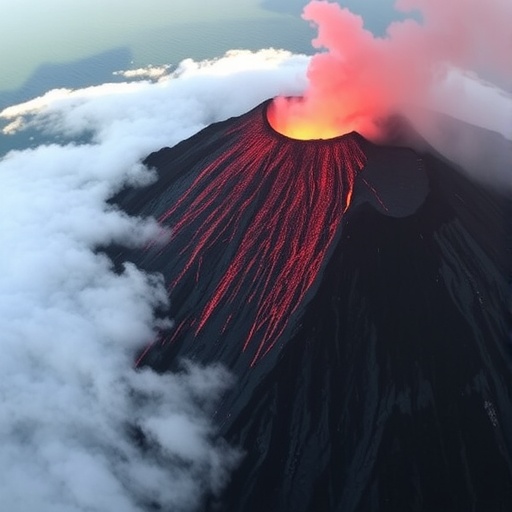
In the heart of Italy lies Vulcano, an island that presents a magnificent yet dangerous interplay between geological phenomena and human endeavors. In a pioneering study, researchers led by B.F. De Jarnatt, alongside T.R. Walter and M.J. Heap, delve into the complexities of hydrothermal weakening and slope instability that define this volcanic landscape. As the team’s findings unfold, they reveal the intricate dynamics of nature and the technology employed to explore them, which could have profound implications for disaster preparedness and mitigation in volcanic regions.
The research employs cutting-edge drone technology, augmenting traditional geological study methods with aerial imaging and advanced data analytics. By employing drones, the team can assess hard-to-reach areas of Vulcano efficiently, gathering real-time data about the geological features and the extent of slope instability. This innovative approach not only enhances safety during research but also provides a bird’s-eye view of landscape changes that would be difficult, if not impossible, to capture from the ground.
As volcanic activity can have catastrophic consequences for nearby populations and ecosystems, understanding the mechanisms driving slope instability is paramount. The team’s investigation into hydrothermal weakening—the process whereby heat and fluid dynamics reduce the cohesion of construction materials and geological layers—sheds new light on the factors that can trigger landslides and other geological hazards. Vulcano’s unique geothermal characteristics offer an ideal laboratory for such research, allowing scientists to observe the effects of heat and pressure on rock strata under various conditions.
In their analysis, the researchers highlight the significant role that temperature variations play in the hydrothermal weakening process. By taking in-situ strength measurements, they quantify how changes in temperature influence rock strength over time. This quantitative analysis is crucial as it ties together theoretical models with empirical data, establishing a robust framework for predicting when and how instability may occur. It combines both fieldwork and laboratory tests to create a well-rounded understanding of material behavior under simulated geothermal conditions.
Furthermore, the study emphasizes the need for a multidisciplinary approach in geological sciences. By integrating fields such as geophysics, thermodynamics, and artificial intelligence/data science, the researchers demonstrate how collaborative strategies can lead to more comprehensive understanding and better predictive models. This scientific synergy not only enriches the research but also enhances the applicability of findings to real-world scenarios, aiding governments and disaster-response agencies in preparing for volcanic events.
Through a deep dive into the specific case of Vulcano, the researchers also draw comparisons with other volcanic regions globally. The findings suggest that the mechanisms at play in Vulcano may not be isolated occurrences but rather part of a wider geological narrative common to many active volcanoes. By understanding Vulcano’s hydrothermal processes, we can glean insights applicable to other regions, improving our predictive capabilities in diverse volcanic terrains.
In addressing the societal implications of their research, the team underscores the critical need for communities living in the shadow of volcanoes to have access to accurate geological assessments. The potential for devastating eruptions and landslides makes this knowledge essential for effective public safety communication and community preparedness. Their research argues for stronger collaborations between scientists and local authorities, advocating for the integration of real-time monitoring technologies into disaster response frameworks.
The study is timely, as climate change continues to influence geological processes. Increasingly erratic weather patterns exacerbate volcanic activity, modifying the frequency and intensity of hydrothermal processes. As global temperatures rise, thus altering water cycles and influencing volcanic systems, understanding how these changes affect slope stability becomes critical. The research illustrates a growing need for adaptive strategies that account for the shifting nature of our planet.
In conclusion, the work of De Jarnatt, Walter, Heap, and their team marks a significant stride towards understanding the hazards associated with hydrothermal weakening at Vulcano. Their innovative use of technology, combined with meticulous field measurements, lays the groundwork for future studies aimed at enhancing our ability to navigate volcanic risks. As the world grapples with the dual challenges of geological hazards and climate change, such rigorous scientific inquiry will prove invaluable in safeguarding lives and property.
In sum, the team’s findings represent a beacon of hope and knowledge in a tumultuous era. With the application of drones and in-situ strength measurements, the intricate relationship between geothermal activity and slope stability is brought to the forefront, thus fostering a deeper awareness of how to mitigate the risks posed by such powerful natural forces.
The implications of this research extend far beyond Vulcano itself, resonating with volcanic regions worldwide. By disseminating these findings, the team not only contributes to academic discourse but also empowers communities with the tools needed to understand and respond to potential geological hazards. Their work may prove pivotal in shaping future protocols for disaster preparedness and adaptive strategies in an increasingly volatile world.
The bold initiatives taken by these researchers pave the way for further exploration and understanding of our planet’s ever-changing geological dynamics. As they chart the pathways of hydrothermal weakening and slope instability, they illuminate the importance of foresight in our dealings with nature’s immense power.
Subject of Research: Hydrothermal weakening and slope instability at Vulcano, Italy.
Article Title: Hydrothermal weakening and slope instability at Vulcano (Italy) analyzed using drones and in-situ strength measurements.
Article References:
De Jarnatt, B.F., Walter, T.R., Heap, M.J. et al. Hydrothermal weakening and slope instability at Vulcano (Italy) analyzed using drones and in-situ strength measurements.
Commun Earth Environ (2025). https://doi.org/10.1038/s43247-025-03014-5
Image Credits: AI Generated
DOI: 10.1038/s43247-025-03014-5
Keywords: Hydrothermal weakening, slope instability, drones, in-situ strength measurements, Vulcano, Italy, volcanic activity, disaster preparedness, geological hazards.


