

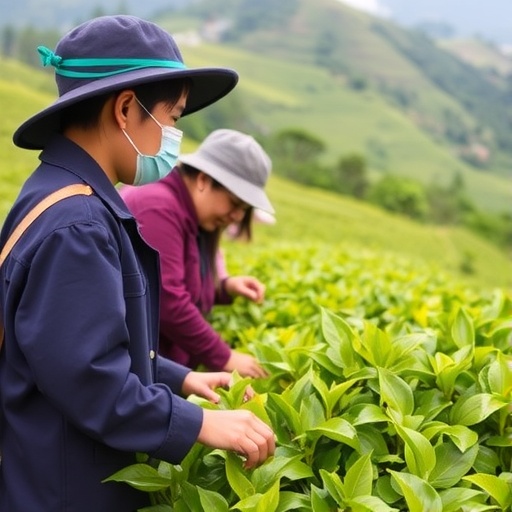
In the lush and fertile landscapes of Vietnam’s Central Highlands, a silent revolution is brewing within the tea industry. As the world shifts its focus toward sustainable agricultural practices, researchers are uncovering key factors that play a pivotal role in enhancing the sustainability of tea production in this vibrant region. The work of Manetti, Demaria, D’Annolfo, and their team sheds light on the intricate balance between traditional practices and modern innovations, aiming for a future that respects both the environment and the livelihoods of local farmers.
Tea is not merely a beverage in Vietnam; it is a cultural staple woven into the very fabric of Vietnamese society. The Central Highlands is particularly known for its high-quality tea, cherished both locally and internationally. However, as global demand rises, so too do the pressures on the delicate ecosystems that support tea cultivation. The researchers have delved deep into understanding how sustainable practices can not only protect these ecosystems but also ensure economic viability for local farmers.
One of the most critical aspects of sustainable tea production identified in the study is the importance of diversified farming practices. This approach involves cultivating multiple crop varieties alongside tea plants, creating an agro-ecosystem that minimizes pest outbreaks and soil degradation. By encouraging biodiversity, farmers can enhance their resilience against climate impacts and market fluctuations. This practice is rooted in traditional farming wisdom and is being rejuvenated through scientific validation.
Moreover, the study emphasizes the role of organic farming techniques in promoting sustainable tea production. By eschewing synthetic pesticides and fertilizers, farmers can not only produce cleaner tea but also contribute to healthier soil and water systems. The researchers found that transitioning to organic practices might require more initial investment and adjustment time for farmers, but the long-term benefits for both the environment and crop quality are substantial. Organic tea commands a higher market price, allowing farmers to benefit economically in the long run.
Water management emerged as another significant factor influencing sustainable tea cultivation. The Central Highlands, while blessed with rich natural resources, faces challenges related to water scarcity and inefficient usage practices. The research highlights innovative irrigation techniques, such as drip irrigation and rainwater harvesting, which optimize water use and reduce waste. These methods not only ensure that tea plants receive adequate hydration but also contribute to a sustainable water management framework that can benefit entire communities.
The social dimension of sustainability was also a key focus of the research. Empowering local communities through education and access to resources was identified as a vital factor for sustainable tea production. Training programs that inform farmers about sustainable practices and provide them with the necessary tools can lead to a more engaged and informed community. The study suggests that fostering a sense of ownership and pride in sustainable practices can enhance participation and commitment among farmers.
Additionally, the research brings into perspective the significance of fair trade practices in the sustainable tea supply chain. Ensuring that farmers receive fair compensation for their products not only supports their livelihoods but also encourages them to invest in sustainable practices. The researchers argue that consumers play a pivotal role in this ecosystem. By choosing to buy ethically sourced tea, consumers can directly influence production practices and contribute to a more sustainable future for tea farming in Vietnam.
Climate change poses an ever-increasing threat to agriculture, and tea production is no exception. The research identifies climate resilience as a key pillar of sustainable tea production. By adapting to changing climatic conditions through the cultivation of climate-resilient tea varieties and investing in soil health, farmers can protect their crops against the unpredictable effects of climate change. This adaptive approach not only secures their livelihoods but also contributes to the broader objective of global climate resilience.
In focusing on the economic viability of sustainable tea practices, the researchers explore various models that can enhance profitability while adhering to sustainability principles. Collaborative marketing strategies that connect farmers directly with consumers have emerged as a powerful tool. By bypassing intermediaries, farmers can retain a larger share of the profits and build relationships with consumers who value sustainability.
The research insights are not confined to the local context. They resonate globally, as the world grapples with the pressing need for sustainable agricultural practices across various sectors. The findings serve as a blueprint for tea-producing regions worldwide, suggesting that a shift towards sustainable practices is not only feasible but essential for the future of global agriculture.
The researchers conclude by emphasizing the collaborative nature of sustainable tea production. Engaging all stakeholders, from farmers and local communities to governments and consumers, is crucial for fostering a sustainable tea industry. This holistic approach ensures that economic, environmental, and social factors are all considered in the quest for sustainability, paving the way for a brighter future for Vietnam’s tea industry.
As tea lovers around the globe sip their favorite brew, the story of sustainable tea production in Vietnam’s Central Highlands serves as a reminder of the intricate connections between agriculture, culture, and sustainability. It highlights an inspiring journey of innovation, tradition, and cooperation aimed at crafting a better tomorrow. The commitment of researchers and farmers alike to fostering sustainable practices can indeed turn the tide for tea cultivation, ensuring that generations to come can enjoy the beauty and taste of this cherished beverage.
Furthermore, the ongoing research in this domain will undoubtedly stimulate additional studies that explore specific practices, outcomes, and innovations that can support this vital industry. In celebrating the successes and learning from the challenges faced, the vision of sustainable tea production can be realized, benefitting not only farmers in Vietnam but also consumers and ecosystems worldwide.
Subject of Research: Key factors boosting sustainable tea production in Vietnam’s Central Highlands region.
Article Title: Key factors boosting sustainable tea production in Vietnam’s Central Highlands region.
Article References:
Manetti, I., Demaria, F., D’Annolfo, R. et al. Key factors boosting sustainable tea production in Vietnam’s Central Highlands region. Discov Sustain (2026). https://doi.org/10.1007/s43621-026-02618-x
Image Credits: AI Generated
DOI:
Keywords: Sustainable agriculture, tea production, Vietnam, biodiversity, organic farming, water management, fair trade, climate resilience, economic viability.


