


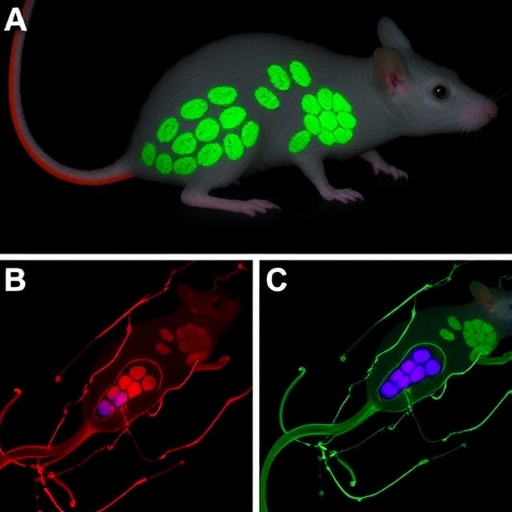
In a groundbreaking study set to reshape our understanding of neurological disorders, researchers have uncovered a critical link between the deficiency of central biogenic amines and behavioral abnormalities in genetically engineered mice lacking the Dnajc12 gene. This revelation, documented by Deng, Follett, Fox, and colleagues, shines a new light on the molecular underpinnings of neurodegenerative conditions, particularly Parkinson’s disease, offering promising avenues for future therapeutic interventions.
Biogenic amines, including dopamine, serotonin, and norepinephrine, are pivotal neurotransmitters that regulate an array of brain functions — from mood and cognition to motor control. Their precise balance is essential for maintaining neuronal health and facilitating normal behavioral expression. When this balance falters, as seen in Parkinsonian syndromes, patients exhibit profound motor deficits, cognitive impairment, and altered exploratory behaviors. Until now, the genetic determinants that influence these neurochemical pathways remained incompletely understood.
The Dnajc12 gene, which encodes a member of the heat shock protein 40 (Hsp40) family, has garnered attention due to its putative role in protein folding and cellular stress responses within the central nervous system. By engineering knock-out mice—animals in which this gene is completely inactivated—the research team sought to delineate the gene’s direct contributions to both neurochemical homeostasis and behavioral phenotypes. What they found was both striking and revealing: the absence of Dnajc12 led to a marked reduction in central biogenic amine concentrations, coupled with significant deficits in exploratory behavior.
Utilizing advanced neurochemical assays, the researchers measured levels of key biogenic amines across various brain regions known to be involved in motor and cognitive functions. The results underscored a pervasive depletion of dopamine and serotonin in the striatum and prefrontal cortex, neuroanatomical hubs critically implicated in Parkinson’s pathology. This biochemical deficiency was paralleled by behavioral testing, wherein the Dnajc12 knock-out mice exhibited reduced locomotion, diminished curiosity in novel environments, and altered anxiety-like responses.
The implications of this study extend far beyond animal models. Dopaminergic dysfunction is a hallmark of Parkinson’s disease, a progressive neurodegenerative disorder affecting millions worldwide. By linking Dnajc12 gene disruption to central biogenic amine deficiency and concomitant behavioral impairment, the research provides a compelling genetic framework for understanding some of the enigmatic features of Parkinsonian syndromes. It also raises the possibility that Dnajc12 or its downstream pathways might serve as novel targets for pharmacological intervention.
In exploring the molecular mechanisms underlying these findings, the researchers hypothesized that Dnajc12 may be involved in maintaining the stability and function of key enzymes responsible for synthesizing biogenic amines, such as tyrosine hydroxylase for dopamine and tryptophan hydroxylase for serotonin. Loss of Dnajc12 potentially leads to misfolding and degradation of these enzymatic proteins, precipitating neurotransmitter depletion. Follow-up proteomic analyses confirmed altered expression and stability of several such biosynthetic enzymes in the knock-out mice, bolstering this mechanistic insight.
Equally compelling were the study’s behavioral paradigms, which employed a battery of standardized tests including open field exploration, elevated plus maze, and novel object interaction. Across these assays, Dnajc12-deficient mice consistently demonstrated reduced exploratory drive—an analog to the hypokinetic features and motivational deficits observed in Parkinson’s patients. These phenotypic parallels underscore the translational relevance of the model and highlight the gene’s role in modulating activity and engagement with the environment.
The study further delves into neuroanatomical alterations associated with Dnajc12 deletion. Imaging and histological examinations revealed subtle but significant changes in synaptic density and neuronal integrity within affected brain regions. This neurodegenerative signature aligns with clinical observations in Parkinson’s disease, where synaptic loss contributes importantly to symptom progression. These anatomical findings suggest that beyond neurotransmitter deficits, Dnajc12 deficiency may drive neurodegenerative processes that exacerbate functional decline.
Beyond the immediate neuroscientific community, this research carries potent implications for drug development. Current Parkinson’s treatments primarily focus on symptom management, often through dopamine replacement strategies. However, understanding the genetic and molecular origin of biogenic amine dysregulation could pave the way for gene-targeted therapies or small molecules designed to preserve or restore enzyme function. By highlighting Dnajc12’s essential role, the study opens new horizons for precision medicine approaches in neurodegeneration.
Moreover, the multidisciplinary methodology employed—combining genetics, neurochemistry, behavioral neuroscience, and molecular biology—demonstrates the power of integrative research in unearthing complex pathophysiological mechanisms. The data set generated serves as a rich resource for future inquiries into the interplay between chaperone proteins, neurotransmitter biosynthesis, and behavior, potentially catalyzing a wave of innovative studies aiming to decode neurological disease pathogenesis.
Importantly, the work of Deng and colleagues also prompts a reconsideration of heat shock proteins’ roles in neurological health. Whereas these molecular chaperones were traditionally studied for their cytoprotective functions under stress, emerging evidence—including this study—suggests they may exert nuanced influences on neurotransmitter systems and behavior. This paradigm shift invites broader investigation into chaperone-targeted therapies as viable strategies for combating neurodegeneration.
It is critical to note that while the Dnajc12 knock-out mouse model recapitulates several facets of Parkinsonian dysfunction, it does not fully replicate the entire spectrum of the human disease. Parkinson’s is a multifactorial condition involving genetic predispositions, environmental factors, and complex pathobiology including alpha-synuclein aggregation. Nevertheless, the Dnajc12 deficiency model provides a valuable platform for dissecting discrete elements of the disorder, particularly those tied to biogenic amine metabolism and behavioral alterations.
Looking forward, the research team suggests that future studies investigate the potential reversibility of the observed phenotypes through gene therapy or pharmacological restoration of biogenic amine levels. Such interventions could elucidate whether the deficits caused by Dnajc12 deletion are amenable to treatment and inform the development of novel clinical strategies. Additionally, exploring interactions with other Parkinson’s risk genes may reveal synergistic mechanisms contributing to disease severity and progression.
The impact of this study resonates beyond Parkinson’s disease alone. Given the central role of biogenic amines across a spectrum of psychiatric and neurodevelopmental disorders, the findings could inspire a reevaluation of Dnajc12’s involvement in conditions characterized by neurotransmitter dysregulation, including depression, anxiety, and autism spectrum disorders. Broadening the lens through which we view genetic contributors to neurotransmission may ultimately enhance therapeutic development across multiple brain disorders.
In conclusion, the elegant and comprehensive investigation led by Deng, Follett, Fox, and their team represents a milestone in neuroscience research. By establishing a causal link between Dnajc12 gene loss, central biogenic amine deficiency, and behavioral deficits in a robust mouse model, the study provides invaluable insights into the molecular and functional architecture of neurodegeneration. These discoveries hold promise not only for advancing our understanding of Parkinson’s disease but also for catalyzing innovative strategies aimed at preserving brain health and function.
Cite Scienmag News
Ophelia Keating. (May 31, 2025). Dnajc12 Knockout Mice Show Biogenic Amine Deficiency. Scienmag. https://scienmag.com/dnajc12-knockout-mice-show-biogenic-amine-deficiency/
Ophelia Keating. "Dnajc12 Knockout Mice Show Biogenic Amine Deficiency." Scienmag, 31 May 2025, https://scienmag.com/dnajc12-knockout-mice-show-biogenic-amine-deficiency/. Accessed 3 September 2026.
Ophelia Keating. "Dnajc12 Knockout Mice Show Biogenic Amine Deficiency." Scienmag. May 31, 2025. https://scienmag.com/dnajc12-knockout-mice-show-biogenic-amine-deficiency/


