


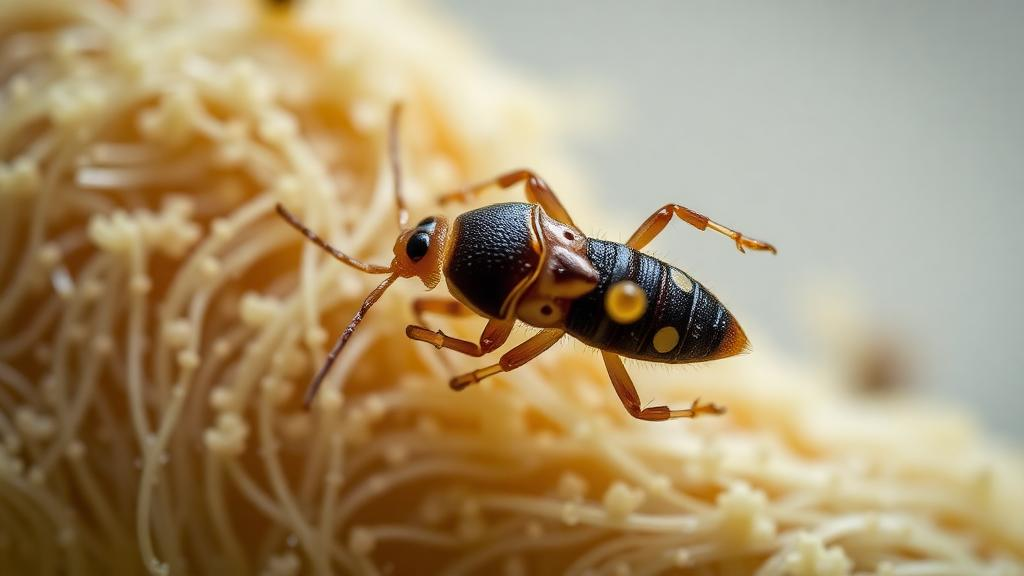
Deep in the steppe grasslands along the Mtkvari River, beneath rocks no larger than a fist, two tiny predatory bugs have been quietly evading science in Georgia for decades. Now, thanks to a combination of old-fashioned fieldwork and modern DNA barcoding, researchers have confirmed the first records of the shore-bug family Leptopodidae for the fauna of Georgia. The findings, published in the journal Caucasiana, document two species, Leptopus hispanus and Erianotus lanosus, through specimens collected across several sites in eastern Georgia, each backed by genetic barcodes that leave no doubt about their identity.
The discovery may sound modest, involving insects that measure just a few millimeters, but it carries real weight for biodiversity science in the Caucasus. Leptopodidae, commonly called spiny-legged bugs, belong to the infraorder Leptopodomorpha, a group of predaceous bugs that typically hug shorelines and littoral zones. The infraorder contains four extant families, the most diverse being Saldidae with roughly 335 species, while Aepophilidae and Omaniidae are tiny families of highly specialized intertidal species in the Old World. Leptopodidae itself holds at least 55 extant species spread across 38 genera, making it one of the smaller but more enigmatic branches of the true bug tree.
What makes these bugs particularly curious is their lifestyle. Despite being grouped under the umbrella name shore-bugs, Leptopodidae are mainly associated with dry environments, sometimes with no traces of water nearby, and they have even been found in caves. They are small to medium-sized predatory bugs ranging from 2.5 to 8 millimeters in length, varying in shape from nearly globose and slightly flattened to elongate and parallel-sided, and often darkly colored. Their heads are short and broad without dorsal trichobothria, their eyes very large, occupying almost the entire side of the head, and their four-segmented antennae thin and distinct. In Leptopodidae, segments two and three of the four-segmented rostrum are spinose laterally, and the front legs of Palaearctic species are armed with a single row of spines, the trait that gives the family its common name.
Before this study, a single species of the family, Patapius spinosus, was believed to occur in Georgia based on distribution records compiled in the 1990s and later checklists. However, the researchers behind the new paper failed to find any exact record in published sources, suggesting the species was either extrapolated from private collections or never actually documented on Georgian territory. The new findings of Leptopus hispanus and Erianotus lanosus thus represent the first confirmed records of Leptopodidae in the country, rewriting a small but meaningful chapter in the Caucasus bug fauna.
The specimens were collected within the framework of the Caucasus Barcode of Life project, a BMBF-funded initiative aimed at building a genetic library of Caucasus biodiversity. Field teams gathered the insects by hand and sweep-net, fixed them in 96 percent ethanol, and stored them in a freezer at minus 22 degrees Celsius for later DNA barcoding at Ilia State University’s Institute of Ecology in Tbilisi. Identification was carried out using established morphological keys, and high-resolution photographs were captured with a Canon EOS 90D camera and macro lens, with image stacking software used to produce crisp composite images of the tiny specimens.
The genetic work followed standard barcoding protocols. Genomic DNA was extracted from tissue samples using a commercial miniprep kit, and partial sequences of the cytochrome oxidase subunit I gene, the workhorse barcode for animal identification, were amplified by polymerase chain reaction using a well-established primer pair. Thermal cycling conditions involved an initial denaturation step followed by two sets of cycles with gradually decreasing annealing temperatures, and the resulting amplicons were visualized on agarose gels. Sequencing was conducted in both directions at the Beijing Genomics Institute in Hong Kong, and sequence analysis was performed using Geneious Prime software. Extracted DNA was deposited in the scientific collections of Ilia State University, with aliquots destined for the LIB Biobank at Museum Koenig in Bonn, Germany, and the sequences submitted to the Barcode of Life Data System, known as BOLD.
The results are striking. For Erianotus lanosus, three specimens were collected at Gori, at an elevation of 589 meters, under rocks in steppe near the Mtkvari River in September 2021. Three barcodes were obtained, all falling within the same Barcode Index Number, BOLD:AEY2001, with a mean p-distance of just 1 percent. Remarkably, no other barcodes of this species were available in BOLD at the time of publishing, making these the first genetic records for the species worldwide. The nearest neighbor in the database was Valleriola sp. from China, with a mean p-distance of 14.6 percent, a substantial genetic gap confirming the Georgian specimens belong to a distinct lineage.
Leptopus hispanus proved even more widely distributed across the sampling sites. Two specimens were collected at Telovani at 903 meters under roadside rocks in July 2021, three more at Gori in steppe near the Mtkvari River, one at Kodistskaro at 736 meters, one at Vardzia at 1315 meters on the Mtkvari River bank, and one swept from vegetation along the Mashavera River. Five barcodes were obtained, all within BOLD:AEX9285, with a maximum p-distance of only 0.3 percent, indicating a tight genetic cluster. Here too, no barcodes of the species existed in BOLD at the time of publishing. The nearest neighbor was Leptopus marmoratus from France, held in a private status, with a mean p-distance of 13.5 percent, again a clear genetic separation.
Both species are widespread across the Palaearctic region, with distributions classified as Centralasiatic-Mediterranean, stretching from the Mediterranean to Central Asia. From neighboring countries, Erianotus lanosus had been previously reported from Armenia, Azerbaijan, and Turkey, and Leptopus hispanus from the same trio of neighbors. Given this broad distribution and their presence just across the borders, the bugs’ absence from Georgian records long puzzled entomologists. The researchers argue the oversight was not only due to the insects’ small size and secretive lifestyle, but mainly because of a lack of sufficient and targeted research on local Heteroptera, the true bugs of Georgia.
The study also casts doubt on the earlier anecdotal record of Patapius spinosus in Georgia, suggesting it was most likely an extrapolation of data on the species’ occurrence in neighboring Azerbaijan and Armenia, which together with Georgia form the South Caucasus ecoregion. Still, given the wide distribution range of Patapius spinosus and its presence in neighboring Turkey, along with another spiny-legged bug, Leptopus marmoratus, the occurrence of these species on Georgian territory remains highly likely. Further studies are needed to establish the actual distribution and population status of the newly confirmed species, which will allow a more accurate assessment of their protection status, as in some countries they are regarded as rare. For now, the DNA-assisted records stand as a vivid reminder that even well-trodden landscapes can hide species science has never formally met, and that genetic barcodes can turn a handful of specimens under riverbank rocks into a confirmed addition to a nation’s fauna.
Subject of Research: Leptopus hispanus and Erianotus lanosus: the first DNA-assisted records of Leptopodidae (Hemiptera, Heteroptera) for the fauna of Georgia
Article Title: Leptopus hispanus and Erianotus lanosus : the first DNA-assisted records of Leptopodidae ( Hemiptera , Heteroptera ) for the fauna of Georgia
Article References: Chitadze, B., Arsenashvili, E., & Bulbulashvili, N. (2023). Leptopus hispanus and Erianotus lanosus: the first DNA-assisted records of Leptopodidae (Hemiptera, Heteroptera) for the fauna of Georgia. Caucasiana, 2, 25-28. https://doi.org/10.3897/caucasiana.2.e101888
Image Credits: AI Generated
DOI: 10.3897/caucasiana.2.e101888
Keywords: Leptopus, hispanus, Erianotus, lanosus, first, DNA-assisted, records, Leptopodidae, Hemiptera, Heteroptera, fauna, Georgia
Cite Scienmag News
Gavin Prescott. (October 18, 2026). DNA Barcodes Reveal Two Elusive Shore Bugs New to Georgia. Scienmag. https://scienmag.com/dna-barcodes-reveal-two-elusive-shore-bugs-new-to-georgia/
Gavin Prescott. "DNA Barcodes Reveal Two Elusive Shore Bugs New to Georgia." Scienmag, 18 October 2026, https://scienmag.com/dna-barcodes-reveal-two-elusive-shore-bugs-new-to-georgia/. Accessed 18 October 2026.
Gavin Prescott. "DNA Barcodes Reveal Two Elusive Shore Bugs New to Georgia." Scienmag. October 18, 2026. https://scienmag.com/dna-barcodes-reveal-two-elusive-shore-bugs-new-to-georgia/


