


In the evolving landscape of American governance, the question of whether state-level policymaking better aligns with citizen preferences than federal-level decisions has long occupied scholars and citizens alike. The landmark 2022 U.S. Supreme Court decision in Dobbs vs. Jackson Women’s Health Organization catalyzed a seismic shift in this debate by overturning Roe vs. Wade, thereby dismantling a federally enshrined right to abortion and devolving regulatory authority to individual states. This judicial pivot has ignited intense dialogue about the nature of representation, policy responsiveness, and the consequences of decentralization in a deeply polarized polity.
A recent empirical investigation led by Gabor Simonovits and colleagues provides compelling evidence that challenges normative assumptions about the virtues of federalism in capturing public opinion. Utilizing comprehensive survey data from over 6,000 respondents representing the diverse American states, the researchers aimed to quantify the gestational age limits for abortion that average state residents find appropriate under typical circumstances. Importantly, these estimates excluded exceptional cases such as pregnancies resulting from rape or incest, risks to maternal health, or severe fetal anomalies—factors that might otherwise confound assessments of baseline abortion acceptability.
Before the Dobbs ruling, the national legal framework permitted abortion access up to relatively late gestational stages compared to aggregate citizen preferences. State policies, on average, reflected a somewhat more permissive stance, a fact highlighting a degree of bipartisanship or consensus around reproductive rights at the federal level, despite underlying ideological fractures. This period represented a legal environment where abortion regulations, while restrictive in some states, were moderated by the nationwide standard set by Roe vs. Wade, ensuring a consistent baseline for reproductive autonomy.
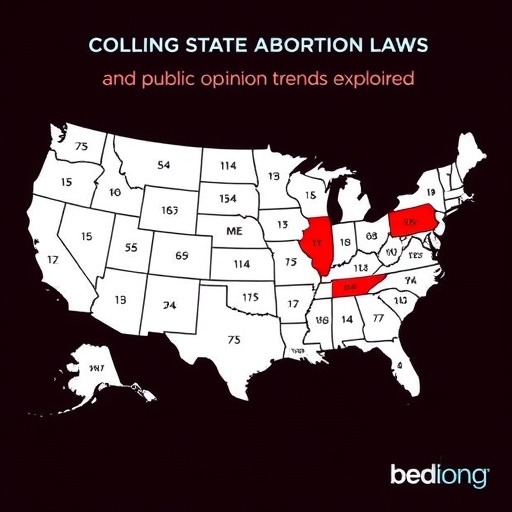
Following the Supreme Court’s ruling, however, a stark transformation unfolded across America’s states, producing a bifurcated policy environment that is emblematic of escalating political polarization. Simonovits et al. report that Democrat-leaning states tended to maintain, or even enhance, permissive abortion policies that exceed the gestational limits favored by the average resident. Conversely, Republican-leaning states enacted laws that are more restrictive than their respective populations’ preferences, reinforcing a pattern of policy divergence rather than convergence with constituent viewpoints.
This phenomenon, often referred to as bimodality, signals the emergence of two divergent clusters of state abortion policy regimes post-Dobbs. One cluster aligns with progressive, pro-choice sensibilities outpacing constituent preferences in permissiveness. The other aligns with conservative, pro-life attitudes that impose more stringent restrictions than many residents advocate. The net result is an exacerbation of legalized abortion’s regional disparities, challenging the notion that devolution inherently enhances democratic representation.
The methodology adopted by the researchers encompassed sophisticated statistical matching between survey-derived gestational age preferences and the legal realities on the ground. By operationalizing public opinion in gestational weeks allowed for abortion, they translated abstract attitudes into measurable policy variables. This quantitative approach allowed for precise mapping of preference-policy congruence across the fifty states, showcasing variations that transcend simplistic partisan generalizations.
Additionally, the investigation accounted for the political leanings of states as a mediating variable, underscoring how ideological polarization inflects policy outcomes even within ostensibly democratic decision-making frameworks. The finding that policies do not reliably track the preferences of residents, but rather reflect partisan agendas, raises critical questions about the integrity of federalism as a mechanism for responsive governance.
Moreover, Simonovits and colleagues illuminate the complex interplay between law, opinion, and representation in contemporary American politics. Their conclusions suggest that state-level devolution, in the context of abortion regulation, functions less as a vehicle for alignment with local preferences and more as a battleground for ideological enforcement. Such dynamics highlight the perils of decentralizing highly contentious issues without mitigating mechanisms to bridge polarization.
This research advances the scholarly discourse on federalism by empirically illustrating that greater localized autonomy does not necessarily translate into enhanced policy congruence with citizen views. Particularly in a politically fragmented environment characterized by entrenched partisan identities, the delegation of authority to subnational levels can crystalize divisions instead of reconciling them.
Furthermore, the study offers critical insights into the design of democratic institutions, suggesting that the legitimacy of devolution hinges on the extent to which mechanisms facilitate authentic representation rather than entrench factional dominance. The abortion policy context exemplifies how contentious moral and political issues may defy straightforward majoritarian accommodation, raising normative dilemmas for constitutional arrangements.
In sum, Simonovits and his team’s research underscores a paradox within American federalism post-Dobbs: while returning abortion regulation to the states was purportedly a means to empower local voices, the empirical data reveal that policies have become more polarized and less reflective of aggregated public sentiment. These findings have profound implications for understanding how governance structures interact with political polarization and citizen preferences in deeply divided societies.
As the United States continues to grapple with the complexities of reproductive rights, this study offers a crucial empirical foundation for policymakers, legal scholars, and political scientists to reconsider assumptions about decentralization and representation. It also illuminates the urgent need for innovative approaches to governance that can reconcile citizen preferences with institutional arrangements in an era marked by intense ideological cleavages.
Ultimately, the Dobbs decision and its aftermath exemplify the challenges inherent in balancing federalism, democracy, and political pluralism in the 21st century. The research by Simonovits et al. invites a re-examination of the promises and pitfalls of devolving authority on deeply contentious social issues and opens avenues for future exploration into creating more representative and equitable frameworks for governance.
News Publication Date: 13-May-2025
Cite Scienmag News
Courtney Benton. (May 13, 2025). Diverging State Abortion Laws and Public Opinion Trends Explored. Scienmag. https://scienmag.com/diverging-state-abortion-laws-and-public-opinion-trends-explored/
Courtney Benton. "Diverging State Abortion Laws and Public Opinion Trends Explored." Scienmag, 13 May 2025, https://scienmag.com/diverging-state-abortion-laws-and-public-opinion-trends-explored/. Accessed 4 September 2026.
Courtney Benton. "Diverging State Abortion Laws and Public Opinion Trends Explored." Scienmag. May 13, 2025. https://scienmag.com/diverging-state-abortion-laws-and-public-opinion-trends-explored/


