

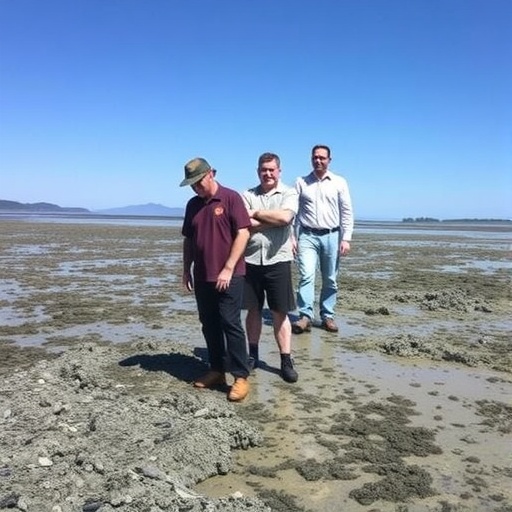
In an extraordinary leap forward in virology and environmental genomics, a groundbreaking study has peeled back the layers of mystery surrounding the biodiversity of large DNA viruses inhabiting intertidal mudflats. These dynamic coastal zones, where the interaction between land and sea creates a complex and unique ecosystem, have long been underexplored in terms of viral diversity. Utilizing cutting-edge metagenomic techniques, researchers have delivered the most comprehensive portrait yet of these colossal viral entities, opening new vistas for understanding viral evolution and ecological influence in marine sediments.
Intertidal mudflats, characterized by their periodic submersion and exposure caused by tides, represent an ecological niche brimming with microbial life. These environments function as hotspots for organic matter decomposition and nutrient cycling, processes in which viruses play an underestimated but pivotal role. The study harnesses high-throughput sequencing technologies combined with sophisticated bioinformatics pipelines to extract, sequence, and analyze viral DNA directly from environmental samples. This approach bypasses traditional culturing methods which have historically limited access to the vast array of uncultivable viral species.
The central focus on large DNA viruses, often classified under the umbrella of giant viruses, is a testament to the paradigm shift in virology. Unlike conventional viruses, these entities possess genomes exceeding hundreds of thousands to millions of base pairs, rivaling the coding potential of some cellular life forms. Their complexity not only challenges the traditional definitions of viruses but also hints at intricate interactions with their microbial hosts. The newfound diversity in the mudflats suggests that these large DNA viruses are integral components of sediment microbial communities, influencing microbial population dynamics and genetic exchange.
Crucially, the study reveals unprecedented viral richness and genomic novelty. Many of the virus sequences uncovered belong to entirely new clades, expanding the viral tree of life. This discovery is instrumental in illustrating how metagenomics can illuminate the dark matter of the virosphere—those viral sequences unlinked to any known taxa. Through phylogenetic analyses and genome annotation, researchers have characterized viral functional genes implicated in host manipulation, metabolic reprogramming, and environmental adaptation. This functional insight underscores the ecological roles of viruses beyond mere pathogens, highlighting their contribution to biogeochemical cycles.
Moreover, the sediment samples collected from geographically distinct mudflat sites offered comparative insights into viral community composition and distribution. Environmental factors such as salinity gradients, sediment grain size, and organic content appear to shape viral assemblages significantly. Such spatial heterogeneity in viral populations hints at segmented ecological niches within mudflats, where different viruses fulfill specific ecological functions. This fine-scale ecosystem partitioning is vital for understanding viral influence on microbial networks and sediment health.
The capability of large DNA viruses to encode auxiliary metabolic genes (AMGs) emerges as a fascinating aspect of the study. These AMGs, likely acquired through horizontal gene transfer, enable viruses to hijack and redirect host metabolic pathways to optimize viral replication under fluctuating environmental conditions. Among the novel AMGs identified are those involved in nutrient acquisition, stress response, and energy metabolism, attesting to a sophisticated viral strategy that affects microbial physiology on a large scale. This viral-mediated control of host metabolism has profound implications for sediment ecology and nutrient flux.
From a technical standpoint, the study leverages single-virus genomics and long-read sequencing to overcome challenges posed by typically fragmented metagenomic assemblies. This methodological progress enhances the resolution and completeness of viral genome reconstruction, providing more reliable genetic insights. It benefits evolutionary studies, enabling the identification of genomic rearrangements and mobile elements that have shaped giant virus genomes over millennia. These insights feed into broader questions about the origins and diversification of giant viruses and their evolutionary interplay with cellular life.
The impact of this research extends well beyond basic science. Recognizing the ecological significance of these large DNA viruses in intertidal ecosystems can inform models of carbon cycling and microbial food webs under changing climatic conditions. The delicate balance of mudflat ecosystems is susceptible to anthropogenic disturbances and global climate change, which in turn affect viral-host interactions and ecosystem functioning. Understanding viral dynamics and diversity lays the groundwork for future monitoring and conservation strategies, ensuring the resilience of these ecologically and economically critical habitats.
This study also challenges preconceived notions about virus-host specificity. The broad host range indicated by viral genomic signatures implies complex viral predation networks, where viruses infect multiple taxa across bacterial and protistan domains. Such multifaceted interactions promote horizontal gene transfer not just among microbial populations but also between distinct domains of life, potentially accelerating microbial evolution and adaptation. This interconnected web of viral influences underscores the intricate ecological tapestry woven by large DNA viruses in marine sediments.
Further, the discovery of viruses encoding genes traditionally thought exclusive to cellular organisms, such as components of DNA repair and translation mechanisms, prompts a reevaluation of virus-cellular boundaries. These findings lend credence to theories positing that giant viruses represent a fourth domain of life or at least a unique evolutionary lineage with ancient origins. The vast genomic repertoires uncovered demand a reconsideration of viral taxonomy and phylogeny, integrating new genomic paradigms informed by environmental metagenomics.
Importantly, the research also identifies viral genes linked with antibiotic resistance and virulence factors, highlighting the role of viruses in the dissemination of genetic elements impacting microbial pathogenicity. In the context of environmental mudflats serving as reservoirs and vectors for such traits, the viral contribution to microbial community health and disease potential cannot be overlooked. These data carry significant implications for understanding the environmental reservoirs of resistance and virulence in microbial ecosystems.
This extensive survey of intertidal mudflat viral diversity signifies a milestone in metagenomic research, illustrating how holistic views of viral ecology can revolutionize our understanding of microbial ecosystems. By unmasking the abundance, diversity, and functions of large DNA viruses, it opens avenues for applied research in biotechnology, environmental monitoring, and even biomedicine. The enormous genetic repository harbored within these mudflat viruses represents a treasure trove of novel enzymes, metabolic pathways, and molecular mechanisms waiting to be harnessed.
In conclusion, the pioneering work of Ji, Li, Wang, and their colleagues fundamentally enriches the biological narrative of giant viruses, positioning them as key players within intertidal mudflat ecosystems. Their metagenomic dissection of these viral communities not only broadens the horizon of marine virology but also deepens our appreciation of the hidden microbial diversity shaping Earth’s coastal environments. The revelations from this research project promise to ignite a wave of future investigations poised to decode the complexities and ecological ramifications of the vast viral world beneath the tides.
Subject of Research: Biodiversity and ecological roles of large DNA viruses in intertidal mudflats, revealed via metagenomics.
Article Title: Unveiling the biodiversity of large DNA viruses in intertidal mudflats via metagenomics.
Article References:
Ji, M., Li, Y., Wang, M. et al. Unveiling the biodiversity of large DNA viruses in intertidal mudflats via metagenomics. Nat Commun (2026). https://doi.org/10.1038/s41467-026-71095-7
Image Credits: AI Generated


