


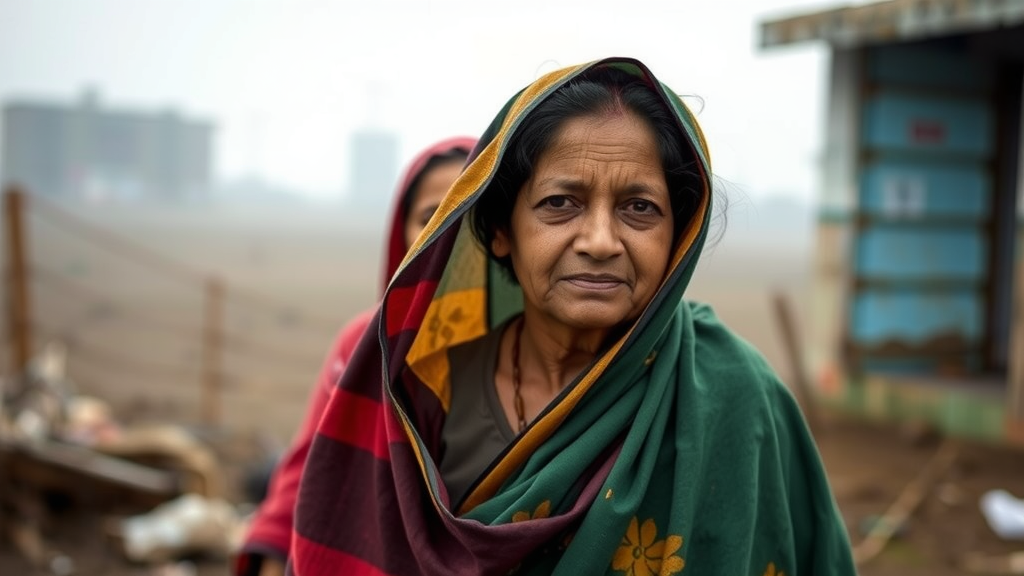
When disaster strikes India, one of the world’s most disaster-prone countries, women consistently bear a heavier psychological burden than men, yet the systems designed to help them recover remain strikingly ill-equipped to meet their needs. That is the central conclusion of a new narrative review published in the Journal of Emergency and Disaster Medicine, which combed nearly two decades of research on psychosocial support for disaster-affected women in India and found the evidence base thin, geographically lopsided, and largely silent on the interventions women actually need.
The review, led by U. Harikrishnan of Amrita Vishwa Vidyapeetham with colleagues from the Institute of Human Behaviour and Allied Sciences in New Delhi and the University of Trento in Italy, set out with two questions: what psychosocial issues and interventions have been documented for women in Indian disaster settings, and how effective and contextually relevant has that support proven to be? The answers, drawn from just six studies surviving a screening process that began with 193 publications, reveal a field where post-traumatic stress disorder dominates the clinical picture while gender-specific care remains largely aspirational.
The methodological approach was deliberately narrative rather than systematic, a choice the authors justify by the heterogeneity of the available literature and the need to capture context-specific social, political and cultural dynamics that rigid protocols can miss. The team searched Scopus, PubMed, PsycINFO, EBSCOhost and Cochrane using combinations of terms covering psychosocial care, crisis intervention and mental health alongside women, India and both natural and human-made disasters. The window ran from January 2005 to December 2024, a period chosen to align with the Sustainable Development Goals’ emphasis on gender equity and well-being.
Of the 193 peer-reviewed publications initially identified, 12 were duplicates and 169 were excluded for being off-topic, unrelated to disasters, or not focused on India. From the remaining 12, six studies made the final cut based on data availability and relevance. Each was appraised with the Joanna Briggs Institute critical appraisal checklists, with scoring rubrics tailored to study design: nine questions for quasi-experimental studies, eight for cross-sectional designs and ten for case-control work. Most of the included studies achieved high-quality ratings, though gaps in reporting confounding factors, exposure measurement and statistical analysis held some at moderate quality.
The six studies shared a telling profile. Most were published between 2010 and 2019, most were conducted in Tamil Nadu in southern India, and most examined both men and women, with the tsunami emerging as the primary disaster type studied. The shadow of the December 26, 2004 Indian Ocean tsunami, which devastated coastal communities across southern India, looms large over the entire evidence base. Post-traumatic stress disorder was the most common psychiatric condition identified, alongside panic disorder, anxiety, depression, unspecified anxiety disorders and somatic complaints.
Across the quantitative findings, women were disproportionately affected compared to other genders. The review identified three overarching themes: psychosocial issues and their associated factors, psychosocial interventions and their effectiveness, and the contextual relevance of psychosocial support. Risk factors compounding women’s vulnerability included displacement, financial constraints, injured family members, low socioeconomic status, poverty, age, marital status, lack of income, urban residency and, critically, the absence of counselling and psychosocial care interventions. Counselling and supportive services themselves emerged as a crucial protective factor against PTSD and distress among women, one of the few intervention findings the review could anchor in evidence.
The cultural dimension proved central to whether support worked at all. Interventions tailored to the cultural context were more likely to succeed, reflecting how strongly culture shapes the way individuals experience disasters, develop coping strategies and respond to external aid and mental health services. This matters enormously in India, where cultural practices, homemaking burdens, limited education, financial instability, widowhood and male-headed family structures all deepen women’s vulnerability when catastrophe hits. The review also points to the darker intersection of disaster and gender: violence against women and girls increases in disaster settings, driven by life stressors, high-risk environments, gender inequalities and inadequate social norms, with global estimates suggesting 35 percent of women experience physical or sexual abuse, a figure that takes on added weight in post-disaster contexts.
On the policy front, the picture is one of partial frameworks and uneven execution. India’s psychosocial support and mental health services operate under national, state and district level guidelines, and the National Institute of Mental Health and Neurosciences has developed modules for service delivery. The National Disaster Management Authority’s guidelines recognize the importance of psychosocial care, yet the review found implementation remains inconsistent and gender-specific provisions are insufficiently developed. Community-based interventions such as counselling and peer support were commonly reported, but mental health services were typically short-term, fragmented and led primarily by non-governmental organizations, often lacking gender sensitivity and long-term integration into public systems. Best practices, including culturally adapted interventions and trauma-informed care, exist but remain limited in scope. Recent scholarship advocating gender-inclusive disaster governance and the mainstreaming of women’s mental health in disaster risk reduction frameworks, the authors note, remains aspirational rather than operational.
The limitations of the review mirror the limitations of the field itself. Only six studies addressed psychosocial interventions for disaster-affected women, nearly all concentrated in southern India, restricting generalizability across a country of India’s size and diversity. The restriction to English-language articles may have overlooked important cultural and regional nuances in a multilingual nation. Gender-specific literature on the psychosocial impact of disasters on women is simply scarce, and the cultural and regional dimensions of the topic are underrepresented in existing research. The authors also note that exposure to multiple catastrophes can compound physical, emotional and overall well-being impacts beyond what single-disaster studies capture, suggesting the true burden on women in disaster-prone regions may be underestimated.
The review’s implications are pointed. Disaster preparedness and psychosocial interventions must explicitly address women’s unique vulnerabilities, particularly in patriarchal and culturally diverse contexts like India. Gender inclusivity strengthens disaster mental health systems overall, and women-specific action plans are needed for disaster risk reduction and preparedness. The authors call for longitudinal, evidence-based studies to understand long-term psychosocial effects tailored to women, culturally responsive approaches that prioritize local values, traditions and gender roles, and broader multisite research covering underrepresented regions and linguistic groups. Skill development programs and policy-level changes, they conclude, could significantly benefit women’s development and well-being. Until then, the women who shoulder the heaviest psychological weight of India’s disasters will continue to face obstacles in accessing the support that could help them recover, a gap the six studies in this review document with uncomfortable clarity.
Subject of Research: Psychosocial support and mental health interventions for women affected by disasters in India
Article Title: Psychosocial support for disaster-affected women in India: a narrative review of the literature
Article References: Harikrishnan, U., Sania, P. S., Namitha, M. R., Fathima, A., Haritha, S., John, A. E., Nair, D. R., Ali, A., & Perletti, G. (2026). Psychosocial support for disaster-affected women in India: a narrative review of the literature. Journal of Emergency and Disaster Medicine, 2(1), Article 11. https://doi.org/10.1007/s44467-026-00014-z
Image Credits: AI Generated
DOI: 10.1007/s44467-026-00014-z
Keywords: psychosocial support, disaster mental health, women's health, India, post-traumatic stress disorder, narrative review, gender equality, tsunami, Tamil Nadu, mental health services, disaster risk reduction, counselling
Cite Scienmag News
Glenn Wilkins. (September 12, 2026). Disaster-Hit Women in India Face a Mental Health System That Leaves Them Behind. Scienmag. https://scienmag.com/disaster-hit-women-in-india-face-a-mental-health-system-that-leaves-them-behind/
Glenn Wilkins. "Disaster-Hit Women in India Face a Mental Health System That Leaves Them Behind." Scienmag, 12 September 2026, https://scienmag.com/disaster-hit-women-in-india-face-a-mental-health-system-that-leaves-them-behind/. Accessed 5 October 2026.
Glenn Wilkins. "Disaster-Hit Women in India Face a Mental Health System That Leaves Them Behind." Scienmag. September 12, 2026. https://scienmag.com/disaster-hit-women-in-india-face-a-mental-health-system-that-leaves-them-behind/


