

Tuesday, August 25, 2026
Science
No Result
View All Result
  • Login
  • HOME
  • SCIENCE NEWS
  • CONTACT US
  • HOME
  • SCIENCE NEWS
  • CONTACT US
No Result
View All Result
Scienmag
No Result
View All Result
Home Science News Cancer

Dine on DNA: Compounds from nucleic acids in food show anticancer effects

August 29, 2024
in Cancer
Reading Time: 2 mins read
0
Dine on DNA: Compounds from nucleic acids in food show
68
SHARES
617
VIEWS
Share on FacebookShare on Twitter
ADVERTISEMENT

When people eat, they ingest the nucleic acids that reside in all living things. The compounds in these acids could inhibit the growth of cancer cells, according to findings published in PLOS ONE by Osaka Metropolitan University Associate Professor Akiko Kojima-Yuasa of the Graduate School of Human Life and Ecology and colleagues.

More benefits of nucleic acids from food

Credit: Osaka Metropolitan University

When people eat, they ingest the nucleic acids that reside in all living things. The compounds in these acids could inhibit the growth of cancer cells, according to findings published in PLOS ONE by Osaka Metropolitan University Associate Professor Akiko Kojima-Yuasa of the Graduate School of Human Life and Ecology and colleagues.

Consuming nucleic acids found in food has been shown to boost the immune system and prevent some diseases. The nucleotides and nucleosides that result from digesting the acids are largely responsible for these beneficial effects.

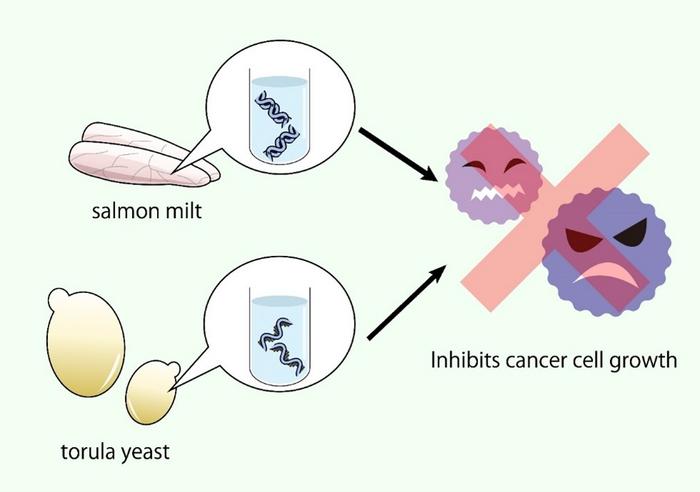
Professor Kojima-Yuasa’s team used compounds of nucleic acids derived from salmon milt DNA and torula yeast RNA and showed that chemical compounds like guanosine could prevent the proliferation of certain cancer cells in laboratory rats. The compounds stopped the cells from starting their replication phase.

“Our research provides a new perspective on the physiological functions of nucleic acids derived from food,” Professor Kojima-Yuasa explained. “We hold hope that this will be a crucial step toward cancer prevention.”

###

About OMU
Established in Osaka as one of the largest public universities in Japan, Osaka Metropolitan University is committed to shaping the future of society through “Convergence of Knowledge” and the promotion of world-class research. For more research news, visit and follow us on social media: X, Facebook, Instagram, LinkedIn.


Journal

PLoS ONE

DOI

10.1371/journal.pone.0305775

Method of Research

Experimental study

Subject of Research

Animals

Article Title

Suppression of Ehrlich ascites tumor cell proliferation via G1 arrest induced by dietary nucleic acid-derived nucleosides

Article Publication Date

18-Jul-2024

COI Statement

A part of the research grant and dietary nucleic acid, hydrolyzed dietary nucleic acid and RNA materials were provided by Fordays Co., Ltd. We declare that these relationships do not affect the results and conclusions of this study. This does not alter on adherence to PLOS ONE politics on sharing data and materials.

Share27Tweet17
Previous Post

Ancient sea cow attacked by a crocodile and sharks sheds new light on prehistoric food chains

Next Post

Children contribute to group projects when there are clear and common goals

Related Posts

Comment Evaluates Movement-Focused Intervention for Mobility in Breast Cancer Survivors
Cancer

Comment Evaluates Movement-Focused Intervention for Mobility in Breast Cancer Survivors

August 25, 2026
Real-World GUARDIANS Study Evaluates Enfortumab Vedotin–Pembrolizumab in Urothelial Cancer
Cancer

Real-World GUARDIANS Study Evaluates Enfortumab Vedotin–Pembrolizumab in Urothelial Cancer

August 25, 2026
Restoring Aging T Cells Could Boost Their Cancer-Fighting Power
Cancer

Restoring Aging T Cells Could Boost Their Cancer-Fighting Power

August 25, 2026
Multiomic profiling reveals AML molecular subtypes and potential treatment targets
Cancer

Multiomic profiling reveals AML molecular subtypes and potential treatment targets

August 25, 2026
Menopausal Status Influences Adjuvant CDK4/6 Inhibitor Efficacy in Early Hormone-Receptor-Positive Breast Cancer
Cancer

Menopausal Status Influences Adjuvant CDK4/6 Inhibitor Efficacy in Early Hormone-Receptor-Positive Breast Cancer

August 25, 2026
Preliminary CAR-T Consolidation With or Without ASCT in Relapsed/Refractory Large B-Cell Lymphoma
Cancer

Preliminary CAR-T Consolidation With or Without ASCT in Relapsed/Refractory Large B-Cell Lymphoma

August 25, 2026
Next Post

Children contribute to group projects when there are clear and common goals

  • Mothers who receive childcare support from maternal grandparents show more

    Mothers who receive childcare support from maternal grandparents show more parental warmth, finds NTU Singapore study

    27656 shares
    Share 11059 Tweet 6912
  • University of Seville Breaks 120-Year-Old Mystery, Revises a Key Einstein Concept

    1061 shares
    Share 424 Tweet 265
  • Bee body mass, pathogens and local climate influence heat tolerance

    682 shares
    Share 273 Tweet 171
  • Researchers record first-ever images and data of a shark experiencing a boat strike

    546 shares
    Share 218 Tweet 137
  • Groundbreaking Clinical Trial Reveals Lubiprostone Enhances Kidney Function

    531 shares
    Share 212 Tweet 133
Science

Embark on a thrilling journey of discovery with Scienmag.com—your ultimate source for cutting-edge breakthroughs. Immerse yourself in a world where curiosity knows no limits and tomorrow’s possibilities become today’s reality!

RECENT NEWS

  • Alpha protein kinase 3 gene therapy restores heart function in cardiomyopathy models
  • Copper Catalyst Directly Converts Aliphatic Primary Amines into Nitriles Through Deaminative Cyanation
  • Balanced mRNA and ribosome levels govern growth in eukaryotic cells
  • Non-native plants’ mycorrhizal strategies shift across biomes and disturbance levels

Categories

  • Agriculture
  • Anthropology
  • Archaeology
  • Athmospheric
  • Biology
  • Biotechnology
  • Blog
  • Bussines
  • Cancer
  • Chemistry
  • Climate
  • Earth Science
  • Editorial Policy
  • Marine
  • Mathematics
  • Medicine
  • Pediatry
  • Policy
  • Psychology & Psychiatry
  • Science Education
  • Social Science
  • Space
  • Technology and Engineering

Subscribe to Blog via Email

Enter your email address to subscribe to this blog and receive notifications of new posts by email.

Join 5,150 other subscribers

© 2025 Scienmag - Science Magazine

Welcome Back!

Login to your account below

Forgotten Password?

Retrieve your password

Please enter your username or email address to reset your password.

Log In
No Result
View All Result
  • HOME
  • SCIENCE NEWS
  • CONTACT US

© 2025 Scienmag - Science Magazine

Discover more from Science

Subscribe now to keep reading and get access to the full archive.

Continue reading
