


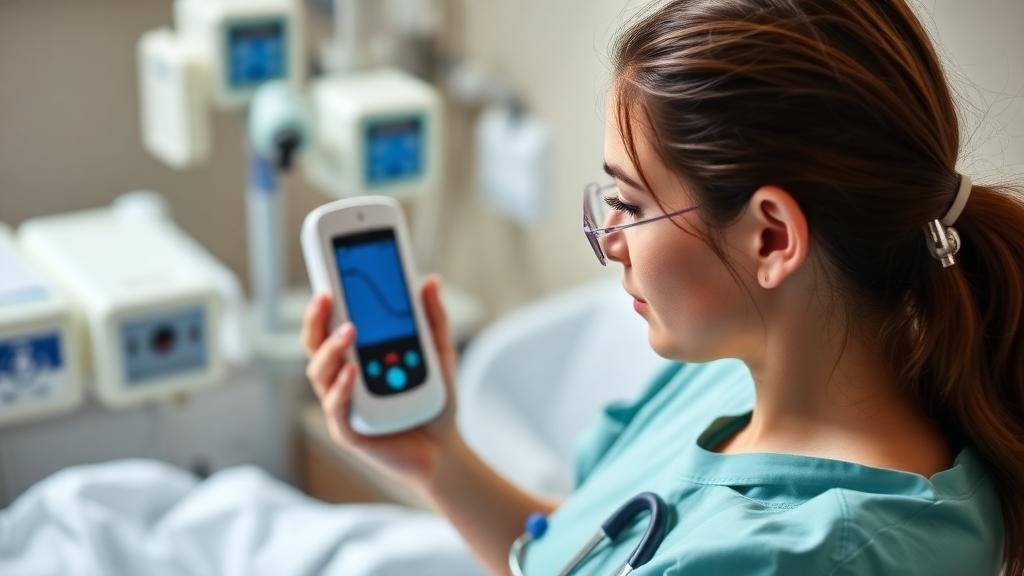
Urine output is one of the oldest vital signs in medicine, and in the intensive care unit it remains one of the most closely watched. A falling urine flow can be the earliest warning of acute kidney injury, sepsis, or dangerous fluid imbalances, often hours before blood tests confirm that something is wrong. Yet the way this crucial number is collected has barely changed in decades: a nurse walks to the bedside, opens the collection system, visually inspects a graduated container, notes the volume, and records it by hand. A new pilot study published in BMC Nursing suggests that this ritual may finally be ready for a digital upgrade, and that the change could ripple through nearly every hour of an ICU nurse’s shift.
The study, led by Olivier Zerbib and Shaul Lev of the Department of General Intensive Care at Hasharon Hospital, Rabin Medical Center in Petah Tikva, Israel, evaluated an electronic urinometer called the FIZE kUO in ten critically ill patients. The device is designed to measure urine output continuously and in real time, without any manual handling of the collection system. Instead of relying on periodic visual checks, the system transmits a live stream of urine output data, allowing clinicians to follow trends minute by minute rather than in snapshots separated by hours. The researchers describe it as an attempt to move urine monitoring from the same manual era that once characterized heart rate and blood pressure measurement, both of which have long since been automated at the bedside.
The rationale for automation goes beyond convenience. Manual urine output measurement is labor-intensive and interruptive, pulling nurses away from other time-sensitive tasks several times per hour in the sickest patients. Each measurement requires physical presence at the bedside, and delays are common when staffing is stretched. Missed or late recordings can create gaps in the fluid balance chart, and those gaps can obscure exactly the trend that matters most: a gradual decline in urine output that signals evolving kidney injury. In a unit where a single nurse may be responsible for one or two critically unstable patients, every interruption carries an opportunity cost, and every delayed data point carries a clinical one.
To capture how the device affected this dynamic, the team ran a prospective, single-center pilot study with a design centered on the people who actually use such technology: the nursing staff. Nurses completed staged questionnaires before, during, and after the monitoring period, comparing their perceptions of manual monitoring with their experience of the automated system. Device performance and any adverse events were documented throughout the entire monitoring period, giving the researchers both a usability picture and a safety record. The study was conducted under Good Clinical Practice guidelines, with ethical approval from the institutional review board of Rabin Medical Center and informed consent obtained from all patients or their legally authorized representatives.
The results paint a consistently favorable portrait of the technology from the nursing perspective. Staff reported high marks for ease of setup, with positive responses in the range of 84 to 87 percent, and roughly three quarters of nurses, 74 percent, said the system saved time. Perhaps most striking, 87 percent reported that continuous data improved their recognition of changes in urine output, the very capability that makes this measurement clinically valuable. By the end of the treatment period, 88.9 percent of nurses indicated that the system prevented missing data, and 78 percent said it facilitated earlier identification of situations requiring intervention. In the language of critical care, earlier recognition is often the difference between a corrective fluid adjustment and a full-blown episode of kidney failure.
Safety, the other essential pillar for any bedside device, also held up. Across the study the FIZE kUO provided continuous monitoring for a total of 1,263 patient-hours, an unusually long cumulative exposure for a pilot of this size, and the researchers observed no device-related adverse events and no serious adverse events. For a device that physically interfaces with the urinary collection system, a common source of infection risk in the ICU, that clean safety record is a meaningful early signal, though the authors and the study’s pilot design make clear that larger evaluations will be needed before broad conclusions can be drawn.
The study’s framing within the broader nursing workload literature is one of its more interesting dimensions. Intensive care nursing is measured in part by tools such as the Nursing Activities Score, which quantifies how much of a nurse’s time is consumed by direct and indirect care tasks. Manual measurement of urine output is precisely the kind of repetitive, low-judgment task that automation advocates argue should be shifted to machines, freeing human attention for the tasks that genuinely require clinical reasoning. The Israeli team’s findings support that argument from the user’s side: nurses perceived the device as reducing repetitive manual work and supporting timelier decision-making, a combination that speaks to both efficiency and quality of care.
There is also a technological lineage worth noting. Continuous monitoring has transformed other domains of critical care. Pulse oximetry replaced intermittent arterial blood gas sampling for oxygen saturation, capnography brought continuous carbon dioxide tracking to ventilated patients, and arterial lines deliver beat-to-beat blood pressure data. Urine output, by contrast, has remained stubbornly analog, recorded in hourly or every-few-hours increments that depend on someone physically walking to the bedside. A continuous electronic urinometer effectively brings urine output into the same data ecosystem as the other vital signs, where it can be displayed on central monitors, trended by clinical information systems, and potentially paired with automated alerts when output falls below thresholds associated with acute kidney injury.
The clinical stakes of that transition are considerable. Acute kidney injury affects a substantial fraction of ICU patients and is strongly associated with mortality, yet it is frequently recognized late because its earliest signs are subtle and its most accessible marker, urine output, is recorded intermittently and sometimes incompletely. Guidelines for kidney injury staging explicitly incorporate urine output criteria over time windows, which means the accuracy and granularity of urine data directly influence diagnosis. Continuous measurement could, in principle, allow clinicians to detect the gradual oliguria that defines early kidney injury hours sooner than a chart reviewed every four hours. The pilot study did not test patient outcomes directly, but the perception among nurses that the system enabled earlier identification of situations requiring intervention points toward exactly that potential benefit.
As with any early-stage evaluation, the caveats are real. The study enrolled ten patients at a single center, was sponsored by FIZE Medical Ltd., the device’s manufacturer, though the authors declare no personal financial relationships or employment with the company, and its endpoints were perceptions, workflow, and safety rather than hard clinical outcomes. Questionnaire-based usability studies capture experience, not efficacy, and the leap from nurses liking a device to patients doing better requires larger, outcome-focused trials. Still, the pattern of results across more than a thousand hours of monitoring, the absence of safety signals, and the strong majorities on every usability measure give the technology a credible foundation. If subsequent studies confirm these findings at scale, the humble urine bottle at the ICU bedside may follow the same path as the mercury sphygmomanometer: a faithful manual tool that eventually gave way to something faster, cleaner, and continuously watching. For the nurses who spend their shifts racing between monitors, ventilators, and medication pumps, that would mean one less interruption and one more reason to trust the numbers on the screen.
Subject of Research: Automated continuous urine output monitoring in intensive care using an electronic urinometer
Article Title: From manual to digital: prospective ICU evaluation of the FIZE kUO® for continuous urine output measurement
Article References: Zerbib, O., Mahamid, T., Ben-Noon, N., & Lev, S. (2026). From manual to digital: prospective ICU evaluation of the FIZE kUO® for continuous urine output measurement. BMC Nursing. https://doi.org/10.1186/s12912-026-05421-1
Image Credits: AI Generated
DOI: 10.1186/s12912-026-05421-1
Keywords: urine output, ICU, nursing workload, acute kidney injury, electronic urinometer, FIZE kUO, critical care monitoring, fluid management, medical device, automation, pilot study, BMC Nursing
Cite Scienmag News
Ophelia Keating. (September 30, 2026). Digital Urinometer Eases ICU Nursing Workload in First Prospective Trial. Scienmag. https://scienmag.com/digital-urinometer-eases-icu-nursing-workload-in-first-prospective-trial/
Ophelia Keating. "Digital Urinometer Eases ICU Nursing Workload in First Prospective Trial." Scienmag, 30 September 2026, https://scienmag.com/digital-urinometer-eases-icu-nursing-workload-in-first-prospective-trial/. Accessed 4 October 2026.
Ophelia Keating. "Digital Urinometer Eases ICU Nursing Workload in First Prospective Trial." Scienmag. September 30, 2026. https://scienmag.com/digital-urinometer-eases-icu-nursing-workload-in-first-prospective-trial/


