

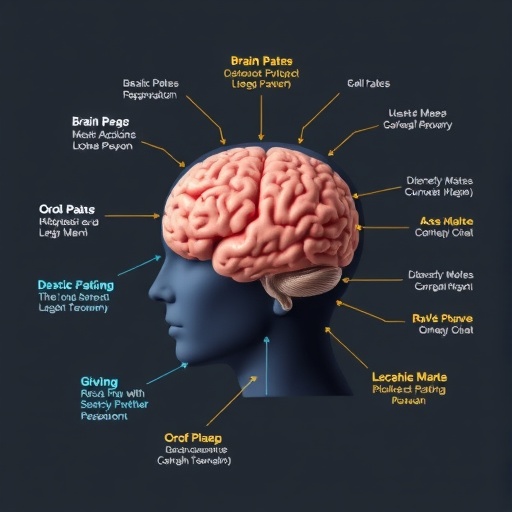
In a groundbreaking move that promises to reshape our understanding of obsessive-compulsive disorder (OCD) during adolescence, recent research has illuminated the distinct neural circuits responsible for the two hallmark features of this complex condition: obsessions and compulsions. These findings mark a pivotal advancement in psychiatric neuroscience, particularly for a demographic where OCD manifests with unique challenges, hormonal dynamics, and cognitive development pressures. Understanding the nuanced brain mechanisms involved opens new horizons for tailored interventions and precision medicine in mental health care.
Obsessive-compulsive disorder has long been characterized by intrusive, persistent thoughts (obsessions) and repetitive behaviors or mental acts (compulsions). Historically lumped together as two sides of the same coin, Li et al.’s 2026 investigation published in Translational Psychiatry (https://doi.org/10.1038/s41398-026-04024-3) challenges this notion with robust evidence highlighting that obsessions and compulsions may not only be phenomenologically distinct but also neurobiologically dissociable phenomena. This nuanced distinction has been elusive due to prior methodological constraints and the confounding influence of comorbid conditions.
The adolescent brain, a dynamic and plastic landscape in constant flux, presents both an opportunity and a challenge for psychiatric research. During this developmental window, neural circuits underpinning emotional regulation, cognitive control, and habit formation undergo profound remodeling. Li et al. leveraged advanced neuroimaging methodologies to probe these circuits in adolescents diagnosed with OCD, aiming to unravel the differential neural underpinnings governing obsessions and compulsions.
Functional magnetic resonance imaging (fMRI), alongside structural MRI, served as the pivotal tools in this inquiry. Participants were exposed to symptom-eliciting stimuli and underwent rigorous clinical assessments to quantify obsessive and compulsive symptom severity independently. Through sophisticated voxel-based morphometry and connectivity analysis, researchers mapped the brain regions demonstrating aberrant activity and connectivity patterns aligned with each symptom dimension.
The data revealed a striking disaggregation in neural substrates: obsessions primarily engaged circuits within the cortico-striatal-thalamo-cortical (CSTC) loop, specifically heightened activity in the orbitofrontal cortex (OFC) and anterior cingulate cortex (ACC). These areas are strongly implicated in error monitoring, decision-making, and intrusive thought generation, effectively serving as the neurobiological crucibles of obsessional phenomena. In contrast, compulsions were more intimately linked with dysregulation within sensorimotor integration pathways and the supplementary motor area (SMA), structures fundamental to habit formation and repetitive motor execution.
Importantly, functional connectivity analyses underscored reduced communication efficiency between frontoparietal control networks and limbic structures during compulsive episodes. This impaired cross-talk likely mediates the failure to exert top-down inhibitory control over compulsive urges. Conversely, obsessive symptom intensity correlated robustly with hyperconnectivity within the medial prefrontal cortex and basal ganglia circuits, regions orchestrating cognitive inflexibility and maladaptive rumination, hallmark traits of obsessional thinking.
The implications of these findings are manifold. From a mechanistic standpoint, they advocate for re-conceptualizing OCD as a network disorder with symptom-specific dysregulations rather than a monolithic pathological entity. This paradigm shift facilitates stratifying patients based on underlying neural pathology rather than solely behavioral phenotypes, thereby enhancing diagnostic precision.
Therapeutically, targeted neuromodulation approaches—such as transcranial magnetic stimulation or deep brain stimulation—can be finetuned to selectively modulate dysfunctional circuits identified for obsessions versus compulsions. For instance, enhancing regulatory control over orbitofrontal and anterior cingulate activity may alleviate intrusive thoughts more efficaciously, whereas modulating SMA and sensorimotor integration may quell compulsive behaviors. This precision targeting heralds a new era in OCD treatment, moving beyond one-size-fits-all pharmacotherapy.
Moreover, these insights bear critical relevance for cognitive-behavioral interventions. Customized cognitive retraining targeting obsession-related decision-making biases or exposure-response prevention protocols emphasizing motor suppression could be optimized to the neurobiological profiles established herein. Early intervention during adolescence, when neural plasticity is heightened, could disrupt maladaptive circuits before they consolidate into chronic pathology.
The research also highlights developmental nuances. Adolescents exhibit distinct patterns of neurocircuitry engagement compared to adults with OCD, suggesting a critical need to design age-appropriate models and treatments. Hormonal changes, neuroinflammatory markers, and synaptic pruning during adolescence likely interact with these neurocircuits, modulating symptom expression and treatment responsiveness.
While robust, the study acknowledges limitations including sample size constraints and the need for longitudinal follow-up to capture circuit maturation trajectories. Future research avenues propose integrating multimodal imaging, genetic profiling, and environmental factors such as stress exposure to build comprehensive predictive models of OCD symptom evolution.
In sum, Li and colleagues’ 2026 study marks a monumental stride in OCD neuroscience, delineating distinct neural substrates for obsessions and compulsions within adolescent brains. By mapping discrete circuit dysfunctions, this research paves the way for precision diagnostics and symptomatic-specific treatments, aligning psychiatry more closely with the tenets of contemporary neuroscience. As OCD affects millions globally, these advancements hold promise not only for diminishing individual suffering but also for unraveling the complex neural architecture of human cognition and behavior.
As mental health continues to ascend in global healthcare priorities, this research serves as a clarion call for investments in neurobiological studies that decode mental illnesses at a granular, circuit-level scale. Harnessing such knowledge, clinicians, neuroscientists, and pharmacologists can collaborate to forge innovative therapies, steering mental health care into an era defined by personalization, efficacy, and hope.
Subject of Research: Neural substrates differentiating obsessions and compulsions in adolescent obsessive-compulsive disorder
Article Title: Distinct neural substrates of obsessions and compulsions in adolescent obsessive compulsive disorder
Article References:
Li, K., Zhang, C., Li, R. et al. Distinct neural substrates of obsessions and compulsions in adolescent obsessive compulsive disorder. Transl Psychiatry (2026). https://doi.org/10.1038/s41398-026-04024-3
Image Credits: AI Generated


