

Saturday, October 24, 2026
Science
No Result
View All Result
  • Login
  • HOME
  • SCIENCE NEWS
  • CONTACT US
  • HOME
  • SCIENCE NEWS
  • CONTACT US
No Result
View All Result
Scienmag
No Result
View All Result
Home Science News Medicine

Diatom Test Matches Lung Tissue to Drowning Site with 95 Percent Accuracy

October 24, 2026
in Medicine
Ophelia Keating
By Ophelia Keating Scienmag Editorial Profile - Health Services Research
Reading Time: 3 mins read
0
Diatom Test Matches Lung Tissue to Drowning Site with 95 Percent Accuracy

Diatom Test Matches Lung Tissue to Drowning Site with 95 Percent Accuracy

65
SHARES
587
VIEWS
Share on FacebookShare on Twitter
ADVERTISEMENT

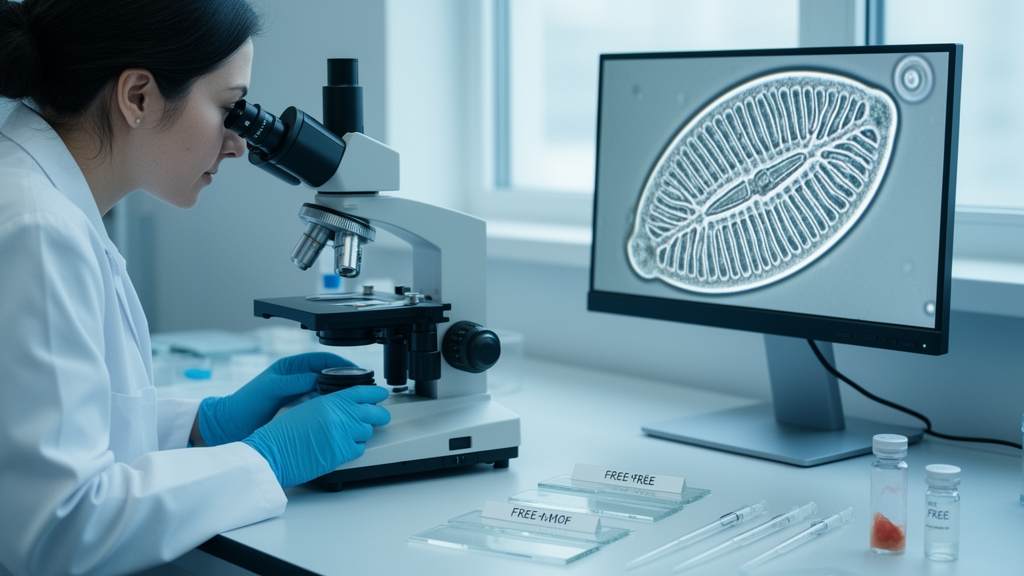
A quantitative approach to diatom analysis can match lung tissue from confirmed drowning cases to the correct body of water with up to 95 per cent accuracy when the true site is among the candidates, according to a study published in the International Journal of Legal Medicine. The new study tested how accurately lung samples can be matched to candidate water bodies using statistical methods rather than qualitative comparison alone. The researchers analysed thirty-two aquatic–lung pairs from confirmed drowning cases, extracting diatoms with a lossless nitric acid and phase-contrast filtration method.

Permutational analysis of variance showed that each aquatic–lung pair shared a highly significant, pair-specific diatom signal, with the pairing factor explaining 86 per cent of the variation in the data (R2 = 0.86, p = 0.001). Differences between the water samples and the corresponding lung samples were statistically insignificant, indicating that lung diatom assemblages reflected the communities present at the drowning site. This established lung samples as highly representative of the site-specific aquatic community in the analysed cases.

The strength of the matching depended on geography. Beta regression analysis identified the spatial tightness of the sampling locations as the sole significant factor affecting pairing accuracy, with a pseudo-R2 of 0.50. The authors describe this as confirming the strong site-specific character of the aquatic–lung pairs.

To simulate real casework, in which one lung sample may be compared against several possible water bodies, the team applied a mutual nearest neighbour criterion. When one lung sample was compared to two candidate aquatic samples, the correct site was identified in 95 per cent of cases. Accuracy declined as the candidate pool grew, but even with eleven competing water bodies the method still reached the correct match in 79 per cent of cases.

To control false positives, the researchers introduced the nearest neighbour distance ratio as a decision parameter and calibrated empirical thresholds at the 95 per cent level, limiting the false-positive rate to 5 per cent within the resampling framework. Corresponding true-positive sensitivity was reported for the three best-performing quantitative distance metrics: Bray–Curtis dissimilarity, quantitative Jaccard distance and Hellinger distance. From these results the authors built a practical decision guide for selecting the most probable drowning site and assessing how distinctive the match is relative to the candidate pool.

The authors are explicit about the method's boundary. The framework performs well when the true drowning site is present among the candidates, but the analysis cannot confirm that the actual site was sampled at all. If the genuine water body is missing from the pool, a false candidate may still emerge as the nearest neighbour, and the current criteria cannot reliably flag such a case.

The study's results indicate that quantitative analysis based on sample distance metrics provides a statistically quantifiable framework for drowning-site determination in cases where the true site is included in the candidate pool, while rejecting false pairings when the true site is absent remains beyond the sensitivity of the method.

Subject of Research: Quantitative diatom analysis for determining the site of drowning in forensic medicine

Article Title: Quantitative diatom analysis for drowning-site determination: Evaluation of accuracy and a practical decision guide

Article References: Bešta, T., Dohnalová, P., Zubíčková, K., Tomášek, P., Markvartová, J., Tomášková, E., Hauer, T., Zagatová, I., Lefnar, R., Hamrová, H., & Kaštovský, J. (2026). Quantitative diatom analysis for drowning-site determination: Evaluation of accuracy and a practical decision guide. International Journal of Legal Medicine. https://doi.org/10.1007/s00414-026-04047-x

Image Credits: AI Generated

DOI: 10.1007/s00414-026-04047-x

Keywords: diatoms, drowning, forensic science, legal medicine, lung tissue, PERMANOVA, Bray-Curtis, site determination, microalgae, quantitative analysis, decision threshold, aquatic ecology

Cite Scienmag News

Ophelia Keating. (October 24, 2026). Diatom Test Matches Lung Tissue to Drowning Site with 95 Percent Accuracy. Scienmag. https://scienmag.com/diatom-test-matches-lung-tissue-to-drowning-site-with-95-percent-accuracy/

Ophelia Keating. "Diatom Test Matches Lung Tissue to Drowning Site with 95 Percent Accuracy." Scienmag, 24 October 2026, https://scienmag.com/diatom-test-matches-lung-tissue-to-drowning-site-with-95-percent-accuracy/. Accessed 24 October 2026.

Ophelia Keating. "Diatom Test Matches Lung Tissue to Drowning Site with 95 Percent Accuracy." Scienmag. October 24, 2026. https://scienmag.com/diatom-test-matches-lung-tissue-to-drowning-site-with-95-percent-accuracy/


Tags: aquatic ecologyaquatic–lung diatom pair-specific signalsBray-Curtisdecision thresholdDiatom analysis in forensic drowning investigationsdiatom assemblages as drowning site indicatorsdiatomsdrowningforensic application of diatom testsforensic sciencegeographic influence on diatom matching accuracylegal medicinelossless nitric acid extraction for diatom analysislung tissuelung tissue diatom matching accuracyMicroalgaePERMANOVApermutational analysis of variance in forensic sciencephase-contrast filtration in diatom extractionquantitative analysisquantitative diatom analysis in legal medicinesite determinationsite-specific diatom community reflection instatistical methods for diatom comparison
Share26Tweet16
Previous Post

Decade of residential pesticide exposure tied to blood pressure and cholesterol changes

Next Post

Two Sleep Questionnaires Flag Different Nurses After Emergency Deployment

Related Posts

Two Sleep Questionnaires Flag Different Nurses After Emergency Deployment
Medicine

Two Sleep Questionnaires Flag Different Nurses After Emergency Deployment

October 24, 2026
Decade of residential pesticide exposure tied to blood pressure and cholesterol changes
Medicine

Decade of residential pesticide exposure tied to blood pressure and cholesterol changes

October 24, 2026
Chimeric rodent malaria parasites put P. vivax vaccine antigens SSP3 and SPECT1 to the test
Medicine

Chimeric rodent malaria parasites put P. vivax vaccine antigens SSP3 and SPECT1 to the test

October 24, 2026
Schistosomiasis detected in one in nine women delivering at Ugandan hospital
Medicine

Schistosomiasis detected in one in nine women delivering at Ugandan hospital

October 24, 2026
Proton beam pauses mid-heartbeat to spare healthy tissue in cardiac ablation
Medicine

Proton beam pauses mid-heartbeat to spare healthy tissue in cardiac ablation

October 24, 2026
Multidrug-resistant bacteria drive one in five VP shunt infections in Pakistan
Medicine

Multidrug-resistant bacteria drive one in five VP shunt infections in Pakistan

October 24, 2026
Next Post
Two Sleep Questionnaires Flag Different Nurses After Emergency Deployment

Two Sleep Questionnaires Flag Different Nurses After Emergency Deployment

  • Mothers who receive childcare support from maternal grandparents show more optimized

    Mothers who receive childcare support from maternal grandparents show more parental warmth, finds NTU Singapore study

    27656 shares
    Share 11059 Tweet 6912
  • University of Seville Breaks 120-Year-Old Mystery, Revises a Key Einstein Concept

    1061 shares
    Share 424 Tweet 265
  • Bee body mass, pathogens and local climate influence heat tolerance

    682 shares
    Share 273 Tweet 171
  • Researchers record first-ever images and data of a shark experiencing a boat strike

    546 shares
    Share 218 Tweet 137
  • Groundbreaking Clinical Trial Reveals Lubiprostone Enhances Kidney Function

    531 shares
    Share 212 Tweet 133
Science

Embark on a thrilling journey of discovery with Scienmag.com—your ultimate source for cutting-edge breakthroughs. Immerse yourself in a world where curiosity knows no limits and tomorrow’s possibilities become today’s reality!

RECENT NEWS

  • Two Sleep Questionnaires Flag Different Nurses After Emergency Deployment
  • Diatom Test Matches Lung Tissue to Drowning Site with 95 Percent Accuracy
  • Decade of residential pesticide exposure tied to blood pressure and cholesterol changes
  • Chimeric rodent malaria parasites put P. vivax vaccine antigens SSP3 and SPECT1 to the test

Categories

  • Agriculture
  • Anthropology
  • Archaeology
  • Athmospheric
  • Biology
  • Biotechnology
  • Blog
  • Bussines
  • Cancer
  • Chemistry
  • Climate
  • Earth Science
  • Editorial Policy
  • Marine
  • Mathematics
  • Medicine
  • Pediatry
  • Policy
  • Psychology & Psychiatry
  • Science Education
  • Science News
  • Social Science
  • Space
  • Technology and Engineering

Subscribe to Blog via Email

Enter your email address to subscribe to this blog and receive notifications of new posts by email.

Join 5,152 other subscribers

© 2025 Scienmag - Science Magazine

Welcome Back!

Login to your account below

Forgotten Password?

Retrieve your password

Please enter your username or email address to reset your password.

Log In
No Result
View All Result
  • HOME
  • SCIENCE NEWS
  • CONTACT US

© 2025 Scienmag - Science Magazine

Discover more from Science

Subscribe now to keep reading and get access to the full archive.

Continue reading