


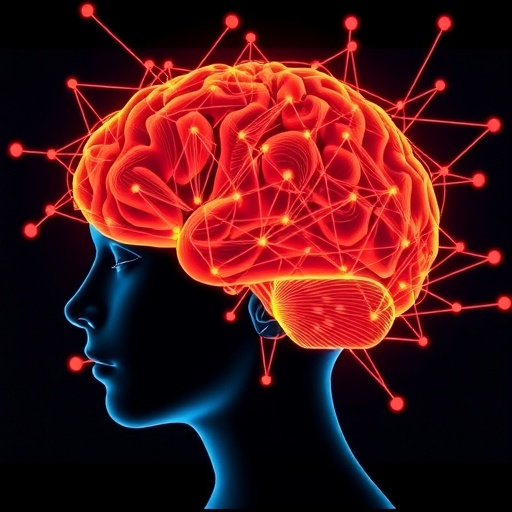
In an era dominated by mental health challenges, a groundbreaking study emerging from the intersection of neuroscience and machine learning offers fresh hope for the diagnosis of adolescent depression complicated by sleep disorders. Sleep disorders, common yet often overlooked in depressed adolescents, have historically lacked reliable neuroimaging markers that could facilitate timely and objective diagnosis. Addressing this gap, researchers have now leveraged advanced brain network analysis techniques combined with cutting-edge computational models to unravel the complex neural signatures underlying these co-occurring conditions.
The research pivots on the sophisticated analysis of brain function through resting-state functional magnetic resonance imaging (fMRI), a technique that captures spontaneous brain activity when a subject is not engaged in any external task. By focusing on whole-brain functional connectivity (FC), which reflects the dynamic communication between distinct brain regions, as well as on betweenness centrality (BC), a graph theory metric quantifying the influence of a node within the overall brain network, the study pioneers a novel diagnostic approach grounded in network neuroscience.
A sample of 117 adolescents diagnosed with depression underwent intensive resting-state fMRI scans to map their brain activity patterns. The cohort was subdivided into individuals with and without diagnosed sleep disorders, enabling a comparative analysis of their brain network attributes. Through rigorous statistical testing—specifically, two-sample t-tests within a discovery dataset of 86 participants—the investigators identified significant differences in both FC and BC metrics that signal disturbed functional integration in the brains of those experiencing sleep difficulties.
One of the key findings spotlighted an elevation in BC within the right middle temporal gyrus (MTG.R), suggesting that this region assumes a heightened informational hub role in depressed adolescents burdened by sleep irregularities. Conversely, diminished BC was observed in the left median cingulate and paracingulate gyri (DCG.L) and the left caudate nucleus (CAU.L), pointing to a disruption in critical nodes responsible for the flow and processing of neural information. These alterations intimate a reorganization of brain communication pathways, potentially underpinning the clinical manifestation of sleep issues within the depression spectrum.
Functional connectivity changes were equally pronounced, with specific aberrations between the left middle occipital gyrus and the aforementioned MTG.R standing out as the most dramatic. This disrupted inter-regional coupling likely reflects impaired sensory and cognitive integration, consistent with the known impact of sleep dysfunction on cognitive performance and emotional regulation in adolescent depression.
To translate these neuroscientific insights into a practical diagnostic tool, the team deployed a support vector machine (SVM) classifier—a form of supervised machine learning adept at discerning subtle patterns within high-dimensional data. The model ingeniously integrated the combined whole-brain BC and FC features, successfully differentiating depressed adolescents with sleep disorders from those without with an impressive classification accuracy of 81.40% during internal leave-one-out cross-validation (LOOCV). This robust internal validation attests to the consistency and reliability of the network biomarkers identified.
The real test of any diagnostic innovation lies in its reproducibility. Impressively, the SVM model’s predictive prowess was externally corroborated using an independent validation cohort of 31 adolescents, maintaining a commendable accuracy rate of 74.19%. Such cross-validation underscores the method’s potential clinical utility, suggesting that functional brain network metrics could soon augment traditional psychiatric assessments, offering objective evidence for sleep-related diagnoses in adolescent depression.
This study advances the paradigm of psychiatric diagnosis by integrating graph-theoretical brain network analysis with modern AI-driven classification techniques. Its success signals a shift away from solely symptom-based diagnoses toward biologically informed frameworks, which can facilitate personalized treatment strategies and earlier interventions. The neuroimaging markers elucidated—in particular, BC alterations in temporal and cingulate regions combined with FC disruptions—may serve as biomarkers guiding the refinement of therapeutic targets and monitoring of treatment response.
Moreover, the findings emphasize the role of specific brain areas implicated in emotional and cognitive regulation, whose functional dysconnectivity is tied to sleep disturbances. The right middle temporal gyrus, left median cingulate cortex, and caudate nucleus form integral components of neural circuits managing attention, memory, and affect, all domains vulnerable in depressive pathology complicated by sleep issues. By pinpointing these hubs, the research not only clarifies neurobiological mechanisms but also highlights pathways that interventions could aim to stabilize.
Beyond its clinical implications, the interdisciplinary nature of this study—bridging neuroimaging, graph theory, and machine learning—exemplifies the future trajectory of neuroscience research. It demonstrates how cross-disciplinary tools can amplify our understanding of complex psychiatric conditions, offering a template for studies into other mental health ailments where objective biomarkers remain elusive.
In light of the widespread prevalence of adolescent depression and its frequent association with debilitating sleep disturbances, this innovative research paves the way for enhanced diagnostic precision. Early and accurate identification of sleep disorder comorbidity can significantly influence treatment outcomes, potentially mitigating the long-term negative impacts on adolescent development, academic performance, and psychosocial functioning.
While further research is warranted to replicate these findings across larger and more diverse populations, and to explore the longitudinal dynamics of brain network changes over the course of depression and its treatment, the present work lays a crucial foundation. It highlights the transformative role that objective neuroimaging markers coupled with AI analysis could play in clinical psychiatry, driving forward personalized, evidence-based care.
In conclusion, the integration of network topological attributes such as betweenness centrality with functional connectivity profiles, interpreted through machine learning classifiers, represents a promising frontier in the diagnostic landscape of adolescent depression with sleep disorders. By elucidating the altered functional architecture of the adolescent brain in such comorbid conditions, this study not only enriches scientific understanding but also brings us closer to precision medicine in mental health—a significant leap in addressing the complexities of adolescent psychopathology.
Cite Scienmag News
Glenn Wilkins. (September 26, 2025). Diagnosing Teen Depression via Brain Network Analysis. Scienmag. https://scienmag.com/diagnosing-teen-depression-via-brain-network-analysis/
Glenn Wilkins. "Diagnosing Teen Depression via Brain Network Analysis." Scienmag, 26 September 2025, https://scienmag.com/diagnosing-teen-depression-via-brain-network-analysis/. Accessed 3 September 2026.
Glenn Wilkins. "Diagnosing Teen Depression via Brain Network Analysis." Scienmag. September 26, 2025. https://scienmag.com/diagnosing-teen-depression-via-brain-network-analysis/


