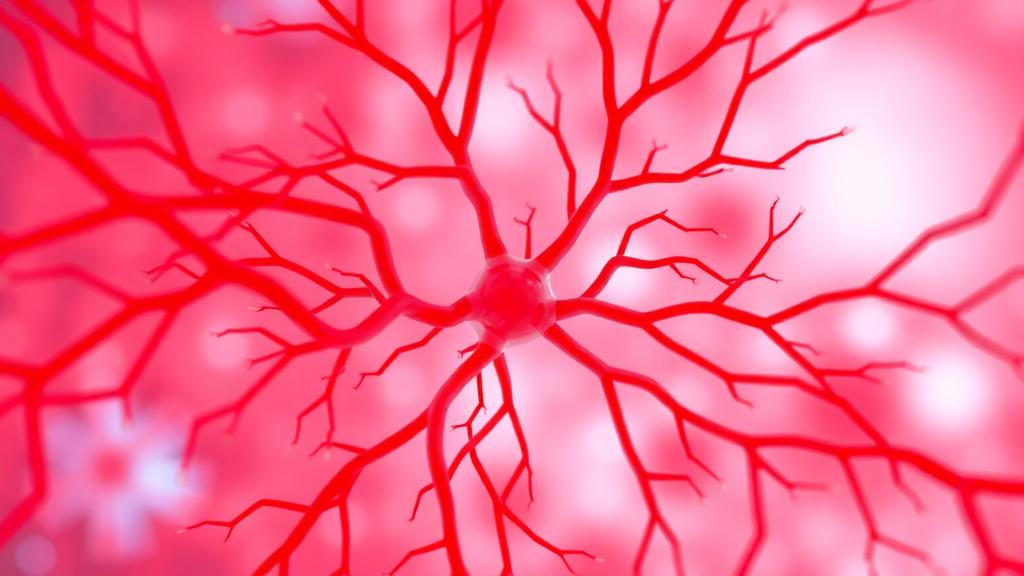
Deep inside the transparent dome of the eye lies one of the most densely innervated tissues in the human body. The cornea, the clear window through which light enters, is threaded with a lattice of extraordinarily fine nerve fibers — and in people with diabetes, those fibers are often among the first casualties of the disease. A new multicenter study from China now suggests that the damage written into this invisible nerve web is not uniform across all forms of diabetes, but instead varies with the metabolic subtype a patient belongs to, offering a tantalizing glimpse of how precision medicine might one day reach the front line of diabetic nerve disease.
The research, published in BMC Endocrine Disorders, enrolled 516 patients with diabetes aged 18 to 80 years across multiple hospitals, including Beijing Hospital, Capital Medical University Beijing Tiantan Hospital, Renmin Hospital of Wuhan University, Qilu Hospital of Shandong University, and Hebei Provincial People’s Hospital. Rather than dividing patients simply into type 1 and type 2 diabetes, the team applied a modified version of the Ahlqvist-based classification, a hierarchical clustering approach that sorts individuals with diabetes into biologically distinct subgroups based on variables such as age at diagnosis, body mass index, glycemic control, and insulin resistance. The subgroups include a severe insulin-deficient diabetes form, known as SAID, and a mild obesity-related diabetes form, known as MOD, among others. The idea is deceptively simple: if diabetes is really several different diseases wearing the same label, then its complications should also carry subtype-specific signatures.
To read those signatures, the investigators turned to corneal confocal microscopy, or CCM, a non-invasive imaging technique that can visualize living nerve fibers in the cornea at near-cellular resolution without taking a single biopsy. From these images, the researchers quantified key morphological parameters, most notably corneal nerve fiber density, or CNFD, a measure of how many main nerve fibers traverse a defined area of the corneal surface. Because small unmyelinated nerve fibers are damaged early in diabetic neuropathy — and because the cornea is the only place in the living body where such fibers can be directly observed — CCM has emerged in recent years as one of the most promising window-on-the-disease tools in neurology and ophthalmology alike.
The results revealed genuine heterogeneity across the Ahlqvist-based subtypes. Corneal nerve fiber density showed an overall between-subtype difference, with numerically lower values in patients classified as having severe insulin-deficient diabetes and numerically higher values in those with mild obesity-related diabetes. That pattern is biologically plausible: severe insulin deficiency is thought to expose nerves to a particularly hostile metabolic environment, while the milder, obesity-driven form may spare small fibers for longer. Yet the study’s authors are careful about how far this finding can be pushed. When the team applied corrected post hoc comparisons — the rigorous pairwise statistical tests required after an initial analysis of variance — no individual subtype pair reached statistical significance. The overall trend, in other words, is suggestive rather than definitive.
This honesty about statistical limits runs through the entire paper and is part of what makes it notable. The researchers also examined whether corneal nerve parameters tracked with nerve conduction studies, the electrical tests that measure how fast signals travel along peripheral nerves. Here they encountered a surprise: the associations between CCM parameters and median nerve motor conduction velocity pointed in an unexpected inverse direction, the opposite of what the team had anticipated. Rather than forcing an interpretation onto this anomaly, the authors explicitly advise caution, noting that the finding requires further validation before any conclusions can be drawn. Similarly, no significant associations emerged between the neuropathy disability score, a clinical measure of neurological impairment, and any of the corneal nerve parameters.
Where the study found its strongest and most consistent signal was in the relationship between corneal nerves and diabetic retinopathy, the microvascular eye disease that remains a leading cause of blindness in working-age adults. Across the entire cohort of 516 patients, lower standardized CCM parameters were consistently associated with higher odds of having diabetic retinopathy. Crucially, these associations held up even in sensitivity models that added further statistical adjustment for diabetes duration, HbA1c — the standard marker of long-term blood sugar control — and body mass index. That robustness matters, because diabetes duration and glycemic control are the classic drivers of retinal disease, and any new marker must prove its worth independent of them.
Intriguingly, the same did not hold for diabetic kidney disease. When the researchers tested the association between corneal nerve parameters and diabetic kidney disease, or DKD, they found no significant relationship. This divergence is scientifically interesting because both retinopathy and nephropathy are traditionally grouped together as microvascular complications of diabetes. If corneal small-fiber damage tracks with retinal involvement but not kidney involvement, it hints that the small nerve fibers of the cornea may share developmental, structural, or metabolic vulnerabilities with the microvasculature of the retina specifically — two tissues that, unlike the kidney, are classically described as lacking direct sympathetic innervation. The finding suggests that corneal nerve imaging markers may be a particularly faithful mirror of what is happening in the retina, potentially allowing clinicians to gauge retinal microvascular risk from a quick, painless scan of the eye’s surface.
The subtype-specific regression analyses, by contrast, remain exploratory. The authors attribute this caution to limited event numbers in some subgroups — a common challenge in clustering-based diabetes research, where certain subtypes may contain relatively few patients with a given complication. Small subgroup sizes make it difficult to detect associations with confidence, and the team is transparent that these findings should be treated as hypothesis-generating rather than practice-changing. The study was retrospectively registered in the Chinese Clinical Trial Registry on April 1, 2025, and was funded by the Beijing Municipal Science and Technology Commission and the Administrative Commission of Zhongguancun Science Park.
The broader significance of the work lies in its convergence of two major trends in diabetes research. The first is the Ahlqvist paradigm itself, first proposed by Swedish researchers in 2018, which reframed diabetes as a cluster of five subtypes with distinct prognoses and complication risks. Since then, researchers worldwide have tested whether these subtypes predict complications differently, and the Chinese study extends that question into the territory of small-fiber neuropathy — a complication that is notoriously difficult to diagnose early because its symptoms, such as burning pain and loss of sensation, often appear only after substantial nerve loss has occurred. The second trend is the maturation of corneal confocal microscopy from a research curiosity into a candidate surrogate endpoint, with international consortia pushing for its adoption in clinical trials of nerve-regenerating therapies.
By combining these two frontiers, the study raises the possibility of a two-layered precision approach: first classifying a patient’s diabetes by its biological subtype, then using corneal nerve imaging to monitor that patient’s specific microvascular and neurological risk over time. The authors themselves frame the path forward clearly, calling for longitudinal studies with comprehensive nerve conduction study-based definitions of distal symmetric polyneuropathy to confirm their exploratory findings. Cross-sectional snapshots, however large, can only show that two things coexist; longitudinal follow-up is needed to show whether corneal nerve loss actually precedes and predicts retinal disease, and whether the subtype differences seen here translate into different rates of complication progression. Until then, the study stands as an early but carefully documented map of how the invisible nerves of the eye differ from one form of diabetes to another — and a reminder that some of the most revealing diagnostics of the future may require nothing more than looking, with the right optics, at the surface of the eye.
Subject of Research: Corneal nerve morphology across Ahlqvist-based diabetes subtypes and its association with microvascular complications
Article Title: Corneal nerve morphological differences across Ahlqvist-based diabetes subtypes: a multicenter cross-sectional study
Article References: Li, Z., Liu, X., Wang, W., Zhong, L., Gao, L., Hou, X., Chen, S., Li, H., Yu, X., Huang, J., Pan, Q., Wu, J., & Guo, L. (2026). Corneal nerve morphological differences across Ahlqvist-based diabetes subtypes: a multicenter cross-sectional study. BMC Endocrine Disorders. https://doi.org/10.1186/s12902-026-02524-3
Image Credits: AI Generated
DOI: 10.1186/s12902-026-02524-3
Keywords: diabetes subtypes, Ahlqvist classification, corneal confocal microscopy, corneal nerve fiber density, diabetic neuropathy, small fiber neuropathy, diabetic retinopathy, diabetic kidney disease, hierarchical clustering, microvascular complications, nerve conduction studies, precision medicine
Cite Scienmag News
Ophelia Keating. (October 11, 2026). Diabetes Subtypes Leave Distinct Fingerprints in the Cornea’s Hidden Nerve Web. Scienmag. https://scienmag.com/diabetes-subtypes-leave-distinct-fingerprints-in-the-corneas-hidden-nerve-web/
Ophelia Keating. "Diabetes Subtypes Leave Distinct Fingerprints in the Cornea’s Hidden Nerve Web." Scienmag, 11 October 2026, https://scienmag.com/diabetes-subtypes-leave-distinct-fingerprints-in-the-corneas-hidden-nerve-web/. Accessed 11 October 2026.
Ophelia Keating. "Diabetes Subtypes Leave Distinct Fingerprints in the Cornea’s Hidden Nerve Web." Scienmag. October 11, 2026. https://scienmag.com/diabetes-subtypes-leave-distinct-fingerprints-in-the-corneas-hidden-nerve-web/