

Fungi may be among the oldest living organisms on Earth, yet scientists still cannot answer one of the simplest questions about them: how long do they live? A new opinion paper in Trends in Microbiology argues that fungal longevity remains one of biology’s most overlooked mysteries. Unlike animals, which can often be aged by counting growth rings, birthdays, or developmental stages, fungi frequently exist as dynamic networks that grow, fragment, fuse, and replace their own tissues. The researchers say that understanding fungal lifespan will require new definitions of individuality and age, along with long-term experiments and technologies capable of observing fungal growth at microscopic scales.
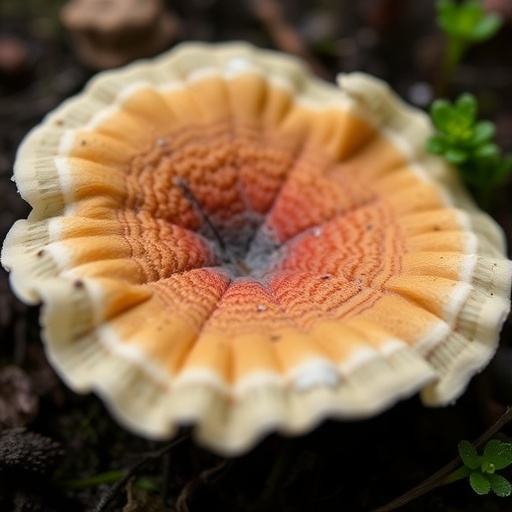
The visible mushroom that appears on a forest floor is only the reproductive structure of many fungi, not the organism in its entirety. Most of the living body is made of mycelium, a branching system of microscopic filaments called hyphae. These filaments extend through soil, decaying wood, or other substrates, absorbing nutrients and communicating through a complex network. In some species, mycelial systems also connect with plant roots in mutually beneficial partnerships known as mycorrhizae. A single fungal network may cover a large area and persist long after the mushroom that first revealed its presence has disappeared.
Some fungal networks are believed to survive for hundreds or even thousands of years. However, those estimates are difficult to verify because the biological boundaries of a fungus are often unclear. Mycelium continuously branches as it encounters new sources of nutrients, while older sections may die, be recycled, or become physically separated from the rest of the network. Detached fragments can continue growing as independent-looking colonies while retaining the same genetic identity. This creates a fundamental problem for researchers: if two separated networks share the same DNA, should they be considered one organism or two?
The question becomes even more complicated when scientists try to determine when a fungal individual begins. For a mushroom-forming species, the starting point might be the germination of a spore, the fusion of compatible cells, or the first formation of a stable underground network. Each definition produces a different estimate of age. A fungus may also replace much of its physical structure during its lifetime, meaning that the oldest genetic lineage and the oldest living tissue are not necessarily the same thing. The researchers therefore argue that fungal aging cannot be understood simply by applying concepts developed for animals or plants.
At present, scientists often combine genetic analysis with measurements of mycelial growth in laboratory cultures. Genetic markers can help identify whether samples collected from different locations belong to the same fungal individual. Researchers may then compare the distribution of those genetic signatures with estimates of growth rates to infer how long a network could have taken to reach its current size. Yet laboratory growth occurs under controlled conditions that may differ sharply from natural environments. Temperature, moisture, soil chemistry, competing organisms, and seasonal changes can all influence how quickly mycelium expands or contracts in the wild.
The researchers say fungal aging is also likely to vary dramatically among species and lifestyles. Unicellular yeasts follow relatively straightforward life cycles in which individual cells divide and produce offspring, making certain aspects of age easier to measure. Filamentous fungi have much more complex bodies, while symbiotic fungi may depend on the survival and behavior of their plant hosts. Decomposer fungi that colonize dead wood face another set of conditions: they may persist after a log begins to break down by extending through surrounding soil or moving toward new sources of organic material. A universal definition of “old” may therefore be impossible.
To address these challenges, the authors recommend combining several emerging approaches. Long-term laboratory experiments could track fungal colonies over years while recording changes in growth, tissue replacement, reproduction, and genetic composition. Genetic barcoding and sequencing could reveal when mutations accumulate within different branches of a network and whether those branches continue to function as a single genetic unit. Such analyses may help distinguish chronological age from the age of individual tissues, as well as identify whether a colony is truly expanding or merely replacing sections that have already died.
The paper also highlights the potential of “fungi-on-a-chip” systems. These microfluidic devices can guide fungal growth through miniature channels while allowing researchers to control nutrients, moisture, chemical signals, and interactions with other organisms. Because the systems are small and transparent, scientists can use microscopy to observe hyphal branching, fusion, damage, and regeneration in real time. They could also test how fungi respond to environmental stress and determine whether aging is associated with measurable changes in growth patterns, cellular repair, or reproductive capacity.
A clearer understanding of fungal longevity would have consequences far beyond mycology. Fungi decompose organic matter, recycle nutrients, support plant growth, influence carbon storage, and contribute to agricultural productivity and human health. Their hidden networks help shape ecosystems even when no mushrooms are visible above ground. If scientists cannot determine how fungal populations persist, reproduce, or disappear, they will struggle to protect fungal biodiversity and the ecological services these organisms provide. The authors of the opinion paper argue that fungal life cycles should be studied across many species rather than reduced to a single lifespan model. As Kristin Aleklett of Lund University puts it, a vast kingdom of organisms lives alongside humanity, and much of its biology remains unexplored.
News Publication Date: 13-Aug-2026
Web References: https://doi.org/10.1016/j.tim.2026.07.001; http://www.cell.com/trends/microbiology
References: Aleklett et al., “Exploring the concept of longevity in fungi,” Trends in Microbiology, DOI: 10.1016/j.tim.2026.07.001
Cite Scienmag News
Roger Howard. (August 13, 2026). Determining a Fungus’s Age Is Surprisingly Difficult, Scientists Say. Scienmag. https://scienmag.com/determining-a-funguss-age-is-surprisingly-difficult-scientists-say/
Roger Howard. "Determining a Fungus’s Age Is Surprisingly Difficult, Scientists Say." Scienmag, 13 August 2026, https://scienmag.com/determining-a-funguss-age-is-surprisingly-difficult-scientists-say/. Accessed 4 September 2026.
Roger Howard. "Determining a Fungus’s Age Is Surprisingly Difficult, Scientists Say." Scienmag. August 13, 2026. https://scienmag.com/determining-a-funguss-age-is-surprisingly-difficult-scientists-say/


