


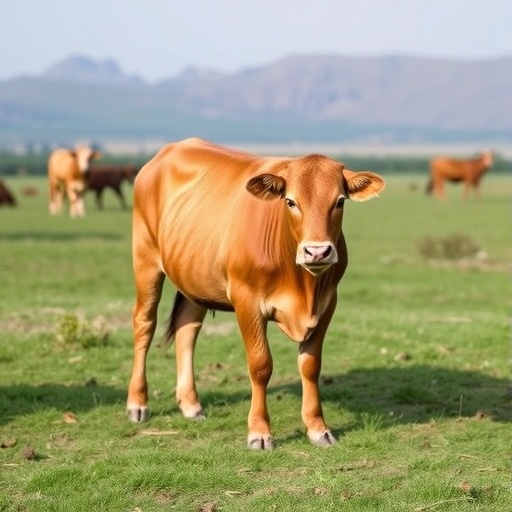
In a groundbreaking study published this year in Acta Parasitologica, researchers have unveiled new insights into the prevalence and diversity of two critical hemoprotozoan parasites, Theileria and Babesia, infecting cattle populations in Southern Xinjiang, China. This research sheds light on the intricate epidemiology of these parasites in a region that often goes underrepresented in global parasitological surveillance, providing a vital foundation for advancing animal health and agricultural productivity in vulnerable pastoral zones.
Theileria and Babesia are apicomplexan protozoa transmitted by ticks, notorious for causing theileriosis and babesiosis respectively, which are economically significant diseases severely impacting livestock worldwide. These diseases provoke anemia, fever, and even death in infected animals, resulting in substantial losses especially within rural communities reliant on cattle as a primary livelihood source. The southern area of Xinjiang, characterized by unique ecological conditions and extensive cattle herding traditions, presents an ideal setting to explore the dynamics of these parasitic infections.
The investigative team, comprising experts from multiple research institutions, embarked on a comprehensive molecular surveillance approach to detect these hemoparasites directly in bovine blood samples drawn across various county-level locations in Southern Xinjiang. The application of cutting-edge molecular diagnostics, including polymerase chain reaction (PCR) assays specific to parasite DNA, allowed detection with unprecedented sensitivity and specificity. This methodological advancement overcame the limitations of traditional microscopy, often compromised by low parasitemia and morphological ambiguity.
Their analyses revealed an unexpected heterogeneity in infection rates, with notable co-infections of Theileria and Babesia species. This coexistence highlights the complex ecology of tick-borne parasitism in this region and raises concerns over the compounded pathogenic burden on affected herds. The discovery of multiple species within each genus further complicates the clinical landscape, suggesting variable virulence profiles and resistance patterns that must be accounted for in treatment protocols.
One of the study’s pivotal findings was the detection of both commonly reported and previously undocumented Theileria and Babesia species, expanding the known spectrum of hemoparasites in Southern Xinjiang. This underscores the dynamic evolutionary interactions within tick and cattle populations, potentially driven by environmental changes and livestock management practices. It also provokes critical questions regarding the vectors responsible for transmission and their adaptability in this distinctive ecosystem.
The researchers also correlated parasite prevalence with ecological parameters such as altitude, temperature, and humidity, uncovering patterns suggestive of environmental influences on the distribution of tick vectors and their parasitic cargo. Such ecological modeling is instrumental in predicting outbreak risks and tailoring region-specific control measures. Targeted tick control strategies, informed by this data, could dramatically reduce infection incidence and safeguard cattle health.
Moreover, the implications of this study extend beyond animal health into the socio-economic realm. Livestock productivity in Southern Xinjiang is integral to local economies, often supporting marginalized populations dependent on pastoralism. Mitigating the impacts of theileriosis and babesiosis through enhanced surveillance and intervention can thus improve economic outcomes and food security, catalyzing broader developmental benefits.
The research team advocates for integrated control approaches that combine veterinary interventions, improved tick management, and community education. Emphasizing early detection and prompt treatment based on molecular diagnostics could revolutionize current management paradigms, minimizing morbidity and mortality associated with these infections. Furthermore, the identification of parasite genetic diversity lays the groundwork for vaccine development tailored to regional parasite populations.
This study also pioneers a regional database capturing molecular epidemiological data that will serve as a reference point for future longitudinal studies. Continuous monitoring of these parasites over time will be critical to assess the impacts of climate change, livestock movement, and intervention efficacy. The authors stress that such surveillance programs require sustained investment and local capacity building.
In summary, this investigation represents a landmark in hemoparasite research within China’s borderland regions, offering comprehensive molecular insights into Theileria and Babesia species affecting cattle. By unveiling the nuanced epidemiology and species diversity, the study enhances our understanding of tick-borne diseases’ complexity and informs smarter, evidence-based strategies to control them effectively. This holds promise for securing the health and productivity of cattle populations upon which millions depend.
The intersection of parasitology, ecology, and socio-economics showcased by this research exemplifies the multidisciplinary approach needed to tackle livestock diseases in challenging environments. Its findings resonate broadly with regions facing similar ecological and husbandry contexts, amplifying its significance and potential for global applications.
As climate variability and land-use changes increasingly reshape ecosystems, such proactive research becomes indispensable to preempt emerging threats from vector-borne livestock diseases. This study not only galvanizes scientific inquiry into these neglected parasites but also offers hope for tangible improvements in animal health management in Xinjiang and beyond.
Moving forward, collaborations between veterinary institutes, government agencies, and international bodies will be essential to translate these findings into actionable public health and agricultural policies. The integration of molecular tools with field epidemiology and community engagement represents the future frontier for controlling tick-borne hemoparasitoses on a broad scale.
Through its meticulous methodology and insightful interpretations, this work stands as a compelling testament to the power of scientific innovation harnessed for sustainable development. The elucidation of Theileria and Babesia burdens in Southern Xinjiang cattle marks a significant step towards safeguarding livestock welfare, securing farmer livelihoods, and fostering resilient agro-ecosystems in an increasingly unpredictable world.
Cite Scienmag News
William Thompson. (November 20, 2025). Detecting Theileria, Babesia in Southern Xinjiang Cattle. Scienmag. https://scienmag.com/detecting-theileria-babesia-in-southern-xinjiang-cattle/
William Thompson. "Detecting Theileria, Babesia in Southern Xinjiang Cattle." Scienmag, 20 November 2025, https://scienmag.com/detecting-theileria-babesia-in-southern-xinjiang-cattle/. Accessed 5 September 2026.
William Thompson. "Detecting Theileria, Babesia in Southern Xinjiang Cattle." Scienmag. November 20, 2025. https://scienmag.com/detecting-theileria-babesia-in-southern-xinjiang-cattle/


