


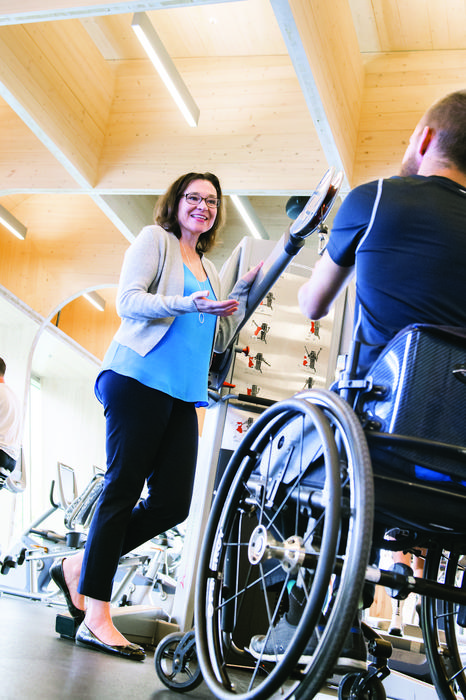
With the Paris 2024 Paralympic Games just around the corner, the extensive training and the sacrifices athletes make to compete at the games take centre stage.

Credit: UBCO
With the Paris 2024 Paralympic Games just around the corner, the extensive training and the sacrifices athletes make to compete at the games take centre stage.
For Paralympians and high-performance athletes with spinal cord injuries (SCI), assessing chronic pain plays a key role in their training and readiness to compete. However, the source of chronic pain is often misattributed to acute trauma or overuse injuries. While the International Olympic Committee acknowledges pain management data among Paralympians and athletes with disabilities is limited, few studies have been launched investigating this dilemma.
Now, new research from UBC Okanagan highlights the need for more comprehensive assessment tools that can help SCI athletes recognize and communicate neuropathic pain.
Neuropathic pain, where a person might feel pain from any part of their body, is nerve pain that occurs after a breakdown, or severe damage to the nervous system. It is often characterized as a burning, tingling and shooting pain. However, it is hard to diagnose for those living with an SCI.
School of Health and Exercise Sciences alumna Dr. Kendra Todd is a Senior Policy Analyst for the Government of Canada’s Office of Public Service Accessibility and coach of British Columbia’s Wheelchair Rugby team.
Dr. Todd says results from her latest study provide the first comprehensive description of neuropathic pain experiences among SCI athletes while also highlighting their challenges in recognizing and communicating this pain.
“Athletes often have greater bodily awareness compared with people who are comparatively inactive and better at identifying painful sensations,” says Dr. Todd. “However, athletes with SCI in this study had difficulty describing their neuropathic pain symptoms. This often means pain can be misunderstood and can result in poor diagnosis and injury management.”
While not everyone diagnosed with neuropathic pain describes it as serious, a clear determination of the cause of the pain is essential for defining treatment approaches. Dr. Todd says participants in her study could express they were in pain, but used terms like indescribable, ambiguous, uncomfortable and dislocated, meaning they could feel pain but couldn’t accurately describe where it was coming from.
“Athletes in our study reported moderately intense neuropathic pain, but found it difficult to communicate their neuropathic pain without being prompted with a list of symptoms,” she adds. “Proper identification and management of neuropathic pain are critical, given its debilitating nature and likelihood of becoming unresponsive to treatment.”
The study, published recently in BMJ Open Sport & Exercise Medicine stresses the need for sports medicine clinicians and trainers to expand the toolbox to include a variety of standardized assessment tools, including symptom-based questionnaires to help identify signs and symptoms of neuropathic pain. They should also become skilled in interpreting patient descriptions and examination findings.
“If we can better understand neuropathic symptoms, we can better guide early pain management decisions for athletes who are forced to limit sports participation or have a slower return to play,” says study supervisor Dr. Kathleen Martin Ginis, UBC Professor and Director of the Centre for Chronic Disease Prevention and Management.
Dr. Martin Ginis stresses the need for sharing best practices with decision-makers to gain a deeper understanding of the language that athletes with SCI use when describing their neuropathic pain.
“Clinicians and trainers must be trained in identifying signs and symptoms of neuropathic pain and be skilled in interpreting patient descriptions and examination findings,” she adds.
Dr. Todd says while everyone expects athletes to train and compete at their full potential, it’s important to keep in mind those with an SCI often deal with hidden and undiagnosed pain.
“The vast majority of athletes with spinal cord injuries are dealing with chronic pain, which is food for thought as we cheer on our Paralympians competing at the Games,” she adds. “And effective neuropathic pain management among athletes with SCI is essential not only for alleviating discomfort but also for facilitating sport participation and promoting their overall wellbeing.”
Journal
BMJ Open Sport & Exercise Medicine
Method of Research
Meta-analysis
Subject of Research
People
Article Title
“I don’t know the correct way to describe it”: neuropathic pain experiences among athletes with spinal cord injury
Article Publication Date
3-Aug-2024
Cite Scienmag News
Courtney Benton. (August 27, 2024). Defining chronic pain for high-performance athletes with disabilities. Scienmag. https://scienmag.com/defining-chronic-pain-for-high-performance-athletes-with-disabilities/
Courtney Benton. "Defining chronic pain for high-performance athletes with disabilities." Scienmag, 27 August 2024, https://scienmag.com/defining-chronic-pain-for-high-performance-athletes-with-disabilities/. Accessed 3 September 2026.
Courtney Benton. "Defining chronic pain for high-performance athletes with disabilities." Scienmag. August 27, 2024. https://scienmag.com/defining-chronic-pain-for-high-performance-athletes-with-disabilities/

