

Sunday, November 22, 2026
Science
No Result
View All Result
  • Login
  • HOME
  • SCIENCE NEWS
  • CONTACT US
  • HOME
  • SCIENCE NEWS
  • CONTACT US
No Result
View All Result
Scienmag
No Result
View All Result
Home Science News Athmospheric

Deep Recurrent Sequence Learning Forecasts Extreme Peatland Wildfire Smoke Episodes

November 9, 2026
in Athmospheric, Medicine
Russell Cooper
By Russell Cooper Scienmag Editorial Profile - Environmental Pollution
Reading Time: 2 mins read
0
Deep Recurrent Sequence Learning Forecasts Extreme Peatland Wildfire Smoke Episodes

Deep Recurrent Sequence Learning Forecasts Extreme Peatland Wildfire Smoke Episodes

65
SHARES
587
VIEWS
Share on FacebookShare on Twitter
ADVERTISEMENT

An anomaly-aware deep learning framework has demonstrated superior accuracy in short-term fine particulate matter (PM2.5) forecasting during catastrophic wildfire and peatland smoke events in West Kalimantan, Indonesia. By coupling ground-based multi-pollutant chemical signatures with deep recurrent sequence learning, the investigation establishes a highly reliable and computationally efficient decision support system designed to provide real-time hazard warnings and strengthen regional public health protection.

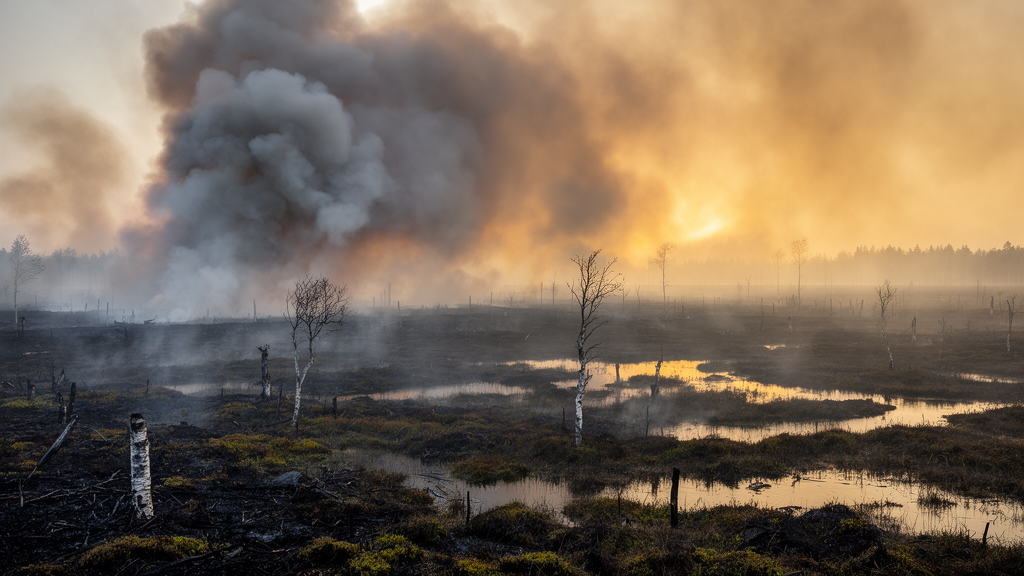
Wildfire-induced biomass burning and smoldering tropical peatland smoke represent catastrophic public health hazards that produce acute respiratory and cardiovascular morbidity among exposed populations. However, standard machine learning frameworks frequently suffer from severe under-prediction plateaus when confronted with extreme PM2.5 episodes.

To establish a more robust atmospheric forecasting architecture, the investigators focused their study on West Kalimantan, Indonesia, recognized as a critical global epicenter for smoldering tropical peat combustion. The research team compiled and evaluated an extensive multi-year atmospheric telemetry dataset consisting of 80,400 hourly observations gathered between January 2021 and August 2025.

The research team implemented an Isolation Forest preprocessing pipeline to systematically filter structural sensor noise across the multi-station monitoring network.

A critical phase of the investigation centered on multi-pollutant feature assessment to determine the primary chemical drivers of smoldering peatland haze. Utilizing tree-based ensemble methods, the researchers assessed the relative predictive importance of co-occurring air pollutants tracked across the eight ground monitoring stations. This empirical feature assessment established Carbon Monoxide (CO) as the primary chemical tracer for smoldering tropical peat smoke, exhibiting an approximate 69 percent predictive contribution to the model.

In comparative performance benchmarking, the proposed Deep Long Short-Term Memory (LSTM) architecture demonstrated substantial advantages over conventional predictive methods. Standard statistical approaches, specifically Linear Regression and Random Forest models, failed to track elevated smoke accumulations due to rigid prediction plateaus that capped estimated particulate concentrations during intense haze events. In contrast, the deep recurrent LSTM network effectively captured non-linear accumulation dynamics across severe haze levels where PM2.5 concentrations exceeded an ISPU index value of 150, achieving superior overall accuracy with an R-squared of 0.89, a mean absolute error (MAE) of 8.12, and a root mean square error (RMSE) of 11.93.

By accurately predicting extreme PM2.5 spikes without suffering from the under-prediction plateaus typical of linear and ensemble baselines, the anomaly-aware deep learning framework delivers a dependable decision support tool for regional authorities.

Subject of Research: Deep learning forecasting of wildfire-induced PM2.5 air pollution during extreme peatland smoke episodes

Article Title: Wildfire-Induced air pollution forecasting: Multi-Pollutant feature assessment and deep recurrent sequence learning for extreme smoke episodes

Article References: Pratama, A., Primanda, D., Prayitno, W., & Gudiato, C. (2026). Wildfire-Induced air pollution forecasting: Multi-Pollutant feature assessment and deep recurrent sequence learning for extreme smoke episodes. Air Quality, Atmosphere & Health, 19(11), Article 264. https://doi.org/10.1007/s11869-026-02155-6

Image Credits: AI Generated

DOI: 10.1007/s11869-026-02155-6

Keywords: Air Quality, PM2.5, Wildfire Smoke, Deep Learning, LSTM, Peatland Combustion, Indonesia, Atmospheric Forecasting, Wildfire-Induced, pollution, forecasting, Multi-Pollutant

Cite Scienmag News

Russell Cooper. (November 9, 2026). Deep Recurrent Sequence Learning Forecasts Extreme Peatland Wildfire Smoke Episodes. Scienmag. https://scienmag.com/deep-recurrent-sequence-learning-forecasts-extreme-peatland-wildfire-smoke-episodes/

Russell Cooper. "Deep Recurrent Sequence Learning Forecasts Extreme Peatland Wildfire Smoke Episodes." Scienmag, 9 November 2026, https://scienmag.com/deep-recurrent-sequence-learning-forecasts-extreme-peatland-wildfire-smoke-episodes/. Accessed 22 November 2026.

Russell Cooper. "Deep Recurrent Sequence Learning Forecasts Extreme Peatland Wildfire Smoke Episodes." Scienmag. November 9, 2026. https://scienmag.com/deep-recurrent-sequence-learning-forecasts-extreme-peatland-wildfire-smoke-episodes/

Tags: air qualityAtmospheric Forecastingdeep learningforecastingIndonesiaLSTMmulti-pollutantPeatland CombustionPM2.5pollutionwildfire smokeWildfire-Induced
Share26Tweet16
Previous Post

Environmental Aspergillus Strains Screened in Côte d’Ivoire for Citric Acid Synthesis

Next Post

GeneSPOT Maps Spatial Relationships and Dynamics Among Genes Across Tissues

Related Posts

Tislelizumab Combined With Chemotherapy Extends Long-Term Survival in Advanced Esophageal Cancer
Medicine

Tislelizumab Combined With Chemotherapy Extends Long-Term Survival in Advanced Esophageal Cancer

November 22, 2026
Global Survey Reveals Marked Variation in Anticoagulation Practices During Adult ECPR
Medicine

Global Survey Reveals Marked Variation in Anticoagulation Practices During Adult ECPR

November 22, 2026
Mutant p53 Reprograms AP-1 Complexes to Drive Cancer Cell Migration
Biology

Mutant p53 Reprograms AP-1 Complexes to Drive Cancer Cell Migration

November 22, 2026
Automated Telephone Cognitive Tests Track Regional Brain Atrophy Across Alzheimer Continuum
Medicine

Automated Telephone Cognitive Tests Track Regional Brain Atrophy Across Alzheimer Continuum

November 22, 2026
Circulating Vesicle Proteins Interfere With CLDN18.2 Cell and Antibody Therapies
Medicine

Circulating Vesicle Proteins Interfere With CLDN18.2 Cell and Antibody Therapies

November 22, 2026
Screening Human Fat Cells Uncovers PLCXD1 Enzyme as Insulin-Regulated Lipid Storage Driver
Medicine

Screening Human Fat Cells Uncovers PLCXD1 Enzyme as Insulin-Regulated Lipid Storage Driver

November 22, 2026
Next Post
GeneSPOT Maps Spatial Relationships and Dynamics Among Genes Across Tissues

GeneSPOT Maps Spatial Relationships and Dynamics Among Genes Across Tissues

  • Mothers who receive childcare support from maternal grandparents show more optimized

    Mothers who receive childcare support from maternal grandparents show more parental warmth, finds NTU Singapore study

    27656 shares
    Share 11059 Tweet 6912
  • University of Seville Breaks 120-Year-Old Mystery, Revises a Key Einstein Concept

    1061 shares
    Share 424 Tweet 265
  • Bee body mass, pathogens and local climate influence heat tolerance

    682 shares
    Share 273 Tweet 171
  • Researchers record first-ever images and data of a shark experiencing a boat strike

    546 shares
    Share 218 Tweet 137
  • Groundbreaking Clinical Trial Reveals Lubiprostone Enhances Kidney Function

    531 shares
    Share 212 Tweet 133
Science

Embark on a thrilling journey of discovery with Scienmag.com—your ultimate source for cutting-edge breakthroughs. Immerse yourself in a world where curiosity knows no limits and tomorrow’s possibilities become today’s reality!

RECENT NEWS

  • Tislelizumab Combined With Chemotherapy Extends Long-Term Survival in Advanced Esophageal Cancer
  • Global Survey Reveals Marked Variation in Anticoagulation Practices During Adult ECPR
  • Consumer Actions Drive Circular Economy Shift in Indian Textile Sector Review
  • Combined Provincial Governance Reshapes Cross Border Particulate Pollution Across Vietnam

Categories

  • Agriculture
  • Anthropology
  • Archaeology
  • Athmospheric
  • Biology
  • Biotechnology
  • Blog
  • Bussines
  • Cancer
  • Chemistry
  • Climate
  • Earth Science
  • Editorial Policy
  • Marine
  • Mathematics
  • Medicine
  • Pediatry
  • Policy
  • Psychology & Psychiatry
  • Science Education
  • Science News
  • Social Science
  • Space
  • Technology and Engineering

Subscribe to Blog via Email

Enter your email address to subscribe to this blog and receive notifications of new posts by email.

Join 5,151 other subscribers

© 2026 Scienmag - Science Magazine

Welcome Back!

Login to your account below

Forgotten Password?

Retrieve your password

Please enter your username or email address to reset your password.

Log In
No Result
View All Result
  • HOME
  • SCIENCE NEWS
  • CONTACT US

© 2026 Scienmag - Science Magazine

Discover more from Science

Subscribe now to keep reading and get access to the full archive.

Continue reading

