


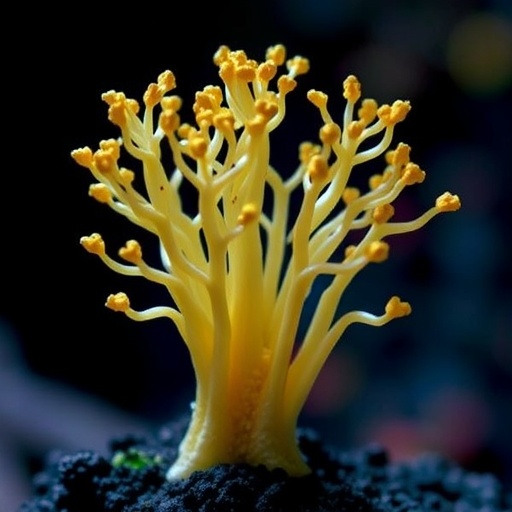
In groundbreaking research, scientists have turned to advanced genomic technologies to elucidate the genetic architecture of the enigmatic fungus known as Ophiocordyceps sinensis, a species that has long been revered in traditional medicine and has piqued the interest of the scientific community. By utilizing whole genome sequencing and resequencing techniques, the researchers aim to unlock the genetic mysteries that underpin this organism’s unique traits and capabilities. This study not only provides insights into the genetic diversity of Ophiocordyceps sinensis but also sets the stage for future research that could revolutionize our understanding of this remarkable species.
Ophiocordyceps sinensis, often hailed as a “caterpillar fungus,” has been a subject of fascination due to its parasitic life cycle and its role in traditional Chinese medicine. The fungus specifically infects larvae of ghost moths and grows inside their bodies, eventually emerging from the dead host in a fruiting body that has been used for centuries as a tonic to enhance vitality, stamina, and overall health. The global interest in Ophiocordyceps sinensis has surged, especially as it has made a name for itself in the realm of natural supplements, particularly in athletic circles.
The researchers at the forefront of this study embarked on a journey that involved sequencing the entire genome of multiple wild strains of Ophiocordyceps sinensis. They meticulously gathered samples from different geographical locations, encompassing diverse environmental conditions. The resulting data offered an unparalleled view of the genetic make-up of this intriguing fungus, revealing the genes responsible for its medicinal properties, as well as its abilities to adapt to various ecological niches.
Notably, the use of advanced sequencing technologies allowed the researchers to generate vast amounts of genomic data, which they then analyzed using sophisticated bioinformatics tools. This enabled them to identify specific genetic markers associated with traits such as growth rate, environmental adaptability, and the production of bioactive compounds. As a result, researchers have unearthed a treasure trove of information that could pave the way for more efficient methods of cultivating Ophiocordyceps sinensis, potentially leading to sustainable production practices that could alleviate pressure on wild populations.
The study’s implications are extensive, particularly for the field of mycology and pharmacology. Understanding the genetic structure of Ophiocordyceps sinensis could lead to the development of new therapeutic agents derived from the fungus. Researchers have isolated several bioactive compounds with potential anti-inflammatory, anti-cancer, and immunomodulatory effects, all of which could benefit from further study. The ability to manipulate the genetic pathways responsible for these compounds could enhance yield and potency, providing consumers with better-quality products.
Moreover, this research holds significance beyond the realm of traditional medicine and natural supplements. The genetic insights gleaned from Ophiocordyceps sinensis can provide a broader understanding of fungal biology, particularly how fungi interact with their environments and host organisms. This knowledge is critical in an era where climate change poses threats to biodiversity and ecosystem balance. By studying the genetic foundation of such an adaptable organism, scientists can begin to comprehend how various fungi respond to environmental stressors, which could inform conservation strategies.
In addition, the methodology employed in this research can serve as a template for future studies on other fungi and pathogen species. The combination of genomic sequencing and bioinformatics is becoming increasingly important in the field of microbiology, allowing scientists to gain insights that traditional methods simply cannot provide. As the techniques mature and become more accessible, we can expect a surge in our understanding of complex fungal systems and their roles in both health and disease.
The findings of this research were published in the prestigious journal BMC Genomics, an academic platform renowned for disseminating cutting-edge genomic studies. The collaboration between geneticists, mycologists, and pharmacologists represents a new frontier in interdisciplinary research, illustrating how different scientific domains can converge to confront the many challenges posed to health and ecology.
The global market for medicinal mushrooms and their derived products continues to expand, and the insights from this research could lead to more informed cultivation practices. As demand grows, ensuring that sustainable methods are employed will be crucial in preserving not just Ophiocordyceps sinensis but also the ecosystems in which it thrives. Thoughtful application of the research can contribute to maintaining biodiversity while concurrently satisfying market needs.
We are only beginning to scratch the surface of what this research could uncover. As scientists delve deeper into the genomic landscape of Ophiocordyceps sinensis, it is anticipated that more enlightening revelations will surface. This research offers a window into the potential for scientific advancement that harnesses both ancient wisdom and modern technology. Utilizing genomic data to decipher the complex relationship between fungi and their medicinal properties may very well be the key to unlocking new frontiers in healthcare.
In conclusion, the exploration of Ophiocordyceps sinensis through whole genome sequencing showcases the vast potential that lies within the realm of fungi. As research progresses, we can expect continued collaborations that embrace diverse scientific methodologies. There is much more to learn about how these organisms function within their ecosystems, their genetic adaptations, and how they can be utilized for the benefit of humanity. The efforts made in this study represent not only a significant contribution to the field of mycology but also a hopeful step towards a future where natural products can be utilized more effectively and ethically.
The world of fungi remains largely uncharted, with Ophiocordyceps sinensis leading the investigative charge. As we stand on the cusp of potentially transformative discoveries, it is crucial to maintain a perspective of sustainability and ethical responsibility. Engaging in practices that ensure the conservation of natural resources while advancing scientific knowledge will be vital for future generations.
Ultimately, the ongoing interest in Ophiocordyceps sinensis serves as a reminder of the complexities of our natural world. It symbolizes the delicate balance between traditional practices and modern scientific exploration. Through continued research efforts, we may ultimately discover how to harness the power of nature in a way that respects its inherent value while leveraging its capabilities for human advancement.
Rao, Z., Han, R., Sun, T. et al. Whole genome sequencing and resequencing provide insight into the genetic structure of wild Ophiocordyceps sinensis.
BMC Genomics 26, 976 (2025). https://doi.org/10.1186/s12864-025-12177-6
Cite Scienmag News
Juliet Wilcox. (October 30, 2025). Decoding Wild Ophiocordyceps sinensis Genome Reveals Insights. Scienmag. https://scienmag.com/decoding-wild-ophiocordyceps-sinensis-genome-reveals-insights/
Juliet Wilcox. "Decoding Wild Ophiocordyceps sinensis Genome Reveals Insights." Scienmag, 30 October 2025, https://scienmag.com/decoding-wild-ophiocordyceps-sinensis-genome-reveals-insights/. Accessed 3 September 2026.
Juliet Wilcox. "Decoding Wild Ophiocordyceps sinensis Genome Reveals Insights." Scienmag. October 30, 2025. https://scienmag.com/decoding-wild-ophiocordyceps-sinensis-genome-reveals-insights/


