

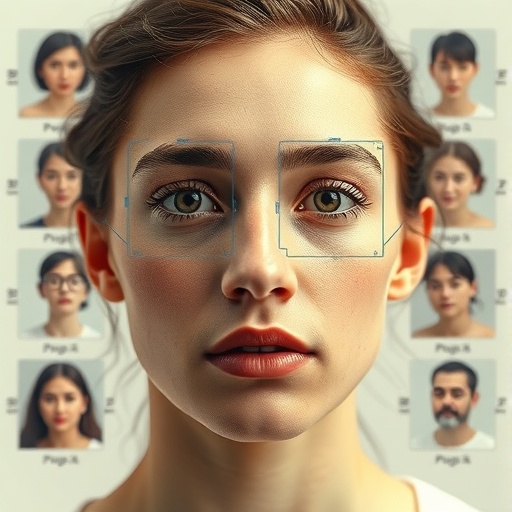
Recent research has unveiled fascinating insights into the mechanisms of person perception, particularly regarding how we attend to faces and bodies. The study conducted by Lawrance et al. sheds light on the intricate interplay between our cognitive processes and sensory perceptions when we evaluate others in social contexts. This investigation integrates elements from cognitive psychology and neuroscience to elucidate how visual attention is preferentially allocated between facial and bodily cues during social interactions.
Person perception—the ability to recognize and interpret the behavior, emotions, and intentions of others—is a fundamental human skill that significantly influences our social dynamics. Traditionally, much focus has been placed on facial recognition, emphasizing how we interpret various emotions and characteristics from facial expressions. However, this research underscores the importance of body language, suggesting that bodily cues play a vital role in person perception and our overall interpretation of social situations.
At the core of this study lies the question: how do we prioritize faces over bodies, or vice versa, when processing the information we receive from others? Previous studies suggest that humans have a predisposition for attending to faces, which serve as critical indicators of identity and emotional state. Yet, Lawrance et al. argue that bodily cues are not merely supplementary but are integral to a holistic understanding of person perception.
The authors employed a series of visual stimuli, including images of individuals in varying poses and expressions, to analyze participants’ attentional focus. Eye-tracking technology was utilized to monitor where participants looked during the evaluation of different social scenarios. This methodological approach allowed for a detailed analysis of which aspects of the visual cues captured attention more effectively—the face or the body.
One of the striking findings of the study is that context plays a pivotal role in determining whether participants directed their attention to the face or the body. In scenarios where individuals appeared to be communicating emotions (such as anger or happiness), participants were more likely to focus on faces. Conversely, in contexts that required the interpretation of movement or social interaction (like dance or walking), attention shifted toward the body. This nuanced understanding challenges the previous notion that facial recognition predominates in all social contexts, pointing to a more dynamic interplay between facial and bodily cues.
Furthermore, the study reveals that individual differences, including familiarity with the subjects and prior experiences, could significantly affect how attention is allocated. For instance, individuals who are highly attuned to non-verbal cues might demonstrate a greater propensity to attend to body language, suggesting that educational and cultural factors also shape our perceptual preferences. This indicates a complex interaction between innate cognitive mechanisms and learned behaviors in how we perceive others.
As technology advances, researchers are increasingly able to explore these phenomena within more varied and rich social contexts. By incorporating virtual reality and augmented reality environments, future studies could further illuminate the ways in which bodies and faces influence our perceptions in interactive settings. Lawrance et al.’s work paves the way for a deeper exploration of these technologies, which can mimic real-life social situations more authentically than traditional methodologies do.
The implications of this research extend beyond academic interest; they have practical applications in fields such as psychology, marketing, and even artificial intelligence. Understanding how humans prioritize facial versus bodily information can inform design strategies in AI systems aimed at social interactions, ultimately leading to more sophisticated and relatable virtual agents. Similarly, in therapeutic settings, insights from this research can guide strategies to help individuals with social cognition difficulties, such as those on the autism spectrum, improve their perceptual skills.
Moreover, this research fosters discussions about the broader implications of visual attention patterns in the digital age. With an increasing amount of communication occurring through screens and digital avatars, the dynamics of attention between faces and bodies can have new implications for how we engage in social interactions online. Understanding these subtleties can help in designing better communication platforms that account for human perceptual biases, enhancing virtual interactions in an increasingly digital world.
In essence, the ongoing research by Lawrance and colleagues urges us to reconsider the importance we place on different cues in person perception. As our understanding deepens, it opens up fresh avenues for exploring human social behavior. The findings remind us that while faces may attract immediate attention, the bodies that accompany them are equally rich in information that can shape our understanding of social dynamics.
As scientists continue to decipher the intricate tapestry of human perception, it becomes evident that both facial and bodily information are indispensable threads woven into the social fabric. Ultimately, this exploration enhances our comprehension of where attention is directed in real-time interactions, fostering a more holistic appreciation of the way we perceive and understand each other in a complex social landscape.
Such advancements not only contribute to theoretical frameworks but also bridge the gap between laboratory findings and real-world applications. The integration of cognitive science with practical implications establishes a robust foundation for future research. As more studies build on these findings, we can anticipate even richer insights into the cognitive processes that govern interpersonal dynamics.
It is through comprehensive investigations like these that we can strive towards a deeper understanding of the multifaceted nature of human interaction. By appreciating both faces and bodies, we move closer toward recognizing the full spectrum of nonverbal communication, paving the way for more empathetic and informed social engagement in our communities.
Ultimately, Lawrance et al.’s research stands as a poignant reminder of the complexity of human attention. It challenges us to reconsider the assumptions we harbor about social perception, emphasizing that our understanding must accommodate both our visual engagements with faces and the often-overlooked, yet equally significant, cues provided by bodies.
In conclusion, the findings from this research serve both to highlight the need for a more nuanced appreciation of how we perceive others and to inspire future explorations in this critical field. The path ahead is a promising one, leading us toward a more complete understanding of the interface between visual attention, person perception, and the rich tapestry of human social interactions.
Subject of Research: Visual attention in person perception, focusing on the allocation of attention between faces and bodies.
Article Title: Attending to faces and bodies in person perception.
Article References:
Lawrance, A.K., Argument, N.J., Forner, K. et al. Attending to faces and bodies in person perception.
Atten Percept Psychophys 88, 18 (2026). https://doi.org/10.3758/s13414-025-03171-x
Image Credits: AI Generated
DOI: https://doi.org/10.3758/s13414-025-03171-x
Keywords: Person perception, visual attention, facial recognition, body language, social dynamics, cognitive psychology, neuroscience, individual differences.


