


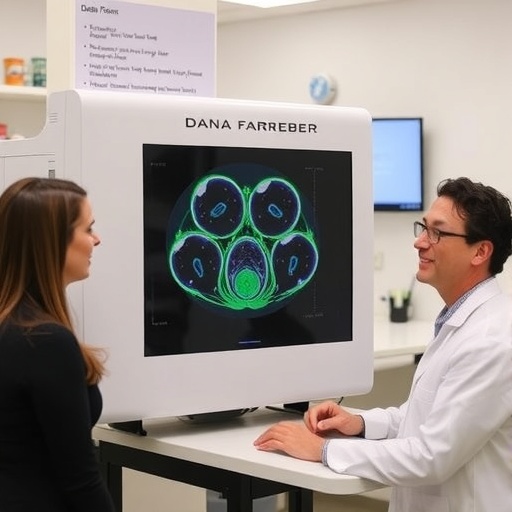
In a groundbreaking advancement poised to revolutionize acute leukemia diagnosis and treatment, researchers at the Dana-Farber Cancer Institute have unveiled MARLIN (Methylation- and AI-guided Rapid Leukemia Subtype Inference), an innovative diagnostic tool leveraging DNA methylation patterns in conjunction with state-of-the-art machine learning algorithms. This technology represents a quantum leap beyond traditional diagnostic methods, promising both unparalleled speed and precision in leukemia subtype classification, a critical determinant for effective patient management and personalized treatment regimens.
Acute leukemia, an aggressive and often life-threatening blood malignancy, demands rapid and accurate diagnosis to optimize therapeutic interventions. Conventional diagnostic workflows rely heavily on a combination of molecular profiling and cytogenetics, processes that can span several days to weeks. MARLIN, by contrast, capitalizes on epigenetic signatures derived from DNA methylation—a biochemical modification affecting gene expression without altering the underlying genetic code. This epigenetic approach allows MARLIN to deliver actionable insights within an astonishingly brief timeframe of approximately two hours post-biopsy, dramatically accelerating clinical decision-making.
The genesis of MARLIN involved assembling a comprehensive reference methylome database drawn from over 2,500 acute leukemia samples, representing an extensive array of subtypes across pediatric and adult populations. This expansive repository unveiled 38 discrete methylation classes, some aligning with known molecular leukemia categories, while others spotlight novel subclassifications invisible to conventional diagnostics. Such epigenetic stratification offers a profoundly refined lens through which to discern leukemia heterogeneity, underscoring the intricate interplay between genetics and epigenetics in oncogenesis.
Central to MARLIN’s predictive acumen is a sophisticated neural network meticulously trained on this reference dataset. This computational framework was engineered to interrogate bone marrow and peripheral blood samples, utilizing minimal input data to extrapolate methylation class assignments swiftly. The implementation of long-read nanopore sequencing technology was pivotal, enabling direct, real-time profiling of DNA methylation patterns from clinical specimens. This sequencing modality eschews the need for extensive sample preparation and amplification, thereby streamlining the workflow and preserving epigenetic fidelity.
Validation studies encompassing both retrospective and prospective cohorts demonstrate MARLIN’s remarkable diagnostic accuracy and reliability. Notably, the tool was capable of generating precise leukemia subtyping results in under two hours after biopsy receipt, a temporal performance that eclipses current standards, which often delay treatment initiation. This accelerated turnaround time holds significant promise for reducing patient morbidity and improving survival outcomes by facilitating earlier tailored therapy.
Beyond speed, MARLIN’s innovative epigenetic perspective addresses critical diagnostic blind spots that traditional methods frequently overlook. For instance, MARLIN effectively detects cryptic genetic rearrangements, such as alterations involving the DUX4 gene, a biomarker correlated with favorable prognosis but notoriously challenging to identify through conventional cytogenetics. Additionally, the identification of novel predictive epigenetic signatures, including HOX gene activation subgroups, opens avenues for the development of bespoke therapeutic strategies, aligning with the burgeoning paradigm of precision oncology.
Researchers emphasize that MARLIN is not intended to supplant standard-of-care diagnostics but to augment them by integrating epigenetic insights, thereby furnishing clinicians and pathologists with a more holistic and timely picture of disease biology. Such synergy is expected to refine risk stratification, guide treatment selections with greater confidence, and ultimately enhance patient outcomes.
The translational potential of MARLIN extends beyond individual patient management. By offering a scalable platform to generate standardized methylation-based leukemia subclassifications rapidly, the tool is poised to become a valuable resource for the broader cancer research community. This capability will facilitate unprecedented investigations into the epigenetic underpinnings of leukemia pathogenesis, resistance mechanisms, and therapeutic vulnerabilities, potentially catalyzing the discovery of novel drug targets and biomarkers.
Future efforts will focus on integrating MARLIN into routine clinical workflows, incorporating user-friendly interfaces and compatibility with existing laboratory infrastructure. The research team envisions that widespread adoption of MARLIN will democratize access to cutting-edge epigenetic diagnostics, bridging gaps in healthcare delivery and enabling equitable patient care regardless of geographic or institutional disparities.
Moreover, the confluence of artificial intelligence and next-generation sequencing encapsulated in MARLIN exemplifies the transformative potential of multidisciplinary innovation in oncology. Machine learning algorithms, trained on meticulously curated epigenomic data, empower the extraction of nuanced biological insights previously inaccessible through manual interpretation, heralding a new era of data-driven precision medicine.
In summary, MARLIN stands as a testament to the power of integrating epigenetics, advanced sequencing technologies, and artificial intelligence to address one of hematology’s most pressing clinical challenges. By providing rapid, accurate, and comprehensive leukemia classification, this technology promises to reshape diagnostic paradigms and accelerate the journey toward personalized cancer therapy, offering renewed hope to patients afflicted by this devastating disease.
News Publication Date: September 22, 2025
Web References:
- Dana-Farber Cancer Institute: https://www.dana-farber.org/
- Nature Genetics article: https://www.nature.com/articles/s41588-025-02321-z
Cite Scienmag News
Nathaniel Bowman. (September 22, 2025). Dana-Farber Unveils Innovative Diagnostic Tool Transforming Acute Leukemia Detection. Scienmag. https://scienmag.com/dana-farber-unveils-innovative-diagnostic-tool-transforming-acute-leukemia-detection/
Nathaniel Bowman. "Dana-Farber Unveils Innovative Diagnostic Tool Transforming Acute Leukemia Detection." Scienmag, 22 September 2025, https://scienmag.com/dana-farber-unveils-innovative-diagnostic-tool-transforming-acute-leukemia-detection/. Accessed 4 September 2026.
Nathaniel Bowman. "Dana-Farber Unveils Innovative Diagnostic Tool Transforming Acute Leukemia Detection." Scienmag. September 22, 2025. https://scienmag.com/dana-farber-unveils-innovative-diagnostic-tool-transforming-acute-leukemia-detection/


