


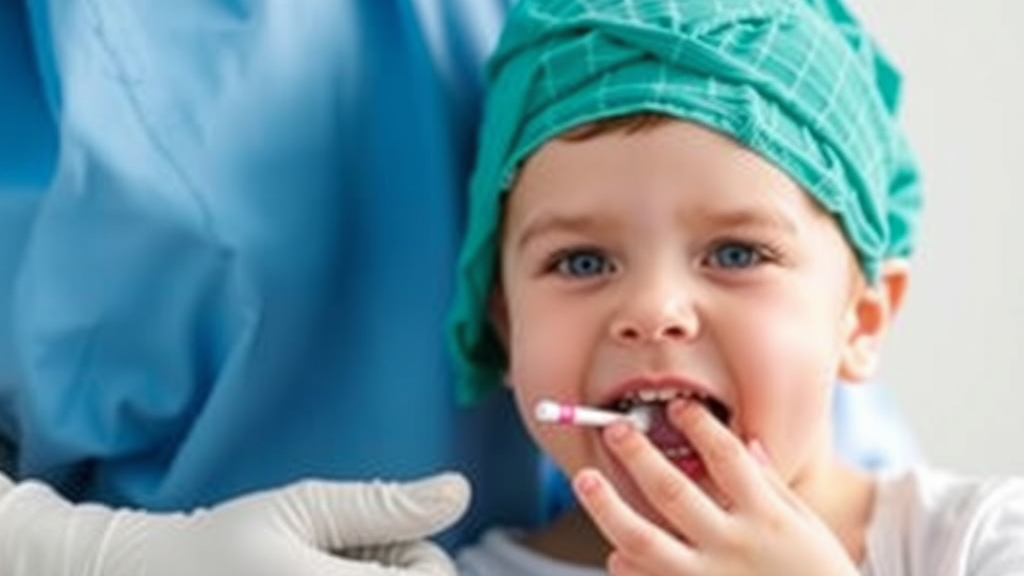
Something as simple as brushing and rinsing a child’s mouth may help determine how well they recover from open-heart surgery. A new retrospective study published in BMC Pediatrics suggests that daily oral health care in the intensive care unit is associated with a significantly lower risk of sepsis and deteriorating cardiac function in children who have undergone complex cardiac surgery. The findings, drawn from more than a decade of patient records at a major Chinese hospital, add weight to a growing body of evidence that the mouth is not an isolated compartment of the body but a gateway whose microbial population can shape systemic outcomes in the most vulnerable patients.
The research, conducted by Maoting Chen and Qianling Wei of the Department of Critical Care Medicine at West China Hospital of Sichuan University and the West China School of Nursing, examined the records of 124 pediatric patients who were hospitalized in intensive care wards after complex cardiac surgery between June 30, 2008 and December 31, 2022. The researchers asked a deceptively straightforward question: did children who received daily oral care during their perioperative period experience fewer adverse clinical events than those who did not? The two outcomes of primary interest were sepsis, the life-threatening systemic response to infection, and deteriorated heart function, both of which are among the most feared complications following pediatric cardiac procedures.
The answer, according to the study’s statistical analysis, was yes. Among the 124 children studied, sepsis occurred in 16 patients, an incidence of 12.9 percent, while deteriorated heart function was observed in 23 patients, or 18.5 percent. When the researchers applied multivariate logistic regression, a statistical technique that adjusts for the influence of multiple variables simultaneously, they found that children who had not received oral health care faced markedly higher risks. In the study’s fully adjusted model, the risk of sepsis was significantly elevated in patients without oral care, with an adjusted odds ratio of 2.32 and a 95 percent confidence interval of 1.36 to 4.32, corresponding to a P value of 0.026. The risk of deteriorated heart function was also higher, with an adjusted odds ratio of 1.83, a confidence interval of 1.09 to 3.14, and a P value of 0.039.
Those numbers translate into a compelling clinical message. An odds ratio of 2.32 means that, after accounting for other factors, children who did not receive daily oral care had more than twice the odds of developing sepsis compared with those who did. For deteriorating cardiac function, the odds were nearly doubled. In both cases, the confidence intervals exclude the value of 1.0, which is the statistical threshold indicating no effect, and the P values fall below the conventional 0.05 significance level. The researchers also performed sensitivity analyses, which are repeated analyses designed to test whether a finding holds up under different assumptions or model specifications, and these continued to indicate that daily oral care contributed to a reduced risk of both sepsis and declining cardiac function in pediatric patients after cardiac surgery.
Perhaps the most intriguing detail to emerge from the study concerns the choice of rinsing agent. The negative association between oral health and adverse outcomes, meaning the protective relationship, was stronger among patients who used a 2 percent oral chlorhexidine rinse than among those who used 0.9 percent physiological saline. Chlorhexidine is an antiseptic agent widely used in hospitals to suppress the microbial load in the mouth, and the finding suggests that the composition of the oral rinse may matter, not merely the act of rinsing itself. Saline, while helpful for mechanical clearance of debris and microorganisms, lacks the sustained antimicrobial activity that chlorhexidine provides. This nuance could inform future protocols for oral hygiene in pediatric intensive care settings.
The biological rationale behind these findings is grounded in well-established oral-systemic pathways. The mouth harbors a dense and diverse microbial community, and in critically ill patients this community can shift toward pathogenic species. Intubation, sedation, and mechanical ventilation, all routine in complex cardiac surgery, bypass the natural defenses of the upper airway and can allow oral bacteria to colonize the lower respiratory tract. From there, microorganisms or their products can enter the bloodstream, triggering the systemic inflammatory cascade that defines sepsis. Inflammation itself can further stress a heart that has just been subjected to the trauma of cardiopulmonary bypass and surgical repair, creating a vicious cycle in which infection and cardiac dysfunction reinforce one another. By reducing the microbial burden in the mouth, daily oral care may interrupt this cycle at its earliest and most accessible stage.
Children undergoing complex cardiac surgery represent a particularly high-risk population for these mechanisms. Their immune systems are still developing, their physiological reserves are limited, and the surgical procedures they undergo are among the most invasive in pediatric medicine. Postoperative sepsis in this group is associated with prolonged intensive care stays, additional organ support, and increased mortality, while deteriorating cardiac function can necessitate escalated mechanical support or reintervention. Any intervention that is inexpensive, noninvasive, and deliverable at the bedside therefore carries substantial potential value for this population, and oral care fits that description precisely.
The study’s design warrants careful interpretation. As a retrospective analysis, it examined existing records rather than prospectively assigning patients to receive or forgo oral care, which means that unmeasured differences between the two groups could have influenced the results. The authors note that the research was approved by the Ethics Committee of West China Hospital of Sichuan University in accordance with the Helsinki Declaration and national regulations, and that informed consent from patients’ parents or legal guardians was waived because most individuals had been discharged and could not be contacted. The use of multivariate regression and sensitivity analysis strengthens the findings, but the association reported here is exactly that, an association, and randomized controlled trials would be needed to establish a definitive causal relationship between daily oral care and reduced adverse events.
Even with those caveats, the study contributes to a broader shift in how critical care medicine views the mouth. Oral health has been increasingly linked to a range of clinical complications, and maintaining good oral care has become recognized as one of the important interventions to reduce the risk of adverse clinical events. Yet, as the authors point out, the association of oral health care with sepsis and cardiac function has remained controversial, with prior evidence inconsistent. By focusing specifically on children after complex cardiac surgery, a population in which both outcomes are frequent and consequential, and by demonstrating statistically significant associations for both, the new research provides further evidence for the importance of oral health in reducing adverse clinical events, particularly in critically ill pediatric patients.
The practical implications are likely to resonate with intensive care teams worldwide. Daily oral care is among the least expensive interventions available in an ICU, requiring little more than trained nursing time, toothbrushes or swabs, and a rinsing solution. If the associations observed here are confirmed in prospective studies, standardizing perioperative oral hygiene protocols for children undergoing cardiac surgery could become a low-cost, high-value component of postoperative care, with the choice of chlorhexidine over saline potentially amplifying the benefit. For the families of the hundreds of thousands of children who undergo cardiac surgery each year, the message from this research is quietly remarkable: one of the keys to protecting a repaired heart may lie not in the operating theater but in the daily, unglamorous care of a child’s mouth.
Subject of Research: The association between perioperative oral care and postoperative sepsis and cardiac function in children after complex cardiac surgery
Article Title: The association between perioperative oral care and adverse clinical events after complex cardiac surgery in children
Article References: Chen, M., & Wei, Q. (2026). The association between perioperative oral care and adverse clinical events after complex cardiac surgery in children. BMC Pediatrics. https://doi.org/10.1186/s12887-026-07406-0
Image Credits: AI Generated
DOI: 10.1186/s12887-026-07406-0
Keywords: oral care, sepsis, cardiac function, pediatric cardiac surgery, intensive care unit, chlorhexidine, oral hygiene, children, critical care, infection prevention, retrospective study, BMC Pediatrics
Cite Scienmag News
Ophelia Keating. (September 24, 2026). Daily Oral Care Linked to Lower Sepsis Risk in Children After Heart Surgery. Scienmag. https://scienmag.com/daily-oral-care-linked-to-lower-sepsis-risk-in-children-after-heart-surgery/
Ophelia Keating. "Daily Oral Care Linked to Lower Sepsis Risk in Children After Heart Surgery." Scienmag, 24 September 2026, https://scienmag.com/daily-oral-care-linked-to-lower-sepsis-risk-in-children-after-heart-surgery/. Accessed 5 October 2026.
Ophelia Keating. "Daily Oral Care Linked to Lower Sepsis Risk in Children After Heart Surgery." Scienmag. September 24, 2026. https://scienmag.com/daily-oral-care-linked-to-lower-sepsis-risk-in-children-after-heart-surgery/


