


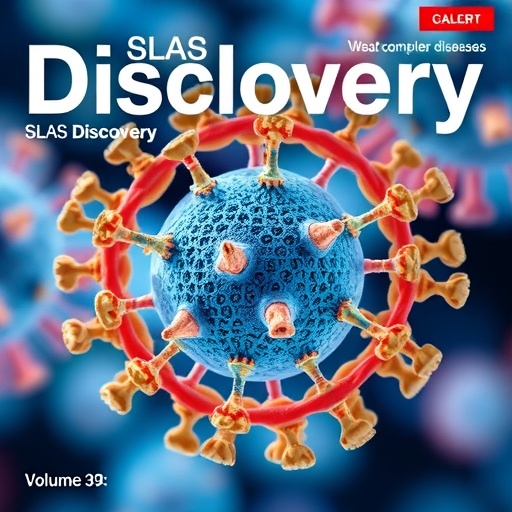
The latest volume of SLAS Discovery ushers in a transformative wave in drug discovery methodologies through its spotlight on pioneering research that leverages advanced imaging techniques, innovative fragment screening, and expansive datasets to propel therapeutic development. This new edition accentuates the cutting-edge intersection of artificial intelligence, high-throughput technologies, and mass spectrometry assays, revealing promising avenues for both addressing historical challenges and expediting the identification of drug candidates.
One of the standout contributions involves an AI-driven workflow designed for label-free live cell imaging in T-cell mediated tumor killing assays. Traditionally reliant on fluorescent markers or nuclear labels, these assays often suffer from limitations such as phototoxicity and segmentation errors, complicating the interpretation of immunotherapeutic efficacy. The novel approach discards the need for such markers by employing brightfield microscopy coupled with sophisticated artificial intelligence algorithms that autonomously analyze cellular interactions. This advancement not only preserves assay fidelity but streamlines labor-intensive protocols, enhancing throughput and reliability in immune-oncology drug screening.
Simultaneously, researchers have explored the application of matrix-assisted laser desorption/ionization time-of-flight (MALDI-TOF) mass spectrometry as a pragmatic platform for identifying covalent fragments targeting notoriously challenging proteins. By screening libraries of reactive fragments, the study highlights two acrylamide-containing molecules capable of selectively binding to cysteine residues proximal to functional binding pockets of the methyl-lysine reader protein MPP8. This breakthrough exemplifies how high-throughput mass spectrometry facilitates the interrogation of epigenetic regulators, which have traditionally eluded conventional drug discovery efforts due to their complex binding landscapes and transient interactions.
Further advancing parasitology drug discovery, another article elucidates a high-content, high-throughput imaging assay tailored for the intracellular parasite Trypanosoma cruzi, the causative agent of Chagas disease. Implemented in a 384-well format, this multiplexed platform concurrently gauges both the anti-parasitic activity of candidate compounds and their cytotoxicity against host MRC-5 fibroblast cells. The dual-readout system refines the identification of potent therapeutic leads with minimized host toxicity, a critical consideration given the adverse side effects associated with existing treatments such as benznidazole and nifurtimox. This assay framework exemplifies the fusion of quantitative imaging with robust screening capabilities to tackle neglected tropical diseases.
Crucially underpinning these innovative methodologies is Binder2030, a comprehensive quantitative membrane proteome binding dataset encompassing affinity measurements of nearly 3,400 small-molecule ligands across approximately 400 membrane proteins. This extensive compendium includes vital classes such as G protein-coupled receptors, solute carrier transporters, and ion channels—targets central to the majority of therapeutic interventions. The dataset standardizes dissociation constant (Kd) assessments and chemical annotations, thus addressing a pivotal bottleneck in drug discovery: the scarcity of high-quality ligand-binding data that enable precise computational modeling and AI-driven predictions.
The convergence of detailed biochemical assays, robust imaging techniques, and expansive quantitative data repositories showcased in this volume signals a paradigm shift in drug discovery workflows. By integrating AI with both experimental and computational strategies, researchers are now equipped to dissect complex biological systems with unprecedented resolution, accelerating target validation and lead optimization in an efficient, scalable manner.
Moreover, the application of label-free imaging combined with deep learning advances opens new horizons for cellular assays, where maintaining physiological relevance and minimizing perturbations are paramount. This reflects a broader trend toward methods that preserve native cellular contexts while extracting maximal biological insight, a critical nuance in immuno-oncology and beyond.
The utilization of high-throughput MALDI-TOF mass spectrometry for covalent fragment screening further exemplifies the trend toward miniaturization and automation in chemical biology. By enabling rapid, sensitive detection of protein-ligand interactions without reliance on secondary labeling or indirect readouts, this methodology streamlines the identification of viable chemical scaffolds that may disrupt epigenetic readers implicated in oncogenesis.
In addressing parasitic disease drug discovery, the deployment of multiplexed, high-content imaging represents a strategic leap. The simultaneous assessment of parasite viability and host cytotoxicity ensures a holistic evaluation of compound efficacy, reducing downstream attrition rates and fostering the development of safer, more effective therapeutic regimens for diseases with significant global health burdens.
At the data frontier, Binder2030’s high-resolution membrane proteome binding matrix empowers computational approaches to simulate and predict ligand-target interactions with enhanced accuracy. This resource fuels AI algorithms by supplying empirical training data, thereby bridging the gap between theoretical modeling and experimental validation—a synergy crucial for the future of precision medicine.
Collectively, the research encapsulated in this volume of SLAS Discovery underscores the imperative of multidisciplinary approaches in modern drug discovery. By harnessing technological advances in imaging, mass spectrometry, and data science, the studies collectively illustrate how foundational innovations can catalyze translational breakthroughs that ultimately impact patient outcomes.
The implications stretch beyond pharmacology and biochemistry, advancing biotechnology and enabling refined strategies to tackle diseases ranging from cancer to parasitic infections. This breadth reflects the expansive vision of SLAS’s mission to integrate academia, industry, and government efforts in amplifying life sciences research.
As the scientific community continues to evolve, the intersection of automation, AI, and advanced analytical methods promises to redefine the standards of drug discovery processes. Such integration fosters not just increased efficiency but improved scientific rigor, ensuring that emerging therapeutic candidates are not only identified rapidly but thoroughly characterized and validated.
This volume serves as a testament to the dynamic and fruitful collaboration across domains, laying the groundwork for future innovations that will shape the landscape of therapeutic discovery. Researchers, clinicians, and technologists alike will find inspiration and practical insights within its pages, highlighting the ever-accelerating pace at which the frontiers of biomedical science are expanding.
News Publication Date: April 1, 2026
Cite Scienmag News
Nathaniel Bowman. (April 29, 2026). Cutting-Edge Research on Complex Diseases Featured in Vol. 39 of SLAS Discovery. Scienmag. https://scienmag.com/cutting-edge-research-on-complex-diseases-featured-in-vol-39-of-slas-discovery/
Nathaniel Bowman. "Cutting-Edge Research on Complex Diseases Featured in Vol. 39 of SLAS Discovery." Scienmag, 29 April 2026, https://scienmag.com/cutting-edge-research-on-complex-diseases-featured-in-vol-39-of-slas-discovery/. Accessed 4 September 2026.
Nathaniel Bowman. "Cutting-Edge Research on Complex Diseases Featured in Vol. 39 of SLAS Discovery." Scienmag. April 29, 2026. https://scienmag.com/cutting-edge-research-on-complex-diseases-featured-in-vol-39-of-slas-discovery/


