


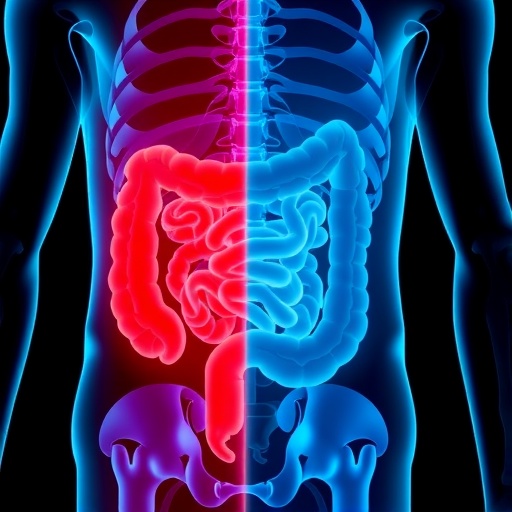
Colorectal cancer (CRC) stands as a formidable challenge in global health, being the second leading cause of cancer-related mortality and the third most common cancer diagnosed worldwide. The disease’s trajectory often begins silently, evolving from benign adenomatous or serrated polyps into malignant tumors over a protracted period. Central to combating CRC’s high mortality rate is the identification and removal of advanced precursor lesions (APLs), which are pivotal harbingers of progression to invasive cancer. Early interception of these lesions offers the greatest potential to reduce disease incidence and improve survival. As such, screening strategies have become the cornerstone of public health efforts aimed at mitigating the burden of colorectal cancer.
In clinical practice within the United States, colonoscopy remains the gold standard for CRC screening. The unique advantage of colonoscopy lies in its dual capacity: it enables direct visualization of the colonic mucosa to detect both overt cancers and precursor lesions, and it facilitates immediate removal of these lesions during the same procedural session. However, despite its clinical efficacy, colonoscopy is fraught with notable limitations. It is invasive, demanding considerable patient preparation, sedation, and carries risk of complications such as perforation and bleeding. Moreover, colonoscopy is costly and resource-intensive, factors that can impede widespread uptake and adherence to screening recommendations. The invasiveness and expense contribute to patient reluctance and screening fatigue, ultimately curtailing population-level screening penetration and diminishing the potential to prevent CRC effectively.
In response to these challenges, there has been vigorous investigation into non-invasive screening modalities, most prominently stool-based biomarker assays. Stool tests detect molecular signatures associated with neoplastic disease processes, including DNA mutations, methylation patterns, and hemoglobin from occult bleeding. These assays serve as non-invasive initial filters to stratify individuals into higher- and lower-risk categories, thereby informing the need for subsequent colonoscopic evaluation. The less invasive nature of stool tests aligns with patient preferences and can achieve higher compliance rates. Yet, diagnostic sensitivity and specificity vary significantly among available tests, especially regarding their ability to detect advanced precursors such as APLs rather than established cancers alone. This trade-off presents a key limitation, as failure to identify such lesions precludes timely intervention that could prevent progression to malignancy.
The landscape of CRC screening is further transformed by technological advances that push the frontier beyond stool testing. Liquid biopsy methods analyzing circulating cell-free DNA (cfDNA) in peripheral blood are emerging as promising tools for early detection. These blood tests seek to identify tumor-derived genetic and epigenetic alterations without the need for invasive procedures. Their appeal lies in their minimal invasiveness, ease of administration, and potential to improve population-wide screening compliance dramatically. Early studies indicate notable sensitivity for cancer detection; however, challenges remain in refining the assays to reliably identify precursor lesions and discriminating benign from malignant alterations. Additionally, signal dilution in early disease states and biological variability pose hurdles to clinical translation and widespread implementation.
From a public health standpoint, increasing adherence to CRC screening guidelines is paramount. The efficacy of any screening test, regardless of its technical merits, is intrinsically linked to population uptake. Barriers such as procedural discomfort, anxiety, access disparities, and awareness gaps reduce screening rates, thereby impeding the overall impact on colorectal cancer mortality. Multi-pronged approaches integrating patient education, outreach programs, and the availability of diverse, patient-tailored screening options are necessary to address these issues. Non-invasive modalities, by lowering barriers to participation, have the potential to revolutionize screening by engaging a broader demographic, including historically underserved populations.
Balancing the imperatives of screening sensitivity, specificity, cost, and patient uptake forms a complex calculus for healthcare systems. Colonoscopy provides unparalleled diagnostic certainty and therapeutic capability but suffers from underutilization due to its burdensome nature. Stool and blood tests promise increased accessibility and acceptance but must demonstrate consistent detection of clinically meaningful lesions without an undesirable increase in false positives that would overload referral systems. Cost-effectiveness analyses underscore the need for optimized screening algorithms that combine modalities and intervals customized to patient risk profiles and resource availability.
Moreover, evolving molecular biology insights have opened new avenues for biomarker discovery, yielding innovative targets for screening assays. Advances in genomics, epigenomics, and proteomics have identified novel signatures associated with carcinogenesis and neoplastic transformation in colorectal tissues. Integration of multi-omic biomarkers into screening platforms holds the promise to enhance detection accuracy, discriminate between lesion subtypes, and provide prognostic information. These technological developments necessitate rigorous validation in diverse, population-based studies to ascertain real-world performance and clinical utility.
Implementation science plays a critical role in translating these innovations from bench to bedside. Health systems face significant logistical, economic, and policy-related barriers in adopting new screening technologies. Reimbursement models, regulatory approvals, and provider education must evolve hand-in-hand with technological progress. Moreover, equity considerations demand vigilant monitoring to ensure new screening methods do not exacerbate existing disparities in cancer outcomes. Tailoring screening programs to cultural contexts and addressing social determinants of health remain essential to equitable healthcare delivery.
The development of next-generation screening methods also invites a re-examination of screening intervals and starting ages. With more sensitive detection tools, there may be opportunities to personalize screening schedules based on individual risk, potentially extending intervals for low-risk individuals and intensifying surveillance for those at higher risk. This precision approach could enhance resource allocation efficiency and patient experience. However, generating the robust longitudinal data necessary to support such stratification remains an ongoing research priority.
In parallel, the incorporation of artificial intelligence (AI) and machine learning techniques into CRC screening workflows is gaining momentum. AI-powered image analysis during colonoscopy can improve lesion detection rates and characterize findings with enhanced accuracy. Similarly, computational algorithms analyzing molecular data from stool or blood samples may uncover complex pattern signatures beyond human interpretation. These tools can refine diagnostic pathways, reduce human error, and optimize personalized screening strategies. Nonetheless, ethical considerations, algorithm transparency, and validation against diverse datasets remain critical to their responsible deployment.
Ultimately, the future of colorectal cancer screening is one of integration — merging technological innovation with behavioral science, healthcare delivery reform, and patient-centered care. Emerging diagnostics have the potential to shift CRC screening from a burdensome invasive procedure to a streamlined, accessible process, markedly increasing early detection and prevention. As research elucidates the biological underpinnings of neoplasia and validates novel biomarkers, screening paradigms will continue to evolve, offering hope for substantially curbing the global burden of colorectal cancer.
In summary, while colonoscopy continues to represent the definitive standard for CRC screening, it is incumbent upon the medical community to embrace and rigorously evaluate novel, less invasive methodologies. The combination of improved biomarkers, liquid biopsy technologies, and AI advancements creates unprecedented opportunities to enhance screening uptake, accuracy, and cost-effectiveness. As these innovations mature, their judicious incorporation into multifaceted screening programs, attentive to patient needs and healthcare system capacities, will be essential to achieving meaningful reductions in colorectal cancer incidence and mortality.
Cite Scienmag News
Nathaniel Bowman. (June 6, 2025). Cutting-Edge Colorectal Cancer Screening: Pros and Cons. Scienmag. https://scienmag.com/cutting-edge-colorectal-cancer-screening-pros-and-cons/
Nathaniel Bowman. "Cutting-Edge Colorectal Cancer Screening: Pros and Cons." Scienmag, 6 June 2025, https://scienmag.com/cutting-edge-colorectal-cancer-screening-pros-and-cons/. Accessed 4 September 2026.
Nathaniel Bowman. "Cutting-Edge Colorectal Cancer Screening: Pros and Cons." Scienmag. June 6, 2025. https://scienmag.com/cutting-edge-colorectal-cancer-screening-pros-and-cons/


