


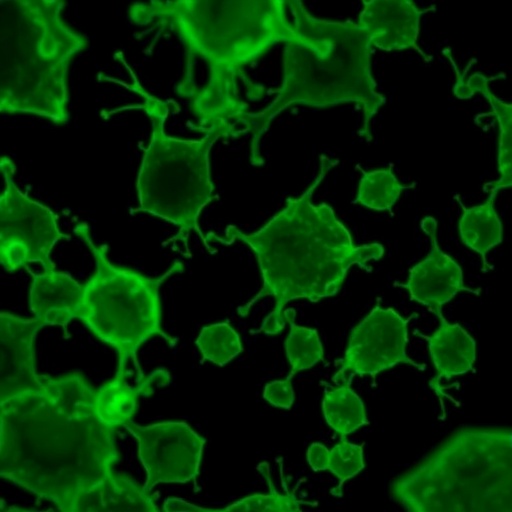
In recent years, CAR T cell therapy has emerged as a groundbreaking approach in the fight against blood cancers, demonstrating remarkable success in eliminating malignant cells that circulate within the bloodstream. Despite these advancements, the extension of CAR T therapies to solid tumors—which account for over 85% of all cancer cases—has been met with significant challenges. These challenges arise primarily from the heterogeneity and complex microenvironment of solid tumors, which impede the ability of immune cells to locate and eradicate every malignant cell. Researchers at Columbia University’s Initiative in Cell Engineering and Therapy (CICET) have recently uncovered a promising solution: a next-generation immunotherapy utilizing HIT cells, which possess heightened sensitivity to tumor-specific markers, enabling a more comprehensive targeting of solid cancers.
At the core of this novel approach lies the problem of antigen diversity within solid tumors. Unlike blood cancers, where malignant cells often express uniform surface proteins such as CD19, making them easily identifiable by CAR T cells, solid tumor cells exhibit a vast array of molecular profiles. This heterogeneity disrupts the efficacy of therapies designed to target a single antigen, as subsets of tumor cells may evade detection and survive treatment. Classical CAR T cells are effective only when the target antigen is sufficiently abundant to trigger activation, meaning low-level antigen expression can result in tumor persistence and relapse. The inability to detect and destroy the last vestiges of cancer cells within solid tumor masses has, until now, represented a formidable barrier to curative immunotherapy.
The breakthrough led by the team at CICET focuses on a molecular marker known as CD70. Although previous research characterized CD70 expression in solid tumors as inconsistent and patchy—leading to its dismissal as a reliable target—Sophie Hanina, a research associate scientist and lead author of the study, hypothesized that current detection techniques lacked the sensitivity to identify low-level expression of this antigen. Through the development and implementation of innovative detection methods, the team revealed that every cancer cell in multiple solid tumor types, including pancreatic, kidney, and ovarian cancers, carries at least trace amounts of CD70 on its surface. This nuanced understanding reframes CD70 as a universal homing beacon within these malignancies, opening the door for targeted immunotherapy with unprecedented precision.
To harness this finding therapeutically, Hanina and colleagues utilized HIT cells, a specialized offshoot of CAR T cells endowed with a distinctive ability: the exquisite sensitivity of natural T cells to minimal antigen presence. Unlike traditional CAR T cells, whose activity thresholds preclude engagement with cells expressing minute quantities of the target antigen, HIT cells can recognize and respond to these subtle molecular signatures. This capability allows HIT cells to surveil the tumor microenvironment with acute vigilance, identifying and attacking even the sparsest tumor cells that would otherwise escape detection.
Experimental data from preclinical models offer compelling evidence of HIT cells’ superior efficacy. In murine models bearing pancreatic, kidney, and ovarian tumors, CD70-directed HIT cells achieved complete eradication of malignancies, a feat traditional CD70 CAR T cells could not replicate. While conventional CAR T cells demonstrated only partial tumor control, HIT cells eliminated the disease entirely without detectable damage to healthy tissues, owing to the restricted expression of CD70 in non-cancerous cells. This selective cytotoxicity highlights the therapeutic potential for HIT cell therapy in solid tumors, promising both enhanced effectiveness and reduced off-target toxicity.
Crucial to the success of HIT therapies is their retention of natural immune cell signaling pathways, which enable a more physiologically relevant response to antigen exposure. By integrating these pathways within a chimeric antigen receptor framework, HIT cells combine engineering precision with biologically optimized sensitivity. This fusion allows for a calibrated immune attack on cancer cells expressing even vanishingly small antigen amounts. The implications for solid tumor immunotherapy are profound, as HIT cells could address the persistent problem of antigen escape—a major factor in treatment failure.
Despite these promising preclinical results, solid tumors impose additional layers of complexity that HIT cell therapy must overcome. The tumor microenvironment often suppresses immune function through immunosuppressive cytokines, regulatory cells, and physical barriers such as dense extracellular matrices. While CD70-targeting HIT cells solve the critical hurdle of tumor cell identification, ongoing research aims to enhance their trafficking, persistence, and resilience within hostile tumor niches. Combining HIT cell therapy with agents that modulate the tumor microenvironment may further amplify therapeutic outcomes and pave the way for durable remissions.
Looking ahead, clinical trials are in preparation at Columbia University Irving Medical Center to evaluate the safety and efficacy of CD70 HIT cells in patients with ovarian and other solid cancers. The breadth of CD70 expression across diverse tumor types—including glioblastoma and pancreatic adenocarcinoma—suggests that this therapy could have broad applicability. If successful in humans, HIT cell therapy could redefine the landscape of cancer treatment, offering hope for complete remission in cancers that have long evaded curative interventions.
The development of HIT cells signifies a pivotal advancement in cellular immunotherapy, encapsulating years of expertise in T cell engineering and immunobiology. Spearheaded by Michel Sadelain, a trailblazer in CAR T cell therapy, this innovation addresses one of the most critical obstacles in oncology: the need to detect and eliminate every malignant cell. The insights gained from CD70 expression patterns and the functional testing of HIT cells provide a blueprint for developing more sensitive and precise immunotherapies against a wider spectrum of solid tumors.
Moreover, the study underscores the importance of refining molecular detection tools in oncology. By revealing the overlooked presence of CD70 at low levels, the research challenges assumptions about tumor antigenicity and encourages re-examination of other molecular targets that may have been prematurely abandoned. Such methodological advancements have the potential to uncover new therapeutic opportunities and enhance personalized treatment strategies.
In conclusion, the emergence of HIT cell therapy as a next-generation cancer immunotherapy offers an innovative solution to the enduring challenge posed by solid tumors. Through enhanced sensitivity to low-density antigens like CD70, HIT cells demonstrate the ability to comprehensively target heterogeneous tumor cell populations, achieving complete tumor eradication in preclinical models. The forthcoming clinical investigations will be pivotal in translating these findings into transformative cancer treatments, potentially improving survival and quality of life for patients afflicted with some of the most intractable cancers.
News Publication Date: February 26, 2026
Web References: http://dx.doi.org/10.1126/science.adv7378
Cite Scienmag News
Nathaniel Bowman. (February 26, 2026). Cutting-Edge Cell Therapy Shows Promise as a Game-Changer Against Solid Tumors. Scienmag. https://scienmag.com/cutting-edge-cell-therapy-shows-promise-as-a-game-changer-against-solid-tumors/
Nathaniel Bowman. "Cutting-Edge Cell Therapy Shows Promise as a Game-Changer Against Solid Tumors." Scienmag, 26 February 2026, https://scienmag.com/cutting-edge-cell-therapy-shows-promise-as-a-game-changer-against-solid-tumors/. Accessed 4 September 2026.
Nathaniel Bowman. "Cutting-Edge Cell Therapy Shows Promise as a Game-Changer Against Solid Tumors." Scienmag. February 26, 2026. https://scienmag.com/cutting-edge-cell-therapy-shows-promise-as-a-game-changer-against-solid-tumors/


