


In a groundbreaking study published in Pediatric Research, researchers have shed new light on the risk factors associated with cutaneous complications arising from advanced therapies in pediatric patients suffering from inflammatory bowel disease (IBD). This research is poised to revolutionize the way clinicians approach dermatological side effects linked to cutting-edge treatments, potentially transforming patient care and outcomes.
Pediatric inflammatory bowel disease, comprising Crohn’s disease and ulcerative colitis, has seen an upsurge in prevalence worldwide, presenting unique challenges due to its chronicity and systemic nature. Advanced therapies, including biologics and small molecule inhibitors, have significantly improved disease management, yet their use is not without adverse effects. Among these, skin complications have emerged as a concerning issue, sometimes compromising treatment adherence and quality of life for young patients.
This study meticulously analyzed a cohort of pediatric IBD patients undergoing advanced therapeutic regimens to identify predisposing factors for cutaneous side effects. The researchers employed a multidisciplinary approach, integrating clinical data with immunological and genetic profiling, to unravel the complex interplay leading to dermatological manifestations.
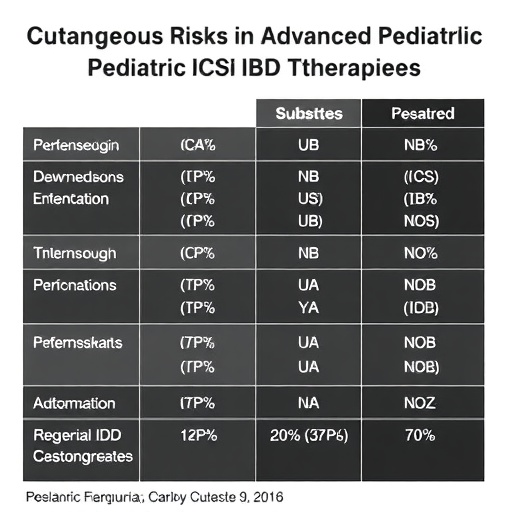
One of the pivotal findings highlighted the differential risk profiles between various classes of advanced therapies. For instance, tumor necrosis factor-alpha (TNF-α) inhibitors were more frequently associated with psoriasiform lesions, a paradoxical reaction where treatments aimed at immune suppression triggered immune hyperactivity in the skin. This paradox underscores the inherent complexity of immune modulation in pediatric patients.
Additionally, the investigation illuminated the role of individual patient factors such as genetic predispositions and baseline immune status. Specific polymorphisms in genes regulating cytokine production appeared to influence susceptibility to skin complications, revealing a potential avenue for personalized risk assessment before initiating therapy.
Environmental and lifestyle factors were also evaluated, revealing that patients exposed to certain external triggers, including ultraviolet radiation and specific microbiota profiles on the skin, manifested increased vulnerability to therapy-induced cutaneous conditions. These insights pave the way for adjunct preventive strategies alongside pharmacologic interventions.
The temporal dynamics of cutaneous adverse events emerged as another crucial aspect. Most skin complications manifested within the initial months of therapy commencement, emphasizing the need for vigilant dermatological monitoring during this critical window. However, late-onset reactions were not uncommon, suggesting that longitudinal follow-up remains essential throughout the treatment course.
The study further elucidated the pathogenic mechanisms underpinning these complications. Immune dysregulation triggered by therapy was shown to alter skin barrier function, promoting inflammatory cascades that translated into clinical manifestations. Understanding these pathways at a cellular and molecular level provides a framework for developing targeted therapeutics to mitigate side effects without compromising efficacy.
Importantly, the management strategies for cutaneous complications were explored. The researchers advocated for integrated care models involving dermatologists, gastroenterologists, and immunologists to tailor interventions. Topical therapies, dose adjustments, and, in some cases, switching to alternative agents were recommended based on severity and patient response.
This research also calls attention to the psychosocial impact of skin complications in pediatric IBD patients. Given the visibility of dermatological issues, children often experience emotional distress and stigma, highlighting the necessity for holistic care approaches that address both physical and mental health dimensions.
Moreover, the study underscores the potential of predictive biomarkers in clinical practice. By identifying patients at heightened risk, clinicians can preemptively adapt therapeutic regimens or introduce prophylactic measures, thereby reducing morbidity associated with cutaneous adverse events.
From a broader perspective, these findings resonate beyond pediatrics, offering insights applicable to adult IBD populations and other autoimmune conditions treated with similar modalities. The interplay between systemic immunity and cutaneous manifestations represents a fertile ground for future translational research.
In conclusion, the elaborate dissection of risk factors for cutaneous complications in pediatric IBD patients receiving advanced therapies marks a significant stride toward personalized medicine. As the therapeutic landscape evolves, integrating such nuanced knowledge will be crucial in optimizing outcomes and enhancing quality of life for young patients grappling with chronic inflammatory diseases.
This study not only deepens our understanding of adverse effects but also stimulates a paradigm shift in patient monitoring and management strategies. It advocates for a proactive approach, blending precision medicine with interdisciplinary collaboration, to navigate the complexities of advanced therapeutic interventions safely.
With inflammatory bowel disease continuing to impose a heavy burden on pediatric populations globally, these insights arrive at a timely juncture. They equip clinicians with evidence-based guidance to balance efficacy and safety, ensuring that advancements in treatment translate into tangible benefits without unintended harm.
The publication of this research invites further investigations into innovative solutions, such as novel drug formulations with reduced dermatological toxicity and development of comprehensive screening tools. As science progresses, the integration of immunogenetics, microbiome analysis, and environmental assessment promises to refine risk stratification models.
Ultimately, this work epitomizes the convergence of clinical acumen and scientific rigor, spotlighting the imperative to address all facets of patient health in the era of precision medicine. By illuminating the dermatological dimension of pediatric IBD therapy, it inspires a more empathetic, informed, and effective clinical practice moving forward.
Cite Scienmag News
Harold Sullivan. (June 21, 2026). Cutaneous Risks in Advanced Pediatric IBD Therapies. Scienmag. https://scienmag.com/cutaneous-risks-in-advanced-pediatric-ibd-therapies/
Harold Sullivan. "Cutaneous Risks in Advanced Pediatric IBD Therapies." Scienmag, 21 June 2026, https://scienmag.com/cutaneous-risks-in-advanced-pediatric-ibd-therapies/. Accessed 4 September 2026.
Harold Sullivan. "Cutaneous Risks in Advanced Pediatric IBD Therapies." Scienmag. June 21, 2026. https://scienmag.com/cutaneous-risks-in-advanced-pediatric-ibd-therapies/


