


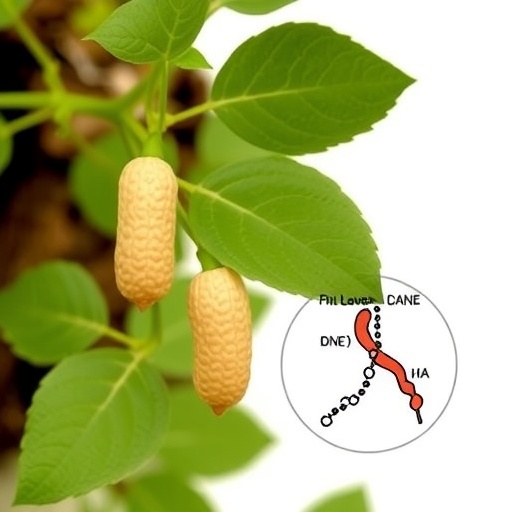
In a groundbreaking study that promises to reshape our understanding of plant immunity and crop protection, researchers from China have conducted an exhaustive genome-wide analysis of the pathogenesis-related protein 10 (PR10) gene family in cultivated peanut (Arachis hypogaea L.). This study, recently published in the prestigious Journal of Integrative Agriculture, delves deep into the molecular underpinnings that confer resistance against Aspergillus flavus, a notorious fungal pathogen responsible for devastating aflatoxin contamination in peanuts—a global food safety concern.
Plants have evolved a sophisticated arsenal of defense mechanisms to combat an array of biotic and abiotic stresses, among which pathogenesis-related (PR) proteins stand as pivotal components. The PR10 subfamily, characterized by its nuclease activity, is recognized for its multifaceted role not only in pathogen defense but also in regulating plant growth and development. Despite its importance, comprehensive knowledge concerning the full spectrum of PR10 genes and their functional dynamics in peanut remained elusive until now.
Employing advanced bioinformatics tools and high-throughput sequencing data, the research team identified a total of 54 distinct AhPR10 genes encoded within the cultivated peanut genome. These genes were meticulously classified into eight phylogenetic groups based on sequence homology and evolutionary relationships. This classification was corroborated using detailed gene structure analyses and identification of conserved protein motifs, underscoring the structural and functional diversity inherent within the family.
Chromosomal mapping of the AhPR10 genes revealed an uneven yet strategic distribution across the peanut genome, a pattern indicative of evolutionary events driving gene family expansion. Intriguingly, synteny analyses illuminated the predominant role of segmental duplications—large chromosomal segments duplicated and retained over evolutionary time—in propagating this gene family, thus fostering genetic innovation and adaptability in response to environmental pressures.
Diving further into transcriptional activity, the team observed that expression patterns of the AhPR10 genes were wide-ranging; some genes exhibited constitutive expression, indicating roles in fundamental cellular processes, while others were inducible, activated in response to pathogen challenge or environmental stimuli. Such differential expression points to a finely tuned regulatory network orchestrating peanut’s defense strategies and physiological functions.
Among the identified genes, AhPR10-7, AhPR10-33, and AhPR10-41 emerged as key players with pronounced expression alterations upon Aspergillus flavus infection. These candidates were singled out for their potential direct involvement in mounting antifungal defenses and mediating resistance phenotypes, thus representing promising targets for future genetic enhancement of crop resilience.
In an impressive series of in vitro fungistatic assays, the research team expressed recombinant AhPR10-33 protein in Escherichia coli, a widely used expression system. Subsequent biochemical assessments validated that recombinant AhPR10-33 exerted potent nuclease activity, capable of degrading nucleic acids—and crucially, its application significantly inhibited the mycelial growth of Aspergillus flavus. This functional demonstration provides compelling evidence of the protein’s antifungal properties at a molecular level.
The implications of these findings are profound. The molecular characterization of peanut PR10 genes and the functional validation of AhPR10-33’s antifungal effect pave the way for innovative breeding and biotechnological interventions aimed at bolstering peanut resistance against mycotoxin-producing fungi. This is a critical advance, considering the global health risks posed by aflatoxins and the economic losses inflicted on peanut-producing regions.
Furthermore, the integration of phylogenetic, structural, and syntenic data presents a holistic perspective on the evolution and diversification of PR10 genes, highlighting nature’s adaptive finesse in equipping plants to thrive under stress. These insights could be extrapolated to other crops, broadening our capacity to engineer robust disease resistance traits using evolutionary informed strategies.
The study also underscores the utility of recombinant protein technologies and molecular biology techniques to validate gene function, an approach that accelerates translational research and the development of applied solutions within agricultural biotechnology. By bridging genomics with functional assays, this research exemplifies a paradigm of precision plant pathology research.
Given the rising global demand for peanut products and the ongoing challenges posed by climate change and pathogen evolution, such foundational research is crucial. It equips breeders, geneticists, and pathologists with vital knowledge and molecular tools to secure food safety, enhance crop yields, and ensure sustainable agricultural practices.
Looking ahead, the researchers advocate for in vivo studies to elucidate the full spectrum of AhPR10 gene functions within the complex milieu of plant-pathogen interactions. Understanding these defensive pathways in the context of the living plant will be instrumental in developing durable resistance mechanisms and mitigating the threat of aflatoxin contamination on a global scale.
In conclusion, this extensive characterization of the AhPR10 family in cultivated peanut not only enriches the scientific repository on plant defense genes but also charts a promising course for translational applications in crop protection. The marriage of genomics, molecular biology, and phytopathology embodied in this study marks a significant stride toward resilient agriculture and food security.
Web References:
http://dx.doi.org/10.1016/j.jia.2024.07.006
References:
Zhao Q, et al. Genome-wide characterization and expression analysis of the cultivated peanut AhPR10 gene family mediating resistance to Aspergillus flavus. Journal of Integrative Agriculture. 2024.
Cite Scienmag News
Juliet Wilcox. (February 1, 2026). Cultivated Peanut AhPR10 Gene Family Plays Key Role in Resistance to Aspergillus flavus. Scienmag. https://scienmag.com/cultivated-peanut-ahpr10-gene-family-plays-key-role-in-resistance-to-aspergillus-flavus/
Juliet Wilcox. "Cultivated Peanut AhPR10 Gene Family Plays Key Role in Resistance to Aspergillus flavus." Scienmag, 1 February 2026, https://scienmag.com/cultivated-peanut-ahpr10-gene-family-plays-key-role-in-resistance-to-aspergillus-flavus/. Accessed 4 September 2026.
Juliet Wilcox. "Cultivated Peanut AhPR10 Gene Family Plays Key Role in Resistance to Aspergillus flavus." Scienmag. February 1, 2026. https://scienmag.com/cultivated-peanut-ahpr10-gene-family-plays-key-role-in-resistance-to-aspergillus-flavus/


