


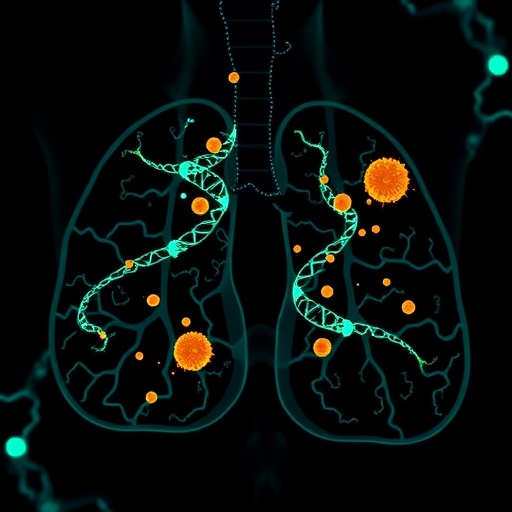
In recent years, the landscape of non-small-cell lung cancer (NSCLC) treatment has undergone a revolutionary transformation, largely driven by the advent of targeted therapies. These novel treatments, aimed at specific oncogenic driver mutations, have significantly improved survival rates and quality of life for patients harboring actionable genetic alterations. However, despite these remarkable advances, the cancer’s ability to develop acquired resistance remains a formidable obstacle, threatening the long-term efficacy of precision oncology. The urgent need to understand and eventually circumvent this resistance has stimulated intense research efforts, with circulating tumour DNA (ctDNA) emerging as a leading tool in this quest.
Targeted therapies act by inhibiting the molecular abnormalities fueling tumor growth. In NSCLC, driver mutations such as those occurring in EGFR, ALK, ROS1, and BRAF, among others, have been successfully exploited to tailor treatments. Initially, patients often respond profoundly to these precision drugs, but the durability of these responses is curtailed when the tumor evolves mechanisms of escape. Acquired resistance manifests through secondary mutations, bypass pathway activations, or histological transformations, all complicating subsequent therapeutic approaches. Gaining insights into these resistance pathways is paramount for developing second-generation inhibitors or combination strategies that maintain disease control.
Traditionally, tumor biopsies have been the gold standard for molecular characterization, yet these procedures are invasive, sometimes risky, and may not fully capture tumor heterogeneity or evolving genetic landscapes. This limitation has propelled ctDNA into the spotlight. ctDNA comprises small fragments of DNA shed by tumor cells into the bloodstream, reflecting the genetic alterations present across primary and metastatic lesions. Its minimally invasive collection through blood samples, often referred to as a “liquid biopsy,” offers unparalleled opportunities for dynamic disease monitoring, early detection of resistance, and real-time molecular profiling.
The integration of ctDNA analysis into clinical management and research paradigms has been transformative. Several landmark studies have demonstrated that ctDNA can detect emerging resistance mutations months before radiographic progression becomes evident. For instance, monitoring the appearance of the T790M resistance mutation in EGFR-mutant NSCLC patients enabled timely intervention with third-generation inhibitors such as osimertinib, improving outcomes. Beyond detection, ctDNA kinetics has shown promise as a prognostic biomarker, providing insights into tumor burden and treatment response.
However, despite its potential, the practical deployment of ctDNA analysis to unravel mechanisms of acquired resistance in metastatic NSCLC is fraught with challenges. Methodological heterogeneity abounds across published studies, encompassing differences in sample processing, sequencing technologies, bioinformatic pipelines, and interpretative frameworks. Such inconsistencies hinder comparability and reproducibility, stalling the field’s progress. Moreover, the sensitivity and specificity of ctDNA assays vary, influenced by tumor shedding rates, assay limits of detection, and the timing of sample collection relative to disease dynamics.
Another major hurdle is the interpretation of complex mutational landscapes derived from ctDNA. Tumors often harbor multiple concurrent resistance mechanisms, including polyclonal mutations, which confound simple categorization. Distinguishing true resistance alterations from passenger mutations or clonal hematopoiesis-related variants requires rigorous analytical approaches and validation. Furthermore, the clinical significance of some detected variants remains uncertain, underscoring the need for functional assays and correlative clinical studies.
To move beyond descriptive cataloging of resistance mutations, the field is shifting towards designing more informative ctDNA-based trials. These would ideally incorporate serial sampling schedules, harmonized methodologies, and prospective biomarker-driven interventions. By integrating ctDNA findings with clinical endpoints and therapeutic responses, such trials can elucidate the temporal evolution of resistance and guide adaptive therapeutic strategies that preempt or overcome escape mechanisms.
An exciting frontier lies in combining ctDNA analysis with complementary modalities such as circulating tumor cells, exosomes, and advanced imaging. Multimodal approaches promise a more comprehensive understanding of tumor biology and microenvironmental influences on resistance. In parallel, technological innovations in ultra-deep sequencing, digital PCR, and single-molecule assays continue to push the frontier of sensitivity, enabling detection of low-frequency variants instrumental in early resistance.
Nevertheless, translating these advances into routine clinical practice demands addressing logistical and economic considerations. The cost-effectiveness of serial ctDNA monitoring, integration within existing diagnostic workflows, and regulatory approvals are ongoing discussions. Educating clinicians on interpreting ctDNA results and incorporating them into treatment decisions remains critical for maximizing patient benefit.
Beyond lung cancer, lessons from ctDNA-guided research in NSCLC hold implications for other malignancies where targeted therapies are standard of care. Understanding common principles and unique nuances of resistance across cancer types may yield generalizable insights and foster the development of universal resistance-monitoring platforms.
Ethical considerations also surface when employing ctDNA surveillance, including patient consent for genetic testing, data privacy, and the psychological impact of uncovering subclinical resistance mutations whose clinical consequences are uncertain. As the technology advances, guidelines to navigate these complexities must evolve in tandem.
One of the overarching goals propelling ctDNA research is the aspiration to conquer acquired resistance and transform NSCLC into a manageable chronic disease rather than a fatal malignancy. By continuously refining biomarker-driven adaptive therapies informed by real-time molecular insights, clinicians may one day outwit cancer’s relentless evolution.
In summary, the harnessing of ctDNA to elucidate and monitor mechanisms of acquired resistance to targeted therapies marks a paradigm shift in metastatic NSCLC management. Although current research confronts substantial methodological and interpretative obstacles, ongoing collaborative efforts aim to standardize and enhance study designs, assay technologies, and clinical integration. The vision of deploying ctDNA as a routine clinical compass to steer precision oncology treatment decisions is compelling and increasingly attainable.
With continued innovation and rigorous validation, ctDNA stands poised to revolutionize how oncologists detect emergent resistance, personalize subsequent therapy, and ultimately improve survival for patients battling metastatic non-small-cell lung cancer. This journey underscores the synergy between cutting-edge molecular diagnostics and therapeutic innovation, offering hope for a future where cancer’s adaptive capacities are met with equally adaptive medical strategies.
Cite Scienmag News
Nathaniel Bowman. (May 31, 2025). ctDNA Uncovers Resistance in Metastatic NSCLC Therapy. Scienmag. https://scienmag.com/ctdna-uncovers-resistance-in-metastatic-nsclc-therapy/
Nathaniel Bowman. "ctDNA Uncovers Resistance in Metastatic NSCLC Therapy." Scienmag, 31 May 2025, https://scienmag.com/ctdna-uncovers-resistance-in-metastatic-nsclc-therapy/. Accessed 4 September 2026.
Nathaniel Bowman. "ctDNA Uncovers Resistance in Metastatic NSCLC Therapy." Scienmag. May 31, 2025. https://scienmag.com/ctdna-uncovers-resistance-in-metastatic-nsclc-therapy/


