


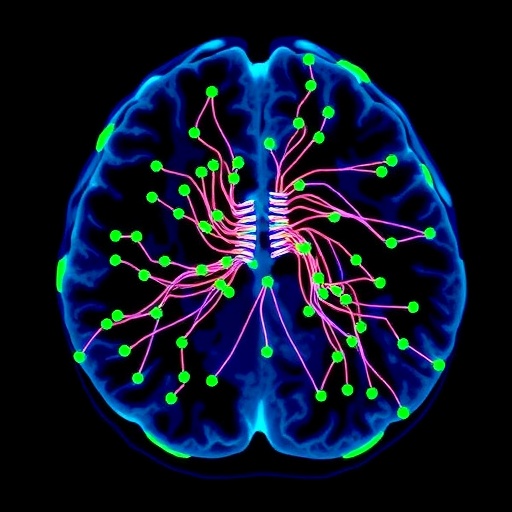
In a groundbreaking advancement for the early detection and management of brain metastases in patients suffering from non-small cell lung cancer (NSCLC), researchers have highlighted cerebrospinal fluid (CSF) circulating tumor DNA (ctDNA) as a remarkably effective biomarker. Published recently in BMC Cancer, this systematic review and meta-analysis reveals that CSF ctDNA not only surpasses traditional diagnostic methods but also offers critical prognostic insights, paving the way for personalized cancer therapies targeting central nervous system (CNS) involvement.
Brain metastasis remains one of the most formidable and life-threatening complications that arise in NSCLC patients, often heralding a significant decline in survival and quality of life. Conventional diagnostic tools, notably magnetic resonance imaging (MRI) and CSF cytology, while widely used, have intrinsic limitations—chiefly, their limited sensitivity in detecting micrometastatic disease or specific molecular alterations that influence treatment planning. The emergence of CSF ctDNA profiling promises to overcome these challenges by accessing molecular information directly from tumor DNA fragments shed into the cerebrospinal fluid.
The researchers embarked on an exhaustive systematic review incorporating data from 26 independent studies focusing on NSCLC patients with documented brain or leptomeningeal metastases. Their goal was to robustly evaluate the diagnostic test accuracy of CSF ctDNA relative to CSF cytology, assessing detection rates, sensitivity, specificity, and overall diagnostic odds ratios. Notably, this meta-analysis presents the most comprehensive synthesis to date, consolidating diverse data to ascertain the clinical utility and reproducibility of CSF ctDNA as a biomarker.
Analyses revealed a striking difference in detection performance: the pooled detection rate for CSF ctDNA was 86%, substantially outperforming CSF cytology’s 60%. This discrepancy is clinically meaningful given that cytology’s lower detection capability potentially delays the identification of CNS metastases, impacting timely therapeutic interventions. The superior sensitivity (91.8%) and specificity (93.5%) observed for CSF ctDNA underline its robustness as a diagnostic modality and validate its capacity to accurately discriminate CNS metastatic disease.
Beyond mere detection, the diagnostic odds ratio (DOR) of 93.51 signals a highly effective test that reliably differentiates metastatic involvement from non-metastatic cases. This metric, combining sensitivity and specificity, reflects the power of CSF ctDNA to serve as a decisive clinical tool. Importantly, the high DOR underscores the potential reduction in false negatives and false positives that currently hinder conventional diagnostic approaches.
The impact of CSF ctDNA extends beyond diagnostics into the realm of prognostication. The meta-analysis highlights that molecular alterations identified within CSF ctDNA samples were associated with poorer overall survival outcomes. This finding not only affirms the biological relevance of ctDNA in reflecting tumor burden and aggressiveness but also suggests that monitoring CSF ctDNA might provide critical insights into disease progression and treatment response over time.
Molecular profiling through CSF ctDNA enables oncologists to detect clinically actionable mutations—such as those in EGFR, ALK, or other driver genes—that are fundamental to targeted therapy decisions. Unlike plasma-based ctDNA analysis, which may inadequately capture CNS tumor heterogeneity due to the blood-brain barrier, CSF ctDNA offers a more direct window into CNS tumor genetics, thereby refining treatment stratification and potentially improving patient survival.
This research signals a paradigm shift in the clinical management of NSCLC patients harboring CNS metastases. The implementation of CSF ctDNA testing could facilitate earlier detection of metastatic disease, enabling prompt intervention tailored to genetic signatures. Early molecular diagnosis is paramount to unlocking the benefits of targeted therapies and immunotherapies in this challenging patient population, ultimately improving prognosis and quality of life.
While the findings are compelling, the authors acknowledge the necessity for further clinical validation. Prospective studies in diverse patient cohorts and real-world settings are crucial to standardize testing protocols, define thresholds for clinical decision-making, and address remaining uncertainties regarding cost-effectiveness and accessibility. Establishing CSF ctDNA testing as a routine diagnostic tool mandates harmonization of pre-analytical, analytical, and interpretative aspects across institutions.
Moreover, the dynamic nature of ctDNA presents opportunities for longitudinal monitoring of therapeutic efficacy and early detection of resistance mechanisms. Repeated CSF sampling could provide real-time updates on tumor evolution, informing timely modifications in disease management. Such a precision medicine approach aligns with contemporary oncology trends emphasizing personalized, adaptive treatment strategies.
The methodological rigor of this meta-analysis adds considerable weight to its conclusions. By systematically assessing heterogeneity, publication bias, and conducting sensitivity analyses, the researchers ensured the robustness of their results. The aggregated evidence affirms the transformative potential of CSF ctDNA, fostering optimism that this biomarker will soon become a mainstay in the CNS metastases diagnostic arsenal.
As NSCLC continues to pose a significant global health challenge, particularly with high incidences of brain metastases, innovations like CSF ctDNA serve as beacons of hope. Their integration into clinical practice could revolutionize outcomes by overcoming diagnostic blind spots that have historically limited effective disease monitoring and intervention.
In conclusion, the systematic review and meta-analysis presented in BMC Cancer decisively positions CSF ctDNA as a superior biomarker for CNS metastasis detection in NSCLC, offering unparalleled diagnostic accuracy and valuable prognostic information. This advancement heralds a new era of molecularly-informed neuro-oncology, where less invasive yet highly informative liquid biopsies provide crucial guidance for clinicians striving to improve patient survival and quality of life. Future research and technological refinement will be pivotal in transforming this promising biomarker into a universally accessible clinical standard.
Cite Scienmag News
Nathaniel Bowman. (August 2, 2025). CSF ctDNA: New Biomarker for NSCLC Brain Mets. Scienmag. https://scienmag.com/csf-ctdna-new-biomarker-for-nsclc-brain-mets/
Nathaniel Bowman. "CSF ctDNA: New Biomarker for NSCLC Brain Mets." Scienmag, 2 August 2025, https://scienmag.com/csf-ctdna-new-biomarker-for-nsclc-brain-mets/. Accessed 4 September 2026.
Nathaniel Bowman. "CSF ctDNA: New Biomarker for NSCLC Brain Mets." Scienmag. August 2, 2025. https://scienmag.com/csf-ctdna-new-biomarker-for-nsclc-brain-mets/


