


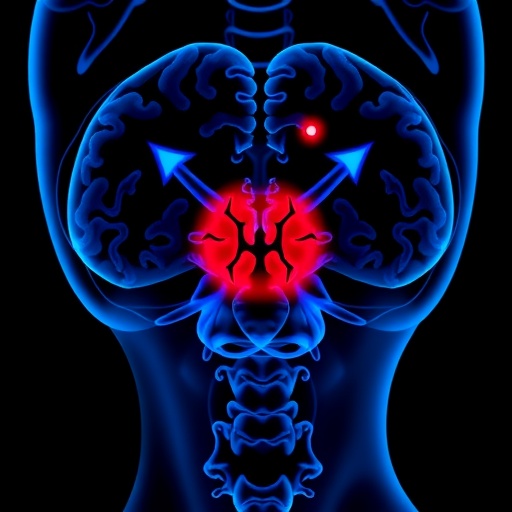
In an exciting development at the intersection of oncology and advanced radiation therapy, recent research has illuminated the promising potential of combining crizotinib with carbon ion particle therapy to treat sacral chordoma cells. This innovative approach, spearheaded by Lohberger, Glänzer, and Etschmaier, pioneers a targeted radiosensitization strategy that may significantly boost therapeutic efficacy against this rare, challenging tumor type.
Chordomas, primarily occurring along the spine and sacrum, are notoriously difficult to treat due to their slow yet invasive growth patterns and resistance to conventional therapies. Despite surgical interventions and photon-based radiotherapy, recurrence is common, urging the oncology community to explore novel modalities that can improve local control while minimizing collateral damage. Enter carbon ion therapy—a frontier in particle therapy distinguished by high linear energy transfer (LET) and superior dose localization compared to traditional X-rays—offering enhanced tumor cell killing and sparing surrounding healthy tissue.
The study meticulously evaluates crizotinib, originally developed as an ALK and ROS1 tyrosine kinase inhibitor, for its radiosensitizing capabilities when paired with carbon ion beams. Crizotinib’s role extends beyond its targeted molecular inhibition; it modulates key signaling pathways that, when combined with high-LET radiation, amplify DNA damage and impair crucial repair mechanisms within chordoma cells. This dual assault could redefine the treatment paradigm for patients plagued by sacral chordomas, which have limited systemic therapy options.
Advanced cellular analyses reveal that the combined treatment disrupts the chordoma cells’ ability to repair double-strand breaks efficiently. Carbon ions, with their densely ionizing tracks, induce complex DNA lesions that are inherently difficult to mend. Crizotinib further incapacitates cellular defense by inhibiting pathways such as MET and ALK, implicated in cell survival and proliferation. This synergistic effect culminates in heightened apoptotic response and decreased clonogenic survival—a key indicator of long-term tumor control.
The research leverages dosimetric precision, enabled by carbon ion particle therapy, to administer lethal doses selectively to tumor cells while preserving adjacent critical structures often compromised in sacral tumor resections. The sacral region’s intricate anatomy and proximity to vital nerves and organs present formidable challenges that carbon ions navigate deftly through their unique depth-dose distribution and improved relative biological effectiveness (RBE).
Beyond the immediate therapeutic implications, this work sheds light on the molecular mechanisms underpinning chordoma radioresistance. By elucidating crizotinib’s influence on signal transduction and DNA damage response pathways, it opens avenues for designing combination therapies tailored to molecular tumor profiles. Personalized medicine, leveraging such insights, promises to improve outcomes where monotherapies have plateaued.
Notably, the study’s evidence is reinforced by in vitro assays demonstrating dose-dependent radiosensitization, cell viability reductions, and alterations in cell cycle progression. Flow cytometry analyses confirm increased G2/M phase arrest—a radiation-sensitive phase—post-treatment, aligning with enhanced DNA damage markers. Such mechanistic consistency affirms the therapeutic potential and provides a robust preclinical foundation for translation into clinical trials.
Furthermore, the work highlights the unique advantage of carbon ion therapy’s biological effectiveness when partnered with molecular inhibitors. Unlike photons, carbon ions induce complex clustered DNA damage, overwhelming standard repair pathways. By simultaneously hampering signaling pathways with crizotinib, the tumor cells’ resilience is further compromised, representing a multifaceted attack strategy.
The implications of this combined approach extend beyond chordomas. Tumors exhibiting similar resistance characteristics or harboring aberrant ALK/MET activity could also benefit from such radiosensitization strategies. As particle therapy centers proliferate globally, these insights could inform combinatorial regimens across diverse oncologic indications.
Importantly, the study stresses safety and toxicity considerations, noting that while crizotinib enhances radiosensitivity, the therapeutic window remains favorable. The precision of carbon ions mitigates excessive radiation exposure, potentially reducing adverse effects—a crucial factor for pelvic tumors where quality of life is often impacted by treatment sequelae. Future in vivo studies and carefully designed clinical protocols will be essential to optimize dosing and validate these synergistic benefits.
This research also exemplifies the expanding role of targeted therapies in radiation oncology, moving beyond traditional cytotoxic agents to molecularly driven radiosensitizers. As the understanding of tumor biology deepens, harnessing agents like crizotinib allows clinicians to exploit vulnerabilities specific to tumor subtypes, thereby augmenting radiotherapeutic gain.
In summary, the combined application of crizotinib and carbon ion particle therapy represents a formidable advance in sacral chordoma treatment. By strategically integrating molecular targeted inhibition with cutting-edge particle therapy, this approach holds promise to overcome inherent radioresistance, improve local disease control, and ultimately enhance patient prognoses. Such innovation underscores the dynamic evolution of oncologic therapies towards precision, efficacy, and safety.
Looking ahead, multidisciplinary collaborations will be pivotal in bringing these findings from bench to bedside. The integration of molecular diagnostics, advanced radiation delivery techniques, and novel pharmacologic agents could redefine standards of care for sacral and other refractory tumors. As the field continues to push boundaries, patients stand to gain from more potent, tailored, and tolerable treatment options.
Driven by the relentless quest to conquer cancer’s most stubborn manifestations, this study exemplifies the synergy between technology and biology. The fusion of carbon ion particle therapy’s physical precision with crizotinib’s molecular targeting may well inaugurate a new era in radiosensitization, transforming outcomes for chordoma patients and beyond.
Cite Scienmag News
Nathaniel Bowman. (December 24, 2025). Crizotinib Enhances Carbon Ion Therapy in Sacral Chordoma. Scienmag. https://scienmag.com/crizotinib-enhances-carbon-ion-therapy-in-sacral-chordoma/
Nathaniel Bowman. "Crizotinib Enhances Carbon Ion Therapy in Sacral Chordoma." Scienmag, 24 December 2025, https://scienmag.com/crizotinib-enhances-carbon-ion-therapy-in-sacral-chordoma/. Accessed 4 September 2026.
Nathaniel Bowman. "Crizotinib Enhances Carbon Ion Therapy in Sacral Chordoma." Scienmag. December 24, 2025. https://scienmag.com/crizotinib-enhances-carbon-ion-therapy-in-sacral-chordoma/


