


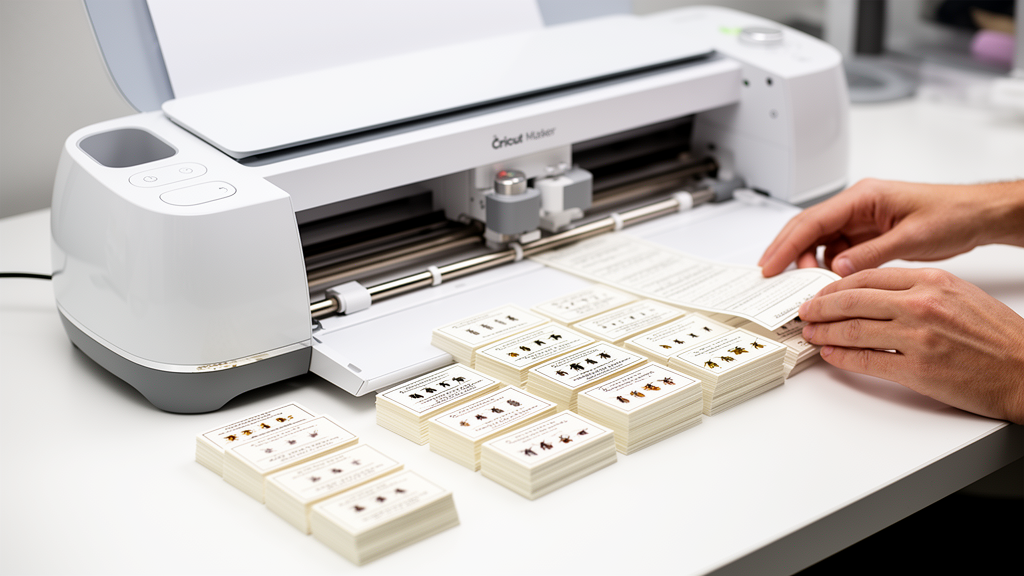
Natural history collections around the world hold more than a billion specimens, and every single one of them depends on a label no bigger than a fingernail to preserve its scientific value. Those tiny slips of acid-free paper record where and when an insect was collected, who found it, and what species it belongs to. Without them, a pinned beetle is just a dead bug. Yet behind the scenes at many of the world’s great museums and biodiversity institutes, the production of these labels has remained stubbornly, almost absurdly, manual: workers printing sheets of labels and then cutting them apart by hand, one straight line at a time, for hours on end. A new study published in Natural History Collections and Museomics argues that this is a waste of human time and a risk to scientific data, and it offers a surprisingly humble solution: a craft cutter more commonly found in hobby rooms and wedding-planning studios.
The research team, based at the Centre for Biodiversity Genomics, tested the Cricut Maker 3, a computer-guided blade cutter, as an automated alternative to hand-cutting entomological labels. The results were striking. In a direct comparison, the machine prepared and cut a batch of 285 labels in 5.7 minutes, while the same task performed manually took 28.4 minutes. That fivefold speed difference scales up dramatically in institutions that process enormous volumes of specimens. The Centre for Biodiversity Genomics alone handles roughly three million DNA barcode vouchers each year, and about ten percent of those require two physical labels apiece, one for collection data and one for barcode information. That translates into a need for around six hundred thousand labels annually, a workload that makes even small per-label time savings enormously consequential.
The problem the study addresses is not merely one of tedium. Hand-cutting labels is labor-intensive and error-prone, producing uneven edges, misaligned cuts, and occasionally truncated data that can compromise the integrity of a specimen’s record. Repetitive strain injuries are a real occupational hazard for staff performing thousands of identical cutting motions. The authors note that finding ergonomic solutions for repetitive tasks reduces injuries and increases productivity, and that variation in label quality can have downstream consequences for data integrity, particularly when labels carry unique identifiers that link a physical specimen to digital databases. In an era when natural history collections are being digitized at unprecedented scale through initiatives like iDigBio and the Global Biodiversity Information Facility, the demand for precise, legible, standardized labels is only growing.
The technical setup behind the automated workflow is more sophisticated than the craft-store origins of the hardware might suggest. The Cricut Maker 3 works with SVG files through its companion design software, allowing the team to build custom label templates in vector format. Because the software otherwise rearranges unattached shapes to optimize space regardless of their position on the page, the researchers attached all cut lines into a single continuous shape to preserve the exact layout of the printed label sheet. They also had to account for a quirk of the machine: it does not begin cuts at the zero-zero corner of the cutting mat but maintains an exclusion border around the edges. To solve this, they mounted cardstock guides on blank mats and created a calibration template that cut away the true margins, ensuring the printed sheet aligned perfectly with the blade path every time.
Material selection proved equally critical. Entomological labels must be made of acid-free, archival-quality cardstock to ensure long-term preservation, and the paper must be rigid enough for thin insect pins to pierce cleanly yet resistant to tearing during the cutting process. The team settled on two specific brands of medium-weight cardstock, one white for collection labels and one canary yellow for DNA barcode labels, since best practice calls for different colours when a specimen carries multiple labels. They tested two types of cutting mats and found that the StandardGrip mats, while initially too adhesive and prone to tearing labels during removal, became acceptable after a break-in period. With rotation of the mats partway through their lifespan, each mat can handle roughly forty-eight pages of labels, or about thirteen thousand six hundred eighty individual labels, before its adhesive surface degrades and requires replacement.
The label design itself reflects careful attention to data standards and space constraints. Each label measures just 17.3 by 8.0 millimeters, compact enough to conserve space in crowded collection drawers. To fit maximum information into minimum area, the team employs internationally recognized data standards: countries are designated by ISO 3166-1 alpha-3 codes, subdivisions by ISO 3166-2 codes, GPS coordinates in decimal degrees rounded to four digits, and dates in a format that protects against accidental swapping of month and day. Text is printed in Arial at sizes ranging from 2.4 to 4.2 points depending on the field, with the sample identifier in bold for visibility. A QR code on each barcode label allows a researcher to scan it with a phone and retrieve the linked record from databases like BOLD, connecting the physical specimen directly to its digital twin.
Maintenance of the system is straightforward but ongoing. The cutting blade should be replaced after approximately thirty-two sheets, or nine thousand one hundred twenty labels, or sooner if tearing and dragging appear at the intersections of cuts. Official replacement blades cost ten to twenty Canadian dollars each, but third-party alternatives perform just as well at twenty-one cents apiece when bought in bulk. Cutting mats accumulate debris with near-daily use, and the team extends their lifespan by scrubbing the adhesive surface with a baby wipe and patting it dry. They also devised a simple physical fix for a persistent problem: a cardstock bracing strip placed against the terminal edge of the label sheet secures the rows during vertical cuts, preventing detachment and further prolonging mat life. Even the removal of finished labels from the mat was re-engineered, using a modified bulldog clamp fitted with polymer clay blades to lift an entire column of labels at once and transfer them to a pinning board in perfect order.
The economics of the system are compelling for institutions of any size. Initial setup costs less than six hundred Canadian dollars, including the machine, thirty cutting mats, and a label removal tool, with a monthly subscription fee of about thirteen dollars for design software access. Operating costs run to roughly twenty-one dollars per one hundred sheets, or twenty-eight thousand five hundred labels, covering mat replacements, blades, and cleaning supplies. For a facility generating a million labels annually, the authors calculate that the workflow saves approximately twenty person-weeks of labor per year, while simultaneously reducing strain-injury risk and making precision-cutting tasks accessible to staff with fine-motor limitations. The machine runs independently once a sheet is loaded, freeing staff to attend to other work during cutting cycles.
What makes this study resonate beyond entomology is the broader lesson about modernization in natural history collections. These institutions are under pressure to digitize, standardize, and expand access to their holdings, yet the physical infrastructure of curation, the pins, the paper, the drawers, the hand-cut labels, has often lagged decades behind the digital side. The authors demonstrate that a consumer-grade tool, adopted thoughtfully with attention to archival standards and workflow design, can bridge that gap without requiring bespoke industrial equipment. They note the system integrates with existing collection databases and common label-generation software, and that the same machine can produce drawer labels, loan documentation, exhibition signage, and outreach materials with nothing more than a new template. In a field where the difference between a preserved specimen and a lost one often comes down to a few millimeters of paper, even the humblest technologies deserve rigorous engineering.
Subject of Research: A low-cost, scalable solution for automated cutting of entomological labels
Article Title: A low-cost, scalable solution for automated cutting of entomological labels
Article References: Sones, J., Lyle, M.-A., Dowling, I., Brown, A., & Hebert, P. D. N. (2026). A low-cost, scalable solution for automated cutting of entomological labels. Natural History Collections and Museomics, 3, 1-12. https://doi.org/10.3897/nhcm.3.179306
Image Credits: AI Generated
Keywords: low-cost, scalable, solution, automated, cutting, entomological, labels, scientific research
Cite Scienmag News
Gavin Prescott. (October 17, 2026). Cricut Maker 3 Cuts Millions of Entomology Labels at 5x Manual Speed. Scienmag. https://scienmag.com/cricut-maker-3-cuts-millions-of-entomology-labels-at-5x-manual-speed/
Gavin Prescott. "Cricut Maker 3 Cuts Millions of Entomology Labels at 5x Manual Speed." Scienmag, 17 October 2026, https://scienmag.com/cricut-maker-3-cuts-millions-of-entomology-labels-at-5x-manual-speed/. Accessed 17 October 2026.
Gavin Prescott. "Cricut Maker 3 Cuts Millions of Entomology Labels at 5x Manual Speed." Scienmag. October 17, 2026. https://scienmag.com/cricut-maker-3-cuts-millions-of-entomology-labels-at-5x-manual-speed/


