


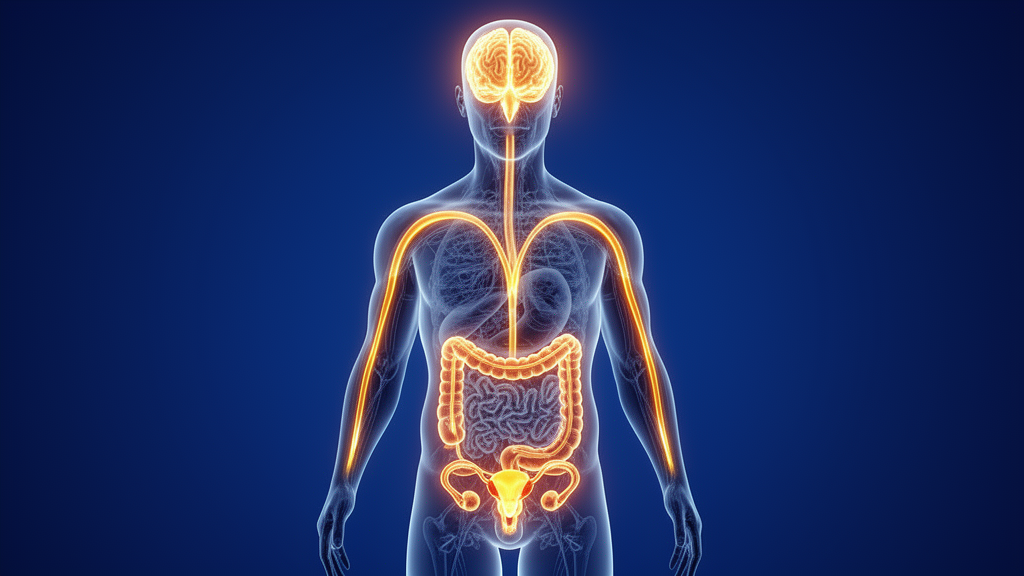
Infertility affects millions of couples worldwide, and despite decades of progress in reproductive medicine, a substantial proportion of cases remain stubbornly unexplained. Hormones, genetics, anatomy, and lifestyle have all been scrutinized, yet for many patients no clear cause is ever identified. Now, a team of researchers from Romania’s Origyn Fertility Center, Grigore T. Popa University of Medicine and Pharmacy, and Alexandru Ioan Cuza University has proposed a provocative new angle: that the biology underlying stable personality traits may ripple outward through the body, influencing the gut, the sex hormones, and ultimately reproductive physiology itself. The idea, published as a Mini Review in Frontiers in Behavioral Neuroscience, does not claim that personality causes infertility. Instead, it offers a testable framework, the Brain-Gut-Gonadal axis, that could reshape how scientists think about the biological roots of unexplained reproductive problems.
The authors are careful to define their terms. Personality, in this context, refers to relatively consistent patterns of thinking, feeling, and behaving that persist across time and situations, not temporary emotional states, acute stress, or passing mood changes. This distinction matters because decades of research have already linked transient stress to reproductive difficulties, with mixed and often inconsistent results. What the Romanian team proposes is something different: that the neurobiological architecture underlying traits such as neuroticism, extraversion, or harm avoidance produces stable, individual differences in how the autonomic nervous system, the hypothalamic-pituitary-adrenal (HPA) axis, and inflammatory pathways operate. Those same regulatory systems happen to be deeply involved in digestion and in reproduction, raising the possibility that personality-related biology and reproductive biology are two faces of the same underlying physiology.
Personality neuroscience has matured considerably over the past two decades. Traits are no longer viewed as purely descriptive psychological labels but as neurobehavioral characteristics rooted in distributed brain networks governing reward processing, emotional regulation, salience detection, and executive control. Dimensional models, particularly the Big Five framework, describe normal-range variation in these traits across the general population. Crucially, studies have associated these traits with measurable physiological differences: variation in HPA-axis reactivity and cortisol dynamics, distinct patterns of autonomic nervous system activity, differences in chronic low-grade inflammation, and even the severity of dermatological conditions such as atopic dermatitis. These are observational associations rather than proven causal mechanisms, but they establish that personality is biologically embodied, not confined to the skull.
The first leg of the proposed framework runs through the gut. The brain-gut axis is a well-established bidirectional communication network linking the central nervous system to the digestive tract through neural, hormonal, and immune signaling. It regulates motility, secretion, and visceral sensitivity, and it is influenced by higher-order brain processes. Research on functional gastrointestinal disorders, particularly irritable bowel syndrome, has repeatedly found that traits such as neuroticism are associated with altered bowel habits, visceral hypersensitivity, and greater symptom severity. Meanwhile, the gut microbiota has emerged as a powerful mediator between brain and body: dysbiosis, or microbial imbalance, has been linked to altered gut signaling and to systemic metabolic, immune, and endocrine changes. Some of those changes, the review notes, may also be relevant to reproductive function, although a direct personality-microbiota-reproduction pathway remains speculative and confounded by diet, medication, and lifestyle factors.
The second leg runs through the reproductive system, which is governed by the hypothalamic-pituitary-gonadal (HPG) axis in concert with autonomic nerves and peripheral endocrine signals. Here the evidence is more fragmentary but intriguing. Personality-related factors have been linked to variations in libido, erectile function, and ejaculatory control in men, including premature ejaculation, and to differences in sexual arousal, satisfaction, and response patterns in women. Autonomic disturbances, for their part, have been associated with male infertility, providing one plausible mechanistic bridge. A systematic review of 23 studies identified neuroticism, harm avoidance, and psychoticism as recurring characteristics in psychological adjustment to infertility, and a more recent comparative study found that infertile couples scored higher on neuroticism and psychoticism, with greater sensory sensitivity and more interpersonal and sexual conflict than fertile couples.
The authors are emphatic, however, that such findings do not establish causation, and they devote considerable attention to the problem of directionality. Pre-existing personality characteristics may shape how people respond to infertility, but infertility itself, with its prolonged treatments, sexual difficulties, relationship strain, and uncertainty about parenthood, may also alter personality-related measurements. Common factors such as age, socioeconomic conditions, comorbidities, and psychological distress could confound both sides of the equation. A Mendelian randomization study exploring causality between neuroticism clusters and female reproductive diseases in European populations reported associations, but the biological mechanisms and direction of these relationships remain uncertain. The review therefore treats behavioral associations, fertility outcomes, and directly measured reproductive physiology as distinct tiers of evidence rather than folding them into a single causal story.
Several biological pathways could, in principle, connect the dots. Personality traits have been associated with differences in HPA-axis activity, and cortisol dysregulation has been investigated in relation to infertility, though findings remain inconsistent. Interactions between the HPA and HPG axes represent a plausible point of convergence, since stress hormones can suppress gonadal function. The relationship may also run in reverse: sex steroids influence brain development and neural function, meaning reproductive endocrine activity can shape personality-related neurobehavioral phenotypes rather than personality acting only upstream. Hypothalamic glial cells, including microglia, participate in inflammatory and metabolic signaling that modulates neuroendocrine regulation. Eating behavior offers yet another convergence point, since metabolic status influences ovulatory function in women and spermatogenesis in men. Polycystic ovary syndrome, which the authors suggest renaming polyendocrine metabolic ovarian syndrome, provides a clinical example where reproductive endocrine dysfunction and distinct personality and temperamental profiles appear together.
The methodology behind the review was systematic. The authors searched PubMed/MEDLINE, Scopus, Web of Science, and Google Scholar for peer-reviewed English-language publications from 2000 to 2026, combining MeSH terms related to personality traits, the brain-gut axis, gut microbiota, autonomic regulation, the HPA and HPG axes, sexual function, and infertility. Of 70 potentially relevant records, 37 were included in the final narrative synthesis after screening. The team explicitly graded their evidence into three levels: established biological relationships supported by mechanistic data, empirical associations between personality and physiological outcomes, and hypothetical cross-system connections proposed within the new framework. Only the first level rests on solid physiological ground; the third, the Brain-Gut-Gonadal integration itself, is presented as hypothesis-generating rather than as a newly discovered biological axis.
What would it take to test the hypothesis? The authors outline a research agenda centered on longitudinal cohort studies that track whether personality traits prospectively predict gastrointestinal, sexual, and reproductive outcomes over time. Studies combining neuroimaging, autonomic assessment, HPA- and HPG-axis measures, inflammatory markers, and reproductive hormones could identify where these systems genuinely converge. Most importantly, comparisons between individuals with unexplained infertility, explained infertility, and fertile controls could reveal whether specific traits correlate with measurable differences in autonomic activity, cortisol dynamics, reproductive hormones, sexual function, or gut microbiota composition. Such designs would directly test, rather than assume, whether personality-related biological variability matters for unexplained infertility, the clinical frontier where the framework could have its greatest impact.
The verdict, for now, is deliberately cautious. The available evidence is heterogeneous, predominantly associative, and vulnerable to confounding and reverse causality, and the proposed framework has not been validated in longitudinal or experimental studies. The authors do not claim that internal organs possess personalities or that traits cause infertility. What they offer is a unifying lens: shared neurobiological and neuroendocrine mechanisms may produce parallel functional response patterns across the brain, the gut, and the gonads, patterns that happen to reflect an individual’s personality. If future studies confirm that personality-related biological differences contribute to variation in reproductive physiology, unexplained infertility, one of medicine’s most frustrating diagnostic categories, may finally gain a new explanatory dimension. Until then, the Brain-Gut-Gonadal axis remains exactly what its authors intend: a bold, testable idea awaiting its experimental verdict.
Subject of Research: The proposed brain-gut-gonadal axis linking personality traits to reproductive physiology and unexplained infertility
Article Title: Personality beyond the brain: a new perspective on the brain-gut-gonadal axis and human fertility
Article References: Doroftei, B., Kamar, A. A. M., Ciobica, A., Puia, D., Doroftei, M., Puha, D., & Puha, B. (2026). Personality beyond the brain: a new perspective on the brain-gut-gonadal axis and human fertility. Frontiers in Behavioral Neuroscience, 20, Article 1985122. https://doi.org/10.3389/fnbeh.2026.1985122
Image Credits: AI Generated
DOI: 10.3389/fnbeh.2026.1985122
Keywords: personality traits, brain-gut axis, HPG axis, HPA axis, unexplained infertility, gut microbiota, autonomic nervous system, neuroendocrine regulation, sexual function, reproductive health, irritable bowel syndrome, cortisol
Cite Scienmag News
Cassandra Pierce. (October 17, 2026). Could Personality Traits Shape Fertility? A New Brain-Gut-Gonadal Hypothesis Emerges. Scienmag. https://scienmag.com/could-personality-traits-shape-fertility-a-new-brain-gut-gonadal-hypothesis-emerges/
Cassandra Pierce. "Could Personality Traits Shape Fertility? A New Brain-Gut-Gonadal Hypothesis Emerges." Scienmag, 17 October 2026, https://scienmag.com/could-personality-traits-shape-fertility-a-new-brain-gut-gonadal-hypothesis-emerges/. Accessed 17 October 2026.
Cassandra Pierce. "Could Personality Traits Shape Fertility? A New Brain-Gut-Gonadal Hypothesis Emerges." Scienmag. October 17, 2026. https://scienmag.com/could-personality-traits-shape-fertility-a-new-brain-gut-gonadal-hypothesis-emerges/


