

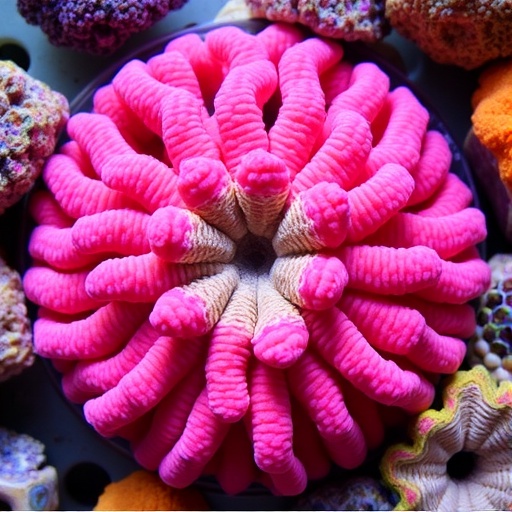
In a groundbreaking study, scientists have unveiled a remarkable correlation between coral tissue depth and environmental stress factors, providing new insights into the complex interplay between coral physiology and climate dynamics. The research, conducted by Vincent and Sheldrake, has set off a wave of interest in marine biology and conservation circles as it highlights the urgent need to understand coral resilience in the face of escalating environmental threats.
Coral reefs, often referred to as the “rainforests of the sea,” are essential to marine ecosystems, supporting a myriad of species and providing critical resources for coastal communities. However, they are increasingly threatened by global warming, ocean acidification, and pollution. This new research sheds light on how these stresses influence coral health at a microstructural level, specifically focusing on the relationship between skeletal microstructural offsets and tissue depth.
The study takes a bold approach by meticulously reconstructing coral tissue depths, revealing that variations in tissue thickness are not merely a response to growth conditions but also a significant indicator of environmental stress. By examining skeletal structures, the researchers have been able to quantify changes in tissue depth with startling accuracy, providing a new tool for assessing the health of coral reefs.
One of the key findings of Vincent and Sheldrake’s research is that coral tissue depth serves as a crucial barometer for environmental health. A reduction in tissue depth often signifies acute stress responses, indicating that corals are either struggling to cope with adverse conditions or adapting to survive in less than ideal environments. This insight is pivotal for marine ecologists striving to monitor and protect reef ecosystems.
Through advanced imaging techniques and analytical methods, the researchers meticulously analyzed coral samples from various locations, each experiencing different levels of environmental stress. Their findings draw a direct link between stress indicators and deviations in tissue depth, suggesting that these microstructural changes could serve as valuable metrics for gauging reef health on a larger scale.
The implications of this study extend well beyond academic interest; they carry significant ramifications for conservation and management strategies. Understanding how coral physiology responds to environmental stressors can help inform efforts aimed at mitigating damage to these vital ecosystems. Effective management relies heavily on accurate indicators of coral health, making the research of Vincent and Sheldrake particularly timely in the context of global climate challenges.
The research utilizes a unique methodology involving the examination of skeletal microstructures. By analyzing the offsets in skeletal structures, the researchers were able to draw inferences about the living tissue that resides atop the skeleton. This innovative approach highlights the interconnectedness of physical structures and biological responses, offering a richer understanding of coral biology.
As climate change continues to wreak havoc on marine ecosystems, the urgency for robust conservation strategies has never been greater. This study emphasizes the need for an integrated response that considers both environmental factors and biological indicators like tissue depth. It serves as a clarion call for scientists and policymakers to prioritize research funding and protective measures for coral reefs around the globe.
The precise relationship between coral tissue depth and environmental stress factors opens new avenues for research, prompting investigations into specific stress responses across different coral species. It raises intriguing questions about evolutionary adaptations and the potential for certain species to tolerate or even thrive under increased environmental pressures.
Moreover, the research has profound implications for predicting the future of coral reefs in a rapidly changing climate. As global temperatures rise and oceanic conditions fluctuate, understanding how corals respond at a microscopic level will be crucial for creating effective conservation frameworks. The findings from this study could ultimately aid in the development of more resilient coral strains, enhancing the survival chances of reefs in the face of unavoidable climatic shifts.
Public engagement with coral conservation is essential, and studies like this one play a crucial role in raising awareness. By illuminating the intricacies of coral biology and the threats they face, researchers can foster a sense of stewardship among the public. Education on the importance of coral reefs not only advances scientific understanding but also cultivates a collective responsibility to protect these vital ecosystems.
In conclusion, the research conducted by Vincent and Sheldrake represents a significant advance in our understanding of coral health and its relationship with environmental stressors. Their work offers a new lens through which to view the challenges facing coral reefs and underscores the importance of continuous research in developing adaptive management strategies. It remains clear that conserving coral ecosystems requires a multi-faceted approach that addresses both the biological and environmental dimensions of their survival.
The urgency of these findings cannot be overstated, as coral reefs continue to face unprecedented threats from human activity and climate change. This study not only enhances our understanding of coral resilience but also serves as a vital step in the ongoing effort to protect and preserve these irreplaceable marine environments for future generations.
With continued research and public engagement, there’s hope that coral reefs can be safeguarded against the mounting pressures of environmental change, ensuring that these underwater ecosystems remain vibrant and thriving.
Subject of Research: Coral tissue depth and environmental stress factors
Article Title: Coral tissue depth reconstructed using skeletal microstructural offsets is driven by environmental stress
Article References:
Vincent, J., Sheldrake, T. Coral tissue depth reconstructed using skeletal microstructural offsets is driven by environmental stress.
Commun Earth Environ (2026). https://doi.org/10.1038/s43247-025-03114-2
Image Credits: AI Generated
DOI: 10.1038/s43247-025-03114-2
Keywords: coral, tissue depth, environmental stress, climate change, marine biology


