


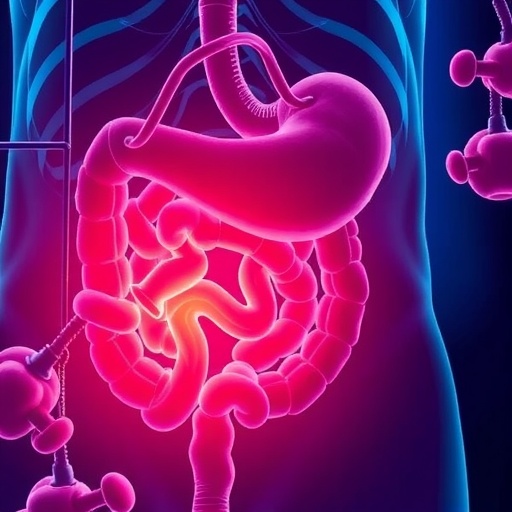
A groundbreaking study from Keio University School of Medicine in Japan has unveiled a novel genetic driver of tumorigenesis in small intestine cancers, challenging long-standing paradigms about the molecular basis of these malignancies. Contrary to the well-established role of APC mutations in colorectal cancer, the research team discovered recurrent mutations in the COPA gene that instigate cancer progression via an unprecedented mechanism. This revelation not only deepens our understanding of intestinal tumor biology but also holds promise for developing targeted diagnostics and therapies for a notoriously rare and understudied form of gastrointestinal cancer.
For decades, the Wnt signaling pathway has been recognized as a pivotal molecular cascade governing cellular proliferation, differentiation, and renewal in the intestinal epithelium. Central to colorectal cancer initiation is the inactivation of APC, a tumor suppressor that normally constrains Wnt signaling. However, small intestine adenocarcinomas exhibit a perplexing disparity: while benign adenomas frequently harbor APC mutations, their malignant counterparts often do not. This enigmatic discrepancy has puzzled oncologists and molecular biologists alike, hinting at alternative oncogenic drivers.
Addressing this clinical and molecular conundrum, the research consortium led by Professors Shigeki Sekine and Toshiro Sato performed comprehensive genomic sequencing on a series of morphologically distinct small intestinal adenomas characterized by protruding, branched glandular structures. Their analysis pinpointed recurrent deletions concentrating in a critical segment of COPA, a gene encoding a subunit of the coatomer complex integral to membrane trafficking between the Golgi apparatus and endoplasmic reticulum. This association had hitherto been unrecognized in the landscape of cancer genomics.
Subsequent validation in a broader patient cohort confirmed the presence of COPA mutations in a subset of both adenoma and adenocarcinoma samples, notably in tumors lacking canonical APC or other Wnt pathway gene alterations. This compelling evidence positions COPA mutations as an independent route to intestinal tumorigenesis, circumventing established Wnt pathway checkpoints. According to Associate Professor Masayuki Fujii, this discovery represents a paradigm shift, underscoring the notion that critical cancer-associated genetic alterations remain elusive even after exhaustive research.
To elucidate the functional ramifications of COPA mutations, the team cultivated patient-derived small intestinal organoids, miniature three-dimensional tissue models faithfully recapitulating in vivo cellular architecture and microenvironment. Gene editing techniques were then employed to introduce COPA mutations into normal intestinal organoids. Remarkably, these mutations triggered robust activation of the Wnt pathway in the absence of R-spondin and Noggin, two essential extracellular proteins traditionally required to potentiate Wnt signaling. This finding indicates that COPA mutations enable tumor cells to autonomously sustain proliferative signals, bypassing normal regulatory controls.
The mechanistic underpinnings of COPA-driven Wnt activation appear to stem from impaired intracellular protein trafficking, which may lead to aberrant localization or turnover of Wnt pathway components. By disrupting the coatomer complex’s role in vesicular transport, COPA mutations potentially facilitate the accumulation or misdistribution of signaling molecules, thus amplifying oncogenic pathways. This novel route to Wnt pathway dysregulation suggests a broader spectrum of cellular processes influencing tumorigenesis beyond genetic mutations in classical signaling mediators.
Clinically, the identification of COPA mutations as alternative drivers in small intestinal tumorigenesis holds significant implications for tumor classification and diagnosis. Small intestine cancers, representing a mere 3% of gastrointestinal malignancies, have eluded precise stratification due to their rarity and heterogenous molecular profiles. Incorporating COPA mutation status into diagnostic criteria could refine existing frameworks such as the WHO classification of digestive system tumors, thereby enhancing pathologists’ ability to distinguish tumor subtypes and inform prognostic assessments.
Furthermore, the dichotomy between APC-mutated adenomas and adenocarcinomas lacking these mutations finds a plausible explanation through the dual pathways revealed in this study. Tumor progression in the small intestine may thus proceed via distinct molecular routes: one canonical pathway reliant on APC inactivation and another COPA-driven trajectory enabling Wnt signaling independent of extracellular amplification. This insight underscores the complexity and plasticity of tumor evolution in gastrointestinal tissues.
Beyond diagnostic refinements, the elucidation of COPA mutations’ role opens avenues for therapeutic innovation. Targeting the aberrant protein trafficking processes or the downstream effects on Wnt signaling may yield novel treatment strategies, particularly for patients whose tumors do not harbor APC mutations and are therefore unlikely to respond to therapies tailored to canonical Wnt pathway aberrations. Such personalized approaches could ultimately improve patient outcomes in a cancer subtype with historically limited options.
The study employed state-of-the-art experimental methodologies, including whole-exome sequencing to identify genetic alterations, organoid culture systems to model disease biology ex vivo, and CRISPR-Cas9 gene editing to dissect causative relationships. This integrative approach exemplifies the cutting-edge convergence of genomics, cellular biology, and translational research in contemporary oncology.
As research progresses, additional investigations into the prevalence of COPA mutations across diverse populations and tumor stages will be essential. Likewise, elucidating the interplay between COPA and other cellular machineries may uncover further insights into how intracellular trafficking intersects with oncogenic signaling. Expanding our molecular atlas of small intestinal cancers not only advances scientific knowledge but also holds tangible clinical significance.
Professor Toshiro Sato emphasizes the seminal nature of this discovery, noting that it broadens the horizon of cancer genetics beyond the well-trodden paths dominated by classic tumor suppressors and oncogenes. The COPA gene, formerly obscure in cancer research, now emerges as a vital node in the intricate network of small intestine tumorigenesis, redefining potential targets for future diagnostics and therapeutics.
This landmark study was supported by esteemed funding bodies including the National Cancer Center Research and Development Fund and the Japan Society for the Promotion of Science, reflecting the high priority accorded to unraveling gastrointestinal cancer mechanisms. Collaborative efforts such as those fostered by the Keio University Global Research Institute continue to propel innovations that transcend disciplinary boundaries and geographic limitations.
In conclusion, the identification of COPA mutations as novel, independent drivers of Wnt pathway activation in small intestinal tumors revolutionizes our understanding of these elusive cancers. By uncovering an alternative oncogenic mechanism that bypasses the established requirement for extracellular Wnt amplifiers, this research not only fills a critical gap left by the inconsistencies in APC mutation distribution but also sets the stage for improved classification, diagnosis, and intervention strategies. As the medical community grapples with the challenges posed by rare cancers, such paradigm-shifting insights are invaluable steps toward optimizing patient care and fostering hope.
News Publication Date: 12-Jun-2026
References:
Sekine, S., Sato, T., Fujii, M., Abeto, N., et al. “Recurrent COPA mutation drives R-spondin-independent Wnt activation in intestinal tumors.” Nature Genetics, 2026. DOI: 10.1038/s41588-026-02616-9
Cite Scienmag News
Nathaniel Bowman. (June 12, 2026). COPA Mutations: A Surprising Catalyst in Intestinal Tumor Development. Scienmag. https://scienmag.com/copa-mutations-a-surprising-catalyst-in-intestinal-tumor-development/
Nathaniel Bowman. "COPA Mutations: A Surprising Catalyst in Intestinal Tumor Development." Scienmag, 12 June 2026, https://scienmag.com/copa-mutations-a-surprising-catalyst-in-intestinal-tumor-development/. Accessed 4 September 2026.
Nathaniel Bowman. "COPA Mutations: A Surprising Catalyst in Intestinal Tumor Development." Scienmag. June 12, 2026. https://scienmag.com/copa-mutations-a-surprising-catalyst-in-intestinal-tumor-development/


