


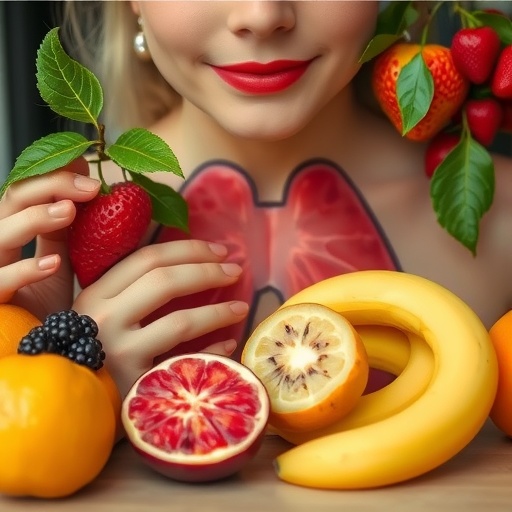
Air pollution remains one of the foremost environmental health threats globally, with more than 90% of the world’s population exposed to pollutant levels exceeding safety guidelines set by the World Health Organization (WHO). Among the pernicious pollutants, fine particulate matter (PM₂.₅), defined as airborne particles with a diameter of 2.5 micrometers or less, is especially concerning due to its ability to deeply penetrate the respiratory tract and impair lung function. Emerging research presented at the prestigious European Respiratory Society Congress in Amsterdam elucidates a potentially accessible avenue to mitigate some of these effects: dietary interventions centered on fruit consumption.
Pimpika Kaewsri, a doctoral researcher from the Centre for Environmental Health and Sustainability at the University of Leicester, spearheaded an extensive observational analysis tapping into the rich dataset of the UK Biobank, encompassing around 200,000 participants. This dataset provided a unique opportunity to rigorously explore the intersection of environmental exposure, nutrition, and respiratory health by juxtaposing self-reported dietary patterns—specifically fruit, vegetable, and whole grain intake—with objective lung function measurements, notably Forced Expiratory Volume in one second (FEV₁), a critical clinical biomarker quantifying the volume of air an individual can forcibly exhale in the first second of a breath.
The study’s core hypothesis rested on the premise that while exposure to PM₂.₅ particles is well-documented to reduce lung capacity and contribute to chronic respiratory diseases, an antioxidant-rich diet, particularly high in fruit, could offer protective bioactive compounds that attenuate inflammation and oxidative damage within pulmonary tissues. Antioxidants found in fruits, including vitamins C and E, flavonoids, and carotenoids, are known to neutralize free radicals and reduce cellular stress, potentially counteracting the pathological cascade triggered by environmental toxicants.
Quantitative results from Kaewsri’s analysis demonstrated a notable divergence between individuals consuming low versus high amounts of fruit. Among women, an increment of 5 micrograms per cubic meter of PM₂.₅ correlated with a 78.1 ml reduction in FEV₁ in those with low fruit intake, compared to a comparatively mitigated 57.5 ml decrement in those with higher fruit consumption. This differential highlights a measurable protective association suggesting that consistent fruit intake can modulate the negative respiratory impacts of airborne pollutants.
Interestingly, this protective association was predominantly observed in women, a finding Kaewsri attributes to documented sex-based differences in diet, with men generally reporting lower fruit consumption. This observation provokes further inquiry into the nuanced interplay between gender-specific lifestyle factors, diet, and respiratory vulnerability. It also intimates the potential for targeted nutritional recommendations and public health strategies that consider demographic variables.
Beyond simple correlation, the study carefully accounted for confounding factors such as age, height, and socioeconomic status to isolate the relationship between diet, pollution exposure, and lung function robustly. However, the inherently observational nature of the research precludes definitive causal inferences, underscoring the need for longitudinal and interventional studies to validate and expand upon these promising findings.
Kaewsri anticipates extending this line of investigation by examining how dietary patterns influence changes in lung function over time, potentially unraveling whether regular fruit intake can slow or prevent progressive respiratory decline linked to chronic pollution exposure. If substantiated, such findings could revolutionize preventive respiratory medicine by integrating environmental health and nutrition science paradigms.
Expert commentary from Professor Sara De Matteis, Chair of the European Respiratory Society’s expert group on occupational and environmental health, underscores the broader public health implications. She highlights the study’s reinforcement of the protective role a plant-rich diet can play in respiratory well-being while cautioning against viewing diet as a panacea that absolves governmental responsibility to enforce stringent air quality regulations. Professor De Matteis advocates for lifelong population-level dietary education coupled with persistent environmental policies to minimize pollutant exposures comprehensively.
The implications of this research resonate beyond respiratory medicine into areas such as environmental justice and social equity. Access to affordable, nutritious fruits is not uniformly distributed, often constrained by economic and geographic limitations. Effective health interventions must therefore address systemic barriers to equitable nutrition while concurrently advancing cleaner air initiatives.
This research aligns with a broader scientific discourse recognizing the multifactorial nature of respiratory health determinants. As urbanization intensifies and industrial emissions persist, integrative strategies harnessing lifestyle modification, policy reform, and technological innovation become imperative.
Further mechanistic research into the antioxidative pathways activated by fruit bioactives in lung tissues could illuminate novel therapeutic targets. For instance, elucidating how phytochemicals modulate inflammatory cytokines and oxidative enzymes in response to particulate exposure might pave the way for nutritional supplements or functional foods specifically designed to bolster pulmonary defenses.
In sum, Kaewsri’s work marks a critical step toward understanding how everyday choices—like including multiple servings of fruit in daily diets—can materially influence resilience to environmental hazards. This integration of environmental health science with nutritional epidemiology exemplifies the evolving complexity of preventive medicine in the Anthropocene era.
As humanity grapples with escalating pollution challenges, such interdisciplinary research provides hope and pragmatic strategies for safeguarding respiratory health through accessible, scalable means. Adopting a holistic approach emphasizing both cleaner air and healthier diets could transform public health trajectories for millions worldwide.
Cite Scienmag News
Russell Cooper. (September 27, 2025). Consuming Fruit Could Mitigate Air Pollution’s Impact on Lung Health. Scienmag. https://scienmag.com/consuming-fruit-could-mitigate-air-pollutions-impact-on-lung-health/
Russell Cooper. "Consuming Fruit Could Mitigate Air Pollution’s Impact on Lung Health." Scienmag, 27 September 2025, https://scienmag.com/consuming-fruit-could-mitigate-air-pollutions-impact-on-lung-health/. Accessed 3 September 2026.
Russell Cooper. "Consuming Fruit Could Mitigate Air Pollution’s Impact on Lung Health." Scienmag. September 27, 2025. https://scienmag.com/consuming-fruit-could-mitigate-air-pollutions-impact-on-lung-health/


