


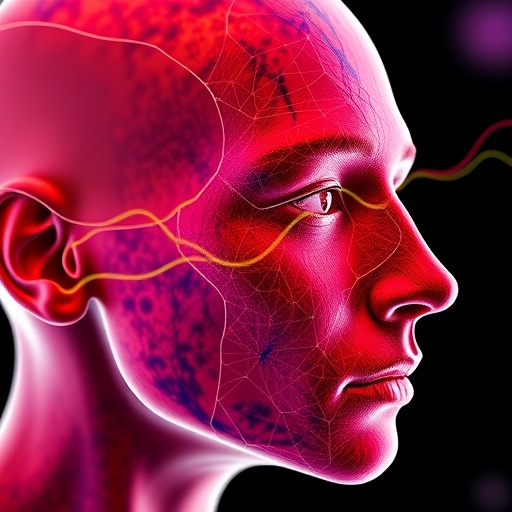
In a groundbreaking study published in the Annals of Biomedical Engineering, researchers have delved into the hemodynamic features of the offending vessels involved in primary hemifacial spasm. This condition, characterized by involuntary muscle contractions on one side of the face, has long posed a challenge for medical professionals seeking effective treatment options. By employing advanced computational fluid dynamics (CFD), the study offers new insights that could pave the way for innovative therapeutic strategies.
The research revolves around the intricate interactions between blood flow and vascular anatomy in patients suffering from primary hemifacial spasm. The phenomenon of hemodynamics refers to the dynamics of blood flow within the circulatory system, which plays a critical role in understanding many vascular disorders. In this case, it is particularly vital as it could illuminate the mechanics that trigger the spasms.
Utilizing a sophisticated CFD approach, the researchers were able to simulate blood flow around the specific vessels that are typically implicated in episodes of hemifacial spasm. This methodology not only provides a more detailed visualization of blood flow patterns but also allows for an analysis of how these patterns might correlate with the spasms. The ability to visualize this flow is crucial in hypothesizing why certain vessels appear to be more ‘offending’ than others.
In the study, the authors meticulously identified key parameters such as pressure gradients, flow velocities, and shear stress, all of which contribute significantly to the pathophysiology of hemifacial spasm. The findings indicated that certain morphological features of offending vessels, combined with pathological hemodynamic conditions, could lead to abnormal stimulation of nearby nerves, resulting in involuntary facial contractions. This newfound understanding highlights the critical interdependence between vascular structure and function in this specific clinical context.
To put these findings into perspective, it is important to acknowledge that existing treatment modalities often focus on surgical interventions to relieve the pressure on affected nerves. However, the revelations from this study suggest that a more nuanced approach, targeting the underlying hemodynamic mechanisms, might yield more sustainable outcomes. By addressing the flow characteristics of these vessels, healthcare professionals may develop tailored strategies that are both less invasive and more effective over the long term.
The utilization of CFD in this research marks a significant advancement in the field of biomedical engineering. By integrating engineering principles with clinical insights, researchers are able to foster a deeper understanding of complex medical conditions. This interdisciplinary approach is likely to inspire future studies exploring other vascular disorders with similar pathophysiological foundations.
Moreover, the computational aspect of this research underscores the growing trend of employing digital simulations in medical research. As computational resources become more accessible and powerful, the potential for applying CFD in various medical contexts only expands. The implications of such technological advancements could revolutionize how conditions like primary hemifacial spasm and other vascular disorders are approached and treated.
In summary, this study showcases a pioneering investigation into the hemodynamic features of offending vessels in primary hemifacial spasm, utilizing cutting-edge computational fluid dynamics. The elucidation of complex blood flow patterns associated with this condition not only enhances the medical community’s understanding but also opens the door to innovative treatment strategies aimed at reducing the frequency and intensity of facial spasms.
As researchers continue to explore the interactions between vascular anatomy and hemodynamics, we may ultimately observe a shift in how primary hemifacial spasm is understood and managed. These findings exemplify the vital role that interdisciplinary research plays in tackling intricate health issues and enhancing patient outcomes. The integration of engineering principles into clinical settings enriches the dialogue surrounding complex medical conditions and reveals new avenues for potential therapies.
Through this in-depth study, the authors hope to inspire further investigations that can build on their findings and contribute to a holistic understanding of primary hemifacial spasm. The interplay between the structure of blood vessels and their hemodynamic behaviors offers a fertile ground for future research, with significant implications for various medical fields.
In conclusion, as the scientific community moves forward, embracing innovations and computational methodologies, we may very well be on the cusp of transformative changes in how primary hemifacial spasm and similar conditions are conceptualized and treated. This adaptive research paradigm promises to foster a new era of targeted, effective, and patient-centered therapies for those afflicted by this challenging neurological disorder.
You, Y., You, C., Zhang, Y. et al. Hemodynamic Features of Offending Vessels in Primary Hemifacial Spasm: A Computational Fluid Dynamics Study.
Ann Biomed Eng (2025). https://doi.org/10.1007/s10439-025-03952-3
Cite Scienmag News
Audrey Campbell. (December 28, 2025). Computational Study Reveals Hemodynamics in Hemifacial Spasm. Scienmag. https://scienmag.com/computational-study-reveals-hemodynamics-in-hemifacial-spasm/
Audrey Campbell. "Computational Study Reveals Hemodynamics in Hemifacial Spasm." Scienmag, 28 December 2025, https://scienmag.com/computational-study-reveals-hemodynamics-in-hemifacial-spasm/. Accessed 3 September 2026.
Audrey Campbell. "Computational Study Reveals Hemodynamics in Hemifacial Spasm." Scienmag. December 28, 2025. https://scienmag.com/computational-study-reveals-hemodynamics-in-hemifacial-spasm/


