


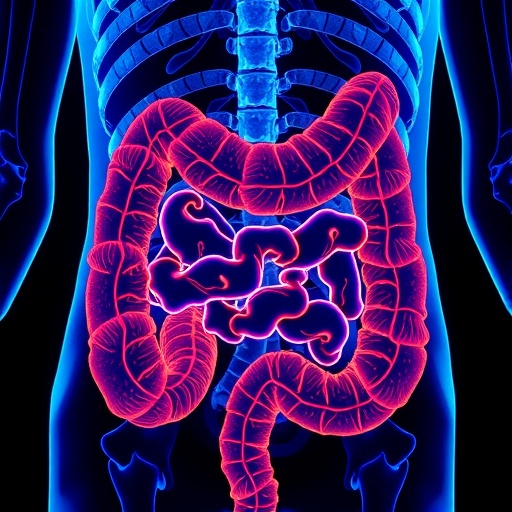
In the relentless quest to unravel the complexities of colorectal cancer (CRC), a groundbreaking study has spotlighted a pivotal molecular player driving the disease’s progression and metastatic spread. Published in BMC Cancer, this research zeroes in on the intricate role of cartilage oligomeric matrix protein, or COMP, as a critical regulator of epithelial-mesenchymal transition (EMT), a biological program that enables cancer cells to gain migratory and invasive traits.
Colorectal cancer remains one of the leading causes of cancer mortality worldwide, largely due to its propensity for metastasis. EMT, a process originally characterized in embryonic development, allows epithelial cells to acquire mesenchymal properties, facilitating detachment and invasion into surrounding tissues. Understanding the molecular switches that control EMT in CRC has been a paramount objective in cancer biology, with hopes of unveiling novel therapeutic targets.
This comprehensive investigation employed multi-omics bioinformatics analyses encompassing vast transcriptomic datasets derived from Gene Expression Omnibus (GEO) and The Cancer Genome Atlas (TCGA). By rigorously mining these datasets, the researchers identified a panel of 36 differentially expressed genes closely tied to the EMT process in CRC samples. These genes were entrenched in critical signaling cascades including extracellular matrix (ECM)-receptor interaction, focal adhesion, and the PI3K-Akt pathway, pathways notorious for their roles in cancer cell survival and motility.
To distill the most impactful prognostic biomarkers among the EMT-related genes, the team leveraged sophisticated machine learning techniques, particularly the random survival forest (RSF) model. This approach excelled in stratifying CRC patients into distinct risk categories with significant differences in overall survival outcomes. Among the candidates, COMP emerged as a standout hub gene, demonstrating strong statistical association with poor patient prognosis.
Delving deeper into COMP’s mechanistic roles, single-cell RNA sequencing analyses revealed its enriched expression in specific cell populations within CRC tissues, underpinning its selective involvement in tumor progression. Clinical validation using colorectal cancer tissue samples further substantiated these findings. High COMP expression levels correlated with disrupted EMT marker balances, notably an upregulation of mesenchymal markers and suppression of adherent epithelial markers such as E-cadherin, hallmark features of aggressive, invasive tumors.
In vitro experiments using HT-29 colorectal cancer cells painted a compelling picture of COMP’s functional influence. Knockdown of COMP led to a marked restoration of epithelial characteristics, underscoring a reversal of EMT. Concomitantly, there was a significant reduction in cellular proliferation, invasion, and migratory capacities, coupled with enhanced apoptotic activity. These observations underscore COMP’s role not only as a biomarker but also as a functional driver of malignant phenotypes in CRC.
The study’s integrative strategy, combining big data analytics with molecular biology and clinical validation, represents a paradigm shift in how oncogenic pathways can be deciphered and exploited. By mapping COMP within ECM-receptor interactions and PI3K-Akt signaling, researchers highlighted its critical positioning at the crossroads of pathways that confer cellular plasticity and survival advantage to tumor cells.
Notably, the link between COMP and ECM remodeling elucidates a vital aspect of the tumor microenvironment’s contribution to cancer dissemination. The ECM is a dynamic scaffold that, when altered, facilitates invasive behavior. COMP appears to modulate this niche, thereby enhancing the metastatic potential of colorectal cancer cells.
This discovery holds profound implications for clinical management. COMP expression could serve as a prognostic indicator to identify high-risk CRC patients who might benefit from more aggressive or targeted therapeutic regimens. Furthermore, therapeutic strategies aimed at inhibiting COMP function may arrest the EMT process, impeding metastasis and improving patient outcomes.
The revelation of COMP’s critical role also invites exploration into combinatory treatments. Targeting COMP alongside PI3K-Akt inhibitors may provide synergistic suppression of CRC progression, addressing resistance mechanisms commonly encountered with monotherapies.
Beyond its immediate translational relevance, the study brings attention to the power of machine learning in oncology research. By adopting the RSF model, the team effectively navigated high-dimensional genomic data to pinpoint clinically significant molecular markers, exemplifying the future trajectory of precision medicine.
Importantly, the findings call for further functional studies to elucidate the downstream signaling events governed by COMP, as well as its interplay with other components of the tumor microenvironment. Understanding these nuances could pave the way for novel interventions that disrupt metastatic cascades at multiple levels.
In a disease where metastasis drastically diminishes survival rates, identifying molecular gatekeepers like COMP offers a beacon of hope. This research not only deepens scientific comprehension of CRC biology but also charts a course towards targeted interventions, potentially reducing morbidity and mortality associated with late-stage colorectal cancer.
As cancer researchers worldwide grapple with the heterogeneous and adaptive nature of tumors, discoveries such as COMP’s role in EMT underscore the necessity of interdisciplinary approaches—melding computational power, molecular insight, and clinical acumen—to outpace cancer’s advancement.
Ultimately, this study propels the field forward by linking molecular intricacies with tangible clinical challenges, embodying the promise of translational oncology. COMP stands as a testament to the dynamic interplay between tumor cells and their microenvironment, orchestrating the deadly symphony of colorectal cancer metastasis.
Cite Scienmag News
Nathaniel Bowman. (November 5, 2025). COMP Drives Colorectal Cancer via EMT Regulation. Scienmag. https://scienmag.com/comp-drives-colorectal-cancer-via-emt-regulation/
Nathaniel Bowman. "COMP Drives Colorectal Cancer via EMT Regulation." Scienmag, 5 November 2025, https://scienmag.com/comp-drives-colorectal-cancer-via-emt-regulation/. Accessed 4 September 2026.
Nathaniel Bowman. "COMP Drives Colorectal Cancer via EMT Regulation." Scienmag. November 5, 2025. https://scienmag.com/comp-drives-colorectal-cancer-via-emt-regulation/


