

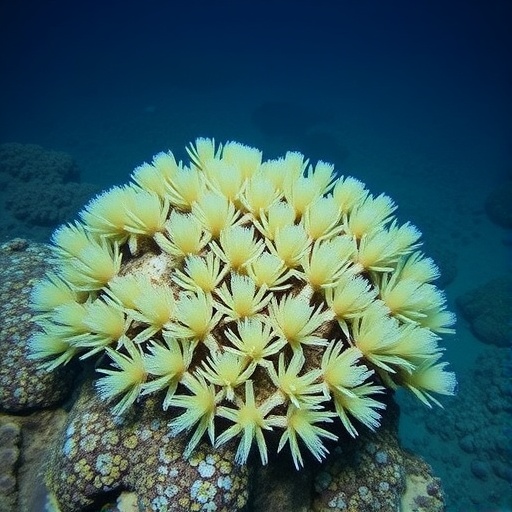
In a groundbreaking study published in the esteemed journal Coral Reefs, researchers have uncovered vital insights into the complex dynamics of coral growth that could drastically influence the future of reef restoration efforts. The study, led by Gamache et al., investigates the significant growth variation within coral colonies, a phenomenon that may obscure important genetic interactions between the host corals and their symbiotic algae. The implications of these findings extend far beyond academic debate, as they can impact conservation strategies crucial for the survival of coral reefs.
Corals are not merely passive marine organisms; they are intricate symbiotic systems. Each coral host is home to various strains of zooxanthellae, a form of symbiotic algae crucial for their energy production. The efficiency of these interactions ultimately shapes the health and resilience of coral colonies. However, understanding how genes and environmental factors collaborate to influence growth rates has remained a challenge. This study delves deep into these intricacies, shedding light on how variation in growth can cloud the interpretation of these genetic factors.
The research team meticulously reared corals in nurseries to analyze their growth patterns. By specifically studying nursery-reared corals, they aimed to isolate the genetic contributions from environmental influences that might otherwise complicate the analysis. The findings reveal a striking level of variability in growth rates across individual corals within the same colony, suggesting that genetic factors may play a more nuanced role than previously understood. This discovery has significant ramifications for coral restoration initiatives, which often focus narrowly on genetically uniform populations.
One critical takeaway from the study is that the effects of host and symbiont genotypes can be obscured by the variability in growth among individual corals. This means that efforts to selectively breed corals for restoration must take into account such variations rather than solely focus on the perceived “best” genetic strains. These insights challenge existing practices and call for a more sophisticated understanding of coral genetics, which incorporates the complexities of intra-colony growth dynamics.
Beyond revealing the genetic complexities of these organisms, the findings pose pressing questions regarding the methodologies employed in coral research and restoration projects. Traditional assessment techniques that overlook within-colony growth variations may render genetic impacts indistinguishable. Consequently, restoration methods that do not consider these variances risk undermining the genetic adaptability and capacity of coral populations to thrive in shifting environmental conditions.
Additionally, the environmental implications of these genetic interactions are vast. As climate change pressures intensify, understanding how corals respond to stress becomes paramount. Growth discrepancies may indicate varying levels of stress tolerance among different genotypes, providing crucial data for selection in restoration programs aimed at enhancing resilience. The research underscores the need for multifaceted strategies that align both genetic and environmental factors in coral conservation efforts.
The findings also prompt a reevaluation of the methods used in marine research. Many scientists have historically relied on homogenous populations for their studies. By embracing a more diverse approach—acknowledging the individual variations within colonies—researchers can facilitate more accurate assessments of genetic resilience in corals. This shift in methodology could lead to more successful conservation strategies, ensuring that coral populations can endure and flourish even as their environments change dramatically.
Another striking aspect of the findings is the potential for these variations to inform future research directions. By examining the relationships between growth rates and environmental influences, scientists can better understand the ecological niches that different coral genotypes may occupy. Such insights could guide targeted research initiatives aimed at enhancing coral health, particularly in regions susceptible to bleaching events and other stressors.
The implications of Gamache et al.’s findings extend to a broader ecological understanding of how coral reefs contribute to biodiversity. Corals serve as essential habitats for numerous marine species, and any decline in coral health directly impacts the broader marine ecosystem. This study provides an urgent reminder that preserving genetic diversity within coral populations is essential not just for their survival, but for the myriad species that rely on them.
As the research community grapples with the data presented by Gamache and her colleagues, it becomes clear that future studies will need to address the intricate interplay between genotype, growth variation, and environmental factors. A comprehensive approach that incorporates these variables will be essential in developing effective conservation frameworks for coral reefs worldwide.
The significance of this research cannot be overstated; it represents a critical step toward revolutionizing conservation practices in the face of climate change. By aligning genetic research with practical restoration efforts, scientists and environmentalists can forge a path forward that supports the resilience of coral populations and the ecosystems they sustain. The paper stands as a testament to the importance of integrating diverse perspectives in scientific inquiry, ultimately paving the way for innovative solutions in the field of marine conservation.
In conclusion, while the study of corals becomes ever more complex, it also offers the promise of actionable insights that can directly influence coral reef conservation strategies. As we strive to protect these vital ecosystems, we must heed the lessons learned from Gamache et al.’s research—it is the intricasy of genetics and the variability in growth that may hold the key to a sustainable future for coral reefs around the globe.
Subject of Research: Coral growth variations and genetic interactions in nursery-reared corals
Article Title: High within-colony growth variation can obscure host and symbiont genotype effects in nursery-reared corals
Article References:
Gamache, M.H., Goergen, E.A., Gilliam, D.S. et al. High within-colony growth variation can obscure host and symbiont genotype effects in nursery-reared corals. Coral Reefs (2025). https://doi.org/10.1007/s00338-025-02803-w
Image Credits: AI Generated
DOI: https://doi.org/10.1007/s00338-025-02803-w
Keywords: Coral reefs, genetic diversity, growth variation, conservation, symbiotic relationships.


