


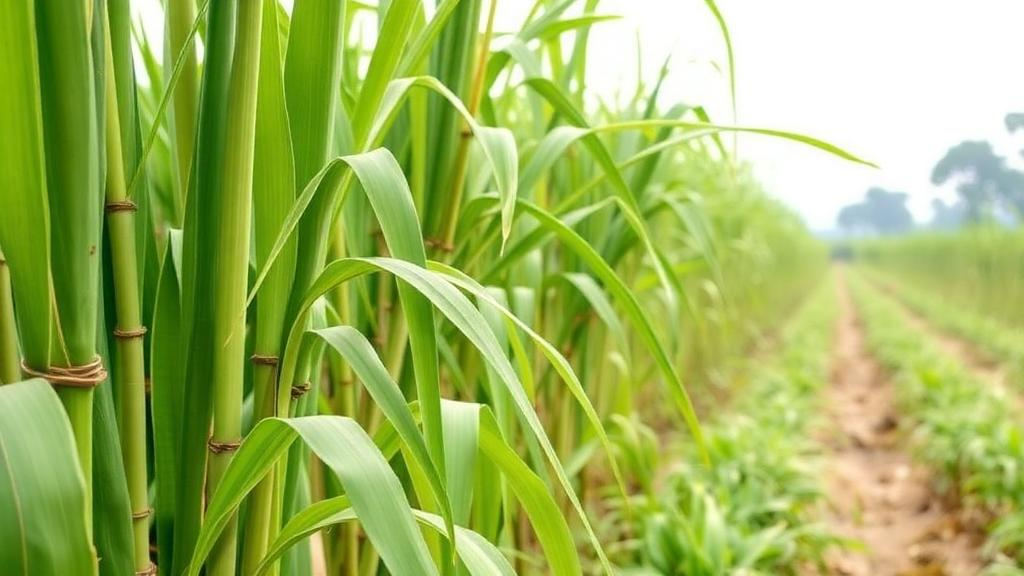
Indian sugarcane farmers in Haryana are set to receive a powerful new tool in their fight for higher productivity and profitability. A team of plant breeders at Chaudhary Charan Singh Haryana Agricultural University (CCS HAU) has developed and released CoH 188, a new early-maturing sugarcane variety specifically tailored to the agro-climatic conditions of Haryana. The variety, described in a recent publication in the Indian Journal of Genetics and Plant Breeding, represents the culmination of years of systematic breeding, multi-location testing, and evaluation aimed at addressing one of the most persistent challenges in the region’s sugarcane economy: the long duration of conventional varieties that ties up land, water, and capital for extended periods before harvest.
Sugarcane is a cornerstone crop of Haryana’s agricultural landscape, supporting a network of sugar mills and thousands of farming households across the state’s canal-irrigated districts. However, the productivity of the crop depends heavily on the genetic potential of the variety grown, its response to local soil and weather conditions, and its maturity profile. Late-maturing varieties occupy the field for twelve months or more, delaying harvest, extending the crushing season’s tail, and exposing the crop to additional risks from pests, diseases, and weather extremes. Early-maturing varieties, by contrast, allow farmers to harvest sooner, free their fields for the next crop cycle, and supply sugar mills with high-sucrose cane at the start of the crushing season, when recovery rates are typically at their best.
CoH 188 was bred at the Regional Research Station in Uchani, Karnal, one of the key research facilities of CCS HAU dedicated to sugarcane improvement in the state. The breeding programme there has a long history of developing varieties adapted to northwestern India’s semi-arid subtropical conditions, where hot summers, monsoon-dependent rainfall, and winter frosts impose specific selection pressures on the crop. The development of a new variety in sugarcane is a slow and complex process, involving the creation of seedlings from crosses between elite parental clones, followed by successive generations of clonal selection, evaluation in preliminary trials, and ultimately large-scale multi-location testing under the All India Coordinated Research Project framework before formal release and notification.
The technical pathway leading to CoH 188 involved careful selection for a combination of traits that matter most to both farmers and sugar mills. Breeders evaluated candidate clones for cane yield, sucrose content in juice, maturity behaviour, resistance to major diseases such as red rot, and adaptability across the diverse soil types found in Haryana’s sugarcane belt. Only clones that demonstrated consistent superiority over existing check varieties across multiple seasons and locations advance through the pipeline. The fact that CoH 188 emerged from this rigorous process indicates that it has demonstrated stable performance under the real conditions that Haryana farmers face, rather than merely excelling in a single favourable trial.
One of the most significant advantages of an early-maturing variety like CoH 188 is its potential to improve the sugar recovery profile of mills in the region. Sugar mills in northern India typically begin crushing operations in November or December, and the sucrose content of cane delivered early in the season is often lower than that of cane harvested later. Early-maturing varieties accumulate sucrose faster and reach peak sugar content sooner, which means that mills can achieve better recovery percentages from the very start of the season. This has cascading economic benefits: higher recovery translates into better payment for farmers under the revenue-sharing formula used in India, and more efficient mill operations reduce the overall cost of sugar production.
The release of CoH 188 also carries implications for cropping system intensification in Haryana. Because the variety matures earlier than conventional types, farmers who grow it can potentially harvest their cane in time to plant wheat or other rabi crops without the long overlap that late-maturing sugarcane forces. This kind of temporal flexibility is increasingly valuable in a state where land holdings are small and farmers need to maximise the productivity of every hectare. The ability to fit sugarcane more neatly into rotation with food grains could encourage more farmers to include the crop in their systems, supporting both sugar supply and household income diversification.
The development team, led by Sudhir Sharma and including Ramesh Bhurta, Naveen Kumar, Harbinder Singh, Maha Singh Jaglan, Ramesh Kumar, Vijeta Gupta, and Mehar Chand, all affiliated with the CCS HAU Regional Research Station in Uchani, Karnal, worked over multiple crop seasons to evaluate and refine the variety. Their publication documents the varietal notification and germplasm registration process, which formally recognises CoH 188 in India’s system of released varieties and makes its genetic material available for future breeding work. Germplasm registration is an important step because it ensures that the valuable genetic combinations embodied in the new variety are preserved and documented for use by future generations of breeders, not just for immediate commercial cultivation.
The formal notification of a variety in India is a significant regulatory milestone. Once a variety is notified by the central government following recommendations from state-level and national testing systems, it becomes eligible for seed production and large-scale distribution through official channels. This means that CoH 188 will now move from the research station into the hands of seed corporations, sugar mill extension programmes, and progressive farmers who multiply cane seed for their communities. The speed and scale of this adoption will depend on the availability of planting material, the demonstration of the variety’s advantages in farmers’ fields, and the support provided by state agricultural departments and sugar mill authorities.
Haryana’s sugarcane farmers have historically relied on a small number of dominant varieties, some of which have been in cultivation for many years and are gradually losing their vigour and disease resistance. The introduction of CoH 188 provides a fresh genetic option that can help diversify the varietal portfolio in the state, reducing the risks associated with genetic uniformity. In sugarcane, where the crop is propagated vegetatively and varieties remain in the field for multiple years, the gradual breakdown of resistance to diseases like red rot and wilt is a constant concern. New varieties with fresh genetic backgrounds are essential for maintaining the long-term sustainability of the crop.
As climate variability intensifies across northwestern India, with erratic monsoons, heat waves, and unseasonal frosts becoming more frequent, the importance of locally adapted, high-performing varieties cannot be overstated. CoH 188, developed specifically for Haryana’s conditions by a public agricultural university, represents the kind of regionally targeted breeding that is essential for building resilience in India’s sugarcane sector. The variety’s early maturity, combined with its documented performance in the state’s testing system, positions it as a potentially transformative addition to the sugarcane landscape of Haryana, offering farmers a faster route to harvest, better returns, and greater flexibility in managing their land and resources.
Subject of Research: Development and release of the early-maturing sugarcane variety CoH 188 for Haryana
Article Title: CoH 188: A New Early-Maturing Sugarcane Variety for Haryana
Article References: Sharma, S., Bhurta, R., Kumar, N., Singh, H., Jaglan, M. S., Kumar, R., Gupta, V., & Chand, M. (2026). CoH 188: A New Early-Maturing Sugarcane Variety for Haryana. Indian Journal of Genetics and Plant Breeding. https://doi.org/10.1007/s44489-026-00056-7
Image Credits: AI Generated
DOI: 10.1007/s44489-026-00056-7
Keywords: sugarcane, CoH 188, Haryana, early maturity, plant breeding, CCS HAU, variety release, sugar recovery, crop rotation, agricultural research, India, germplasm
Cite Scienmag News
Alan Morgan. (October 16, 2026). CoH 188: New Early-Maturing Sugarcane Variety Promises Faster Returns for Haryana Farmers. Scienmag. https://scienmag.com/coh-188-new-early-maturing-sugarcane-variety-promises-faster-returns-for-haryana-farmers/
Alan Morgan. "CoH 188: New Early-Maturing Sugarcane Variety Promises Faster Returns for Haryana Farmers." Scienmag, 16 October 2026, https://scienmag.com/coh-188-new-early-maturing-sugarcane-variety-promises-faster-returns-for-haryana-farmers/. Accessed 16 October 2026.
Alan Morgan. "CoH 188: New Early-Maturing Sugarcane Variety Promises Faster Returns for Haryana Farmers." Scienmag. October 16, 2026. https://scienmag.com/coh-188-new-early-maturing-sugarcane-variety-promises-faster-returns-for-haryana-farmers/


