


In the landscape of psychiatric treatment, clozapine has long stood as a critical option for patients grappling with treatment-resistant schizophrenia. Recent research offers an unprecedented glimpse into how clozapine prescribing patterns have evolved across Germany over the past decade. This extensive study, conducted by Scholle and colleagues, meticulously analyzed national prescription data from 2012 through 2022, uncovering nuanced temporal trends and marked regional disparities in this essential antipsychotic’s use.
Clozapine’s uniquely potent efficacy in treatment-resistant schizophrenia is well-established, making its prescription a cornerstone in psychiatric therapeutics for patients who do not respond to other antipsychotics. However, its use requires careful monitoring due to potential severe side effects such as agranulocytosis. Understanding where and how clozapine is prescribed can offer critical insights into healthcare accessibility, diagnostic protocols, and regional medical practices across Germany. Scholle et al. leveraged a robust dataset encompassing a decade of prescription records to dissect these patterns, yielding findings with profound implications for mental health services.
The study reveals a general upward trajectory in clozapine prescriptions over the ten years examined. This increase suggests a growing recognition among clinicians of its indispensability in treating refractory schizophrenia, possibly influenced by enhanced awareness of clinical guidelines and improved safety protocols that mitigate concerns over side effects. This trend reflects a shift towards more aggressive treatment tactics when addressing resistant symptoms, potentially improving patient outcomes on a national scale.
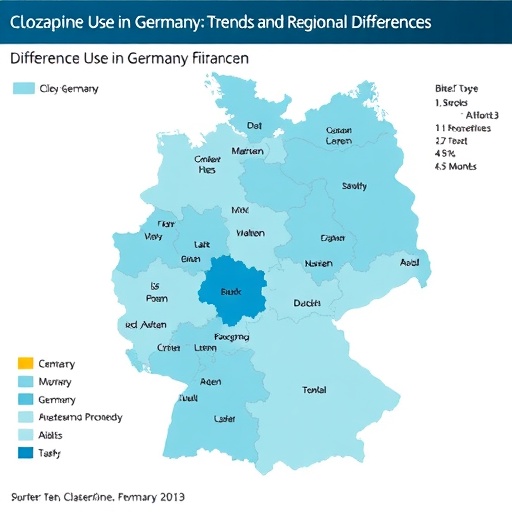
Notably, this rise in clozapine use is far from uniform across Germany’s regions. Scholle and colleagues highlighted considerable geographic variability, with some federal states exhibiting significantly higher clozapine prescription rates than others. These findings suggest disparities in either the prevalence of treatment-resistant cases, prescribing habits, or the accessibility of psychiatric care facilities equipped for clozapine administration and monitoring. The implications of such heterogeneity are critical, pointing to potential inequalities in healthcare provision or differences in clinician training and attitudes.
The data indicate that eastern states of Germany generally show lower clozapine prescription rates compared to their western counterparts. This pattern may reflect historical, systemic, or infrastructural differences post-reunification that continue to shape healthcare delivery. The authors suggest that resource allocation, availability of specialized psychiatric services, and regional healthcare policies might contribute to this variation. Understanding these factors is vital in addressing regional disparities and ensuring equitable care for patients with severe mental illness.
Analyzing demographic factors, the study found age and gender distribution of clozapine recipients remained relatively stable over the decade. This constancy implies that demographic shifts are unlikely drivers for the changing prescription trends. Instead, the most probable catalysts involve changes in clinical practice guidelines, enhancements in diagnostic accuracy for treatment-resistant schizophrenia, and possibly greater patient advocacy or demand for effective therapies.
The research methodology combined large-scale prescription data with rigorous statistical analyses to ensure accuracy and validity. By focusing on prescription rates per 100,000 insured persons, the team normalized data to allow comparison across regions with varying population sizes and insurance structures. Such a methodological approach ensures that observed differences are epidemiologically meaningful rather than artifacts of population density or reporting bias.
This comprehensive temporal and spatial mapping provides policymakers with actionable intelligence. Regions identified as lagging in clozapine use might benefit from targeted interventions aimed at boosting clinician education, resource availability, and patient support systems. Equally, understanding how successful regions manage clozapine therapy could help propagate best practices nationwide, enhancing overall treatment quality.
Beyond healthcare systems, the study touches upon socio-cultural influences potentially shaping prescribing behavior. The stigma associated with schizophrenia and side effects of clozapine might influence both patients’ willingness to start or continue treatment and physicians’ propensity to prescribe it. Regional cultural attitudes towards mental health treatment could thus indirectly affect clozapine utilization, an area ripe for further qualitative research.
The implications of these findings extend into the realm of health economics. Increasing clozapine use suggests rising healthcare costs associated with intensive monitoring but contrasts with the potential for reduced long-term costs due to improved symptom control, fewer hospitalizations, and enhanced patient quality of life. Hence, optimizing clozapine prescribing not only bears clinical importance but also economic significance for national health systems.
Interestingly, the study period covers a decade that includes substantial advancements in digital health records and telemedicine, which could have facilitated better patient monitoring required for clozapine’s safe use. The impact of such technological progress on prescription trends merits further scrutiny, as telepsychiatry and remote monitoring might represent pivotal tools for expanding access to clozapine treatment, especially in underserved areas.
Despite the study’s comprehensive nature, the authors acknowledge limitations inherent in prescription data analyses, such as the absence of direct patient outcome measures and potential underestimation of off-label or undocumented clozapine use. They advocate for complementary research involving clinical outcomes, patient adherence, and side-effect management to paint a more holistic picture of clozapine treatment dynamics.
This landmark investigation into clozapine prescribing across Germany ultimately portrays a healthcare landscape in transition, marked by increasing acceptance of this life-transforming medication tempered with regional challenges. As mental health burden continues to climb worldwide, insights gleaned from such detailed pharmacoepidemiological studies are invaluable for shaping more effective, equitable, and responsive psychiatric care frameworks.
The nuanced understanding of temporal and regional variations in clozapine use provided by Scholle et al. heralds a path toward reducing disparities and optimizing treatment strategies. It calls on stakeholders—from clinicians and healthcare administrators to policymakers and patient advocates—to collaborate closely in harnessing this knowledge for patient-centered advancements in schizophrenia management.
As schizophrenia remains a formidable challenge, research spotlighting therapeutic trends in real-world settings bridges critical gaps between clinical potential and everyday practice. This study not only underscores the vital role of clozapine but also exemplifies how data-driven analysis can catalyze improvements in mental health care delivery, ultimately fostering hope for patients and families impacted by this complex disorder.
Cite Scienmag News
Glenn Wilkins. (May 14, 2026). Clozapine Use in Germany: Trends and Regional Differences. Scienmag. https://scienmag.com/clozapine-use-in-germany-trends-and-regional-differences/
Glenn Wilkins. "Clozapine Use in Germany: Trends and Regional Differences." Scienmag, 14 May 2026, https://scienmag.com/clozapine-use-in-germany-trends-and-regional-differences/. Accessed 4 September 2026.
Glenn Wilkins. "Clozapine Use in Germany: Trends and Regional Differences." Scienmag. May 14, 2026. https://scienmag.com/clozapine-use-in-germany-trends-and-regional-differences/


