


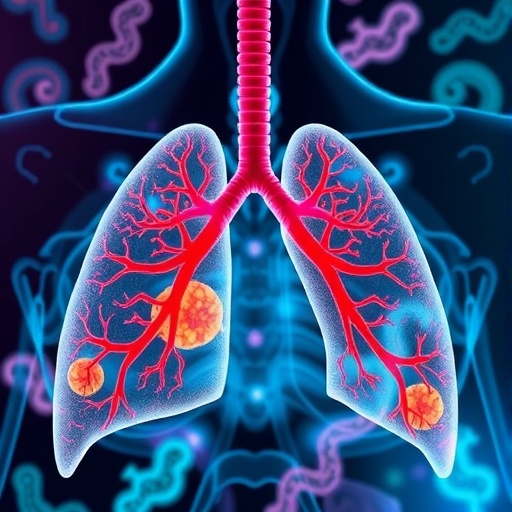
In a groundbreaking new study published in Translational Psychiatry, researchers have unveiled a complex and unexpected biological link between the widely used antipsychotic medication clozapine and increased respiratory vulnerability. This connection is traced through the disruption of the gut–lung microbiota axis, a crucial but often overlooked pathway that interconnects gastrointestinal function and lung health. The study provides compelling evidence that clozapine-induced gastrointestinal hypomotility—the slowed movement of the digestive tract—profoundly alters the composition and function of microbial communities, which in turn compromises pulmonary defenses.
For decades, clozapine has been a cornerstone treatment for refractory schizophrenia, prized for its efficacy when other antipsychotics fail. However, its notorious side effect profile includes gastrointestinal motility disturbance, which can escalate to life-threatening conditions such as paralytic ileus. Until now, the systemic repercussions of this hypomotility have been poorly understood. The new findings demonstrate that the consequences extend far beyond the gut, reverberating along the gut–lung axis, a bi-directional communication network tightly entwined with immune regulation and microbiota homeostasis.
Central to this discovery is the gut–lung microbiota axis, an emerging frontier in biomedical science. The axis represents a dynamic interplay wherein microbial populations in the gastrointestinal tract influence the microbial ecology of the respiratory system, and vice versa. Such crosstalk modulates immune responses locally and systemically, shaping infection susceptibility and inflammatory pathways in both organs. Significantly, perturbations in gut motility appear to disrupt microbial balance, with repercussions cascading to lung defenses.
The study meticulously delineates how clozapine interferes with intestinal transit, resulting in an altered microbial milieu characterized by reduced diversity and shifts in dominant bacterial taxa. This dysbiosis extends to the lung tissue, where altered microbiota signatures were detected. Using advanced metagenomic sequencing, the researchers correlated these microbial changes with markers of immune dysfunction, including impaired alveolar macrophage activity and an attenuated production of key cytokines responsible for pathogen clearance.
Clinically, these molecular and immunological disturbances translate into heightened respiratory vulnerability. Patients and animal models exposed to clozapine showed increased susceptibility to respiratory infections, particularly those caused by opportunistic pathogens that exploit compromised lung defenses. This finding is especially alarming given that respiratory complications are a major cause of morbidity and mortality in individuals with serious mental illness treated with clozapine.
Technically, the study employed a multifaceted approach combining in vivo models with human clinical samples, including fecal and bronchoalveolar lavage microbiota analyses. Gastrointestinal motility was quantified using state-of-the-art imaging and manometry techniques, providing concrete evidence of hypomotility correlating with microbiota disruption. Additionally, immune profiling techniques such as flow cytometry and cytokine assays illuminated the compromised respiratory immune landscape shaped by microbial shifts.
One of the more striking revelations was the identification of specific microbial taxa whose depletion or overgrowth corresponded closely with respiratory dysfunction. These taxa included key SCFA (short-chain fatty acid)-producing bacteria in the gut, whose metabolites are known to have anti-inflammatory and immunomodulatory properties. The reduction in SCFA producers likely contributes to systemic immune dysregulation, highlighting potential therapeutic targets.
Understanding this gut–lung axis disturbance opens new avenues for mitigating the side effects of clozapine. Probiotic or prebiotic interventions could restore microbial balance, potentially preserving lung function despite ongoing gastrointestinal hypomotility. Likewise, pharmacological agents that improve gut motility might indirectly bolster respiratory defenses by maintaining microbiota homeostasis.
Importantly, this study challenges the traditionally siloed understanding of organ systems and pharmacological side effects. It exemplifies how disturbances in one physiological domain, such as gastrointestinal motility, can propagate through microbiota-mediated pathways to influence distant organ systems like the lungs. This systems biology perspective is increasingly essential for developing holistic approaches to patient care.
Further implications extend into psychiatric care, where balancing the benefits of clozapine with its systemic risks remains a clinical dilemma. This research suggests clinicians should closely monitor respiratory health in patients prescribed clozapine, especially those reporting gastrointestinal symptoms. Early intervention strategies might significantly reduce the incidence of severe respiratory infections, improving overall patient outcomes.
At a broader level, the study underscores the profound impact of microbiota in mediating drug effects and side effects. As microbiome research matures, its integration into pharmacovigilance could enhance drug safety profiles by anticipating and managing microbiota-driven complications.
This research also sets the stage for exploring gut–lung axis disruptions in other contexts where gastrointestinal motility is impaired, such as opioid use or underlying motility disorders. The findings emphasize that maintaining gut motility and microbial equilibrium is vital not only for digestive health but also for robust pulmonary immunity.
In conclusion, Cai and colleagues provide a comprehensive and compelling narrative linking clozapine-induced gastrointestinal hypomotility to altered gut–lung microbial communities and increased respiratory vulnerability. Their work elucidates a critical biological axis with profound clinical importance, calling for integrated therapeutic strategies that address both microbiota and motility to safeguard lung health in vulnerable patient populations. This breakthrough redefines how we perceive medication side effects and highlights the gut–lung axis as a promising target for future interventions.
Cite Scienmag News
Morgan Morrow. (May 14, 2026). Clozapine Links Gut Microbiota to Lung Vulnerability. Scienmag. https://scienmag.com/clozapine-links-gut-microbiota-to-lung-vulnerability/
Morgan Morrow. "Clozapine Links Gut Microbiota to Lung Vulnerability." Scienmag, 14 May 2026, https://scienmag.com/clozapine-links-gut-microbiota-to-lung-vulnerability/. Accessed 4 September 2026.
Morgan Morrow. "Clozapine Links Gut Microbiota to Lung Vulnerability." Scienmag. May 14, 2026. https://scienmag.com/clozapine-links-gut-microbiota-to-lung-vulnerability/


