


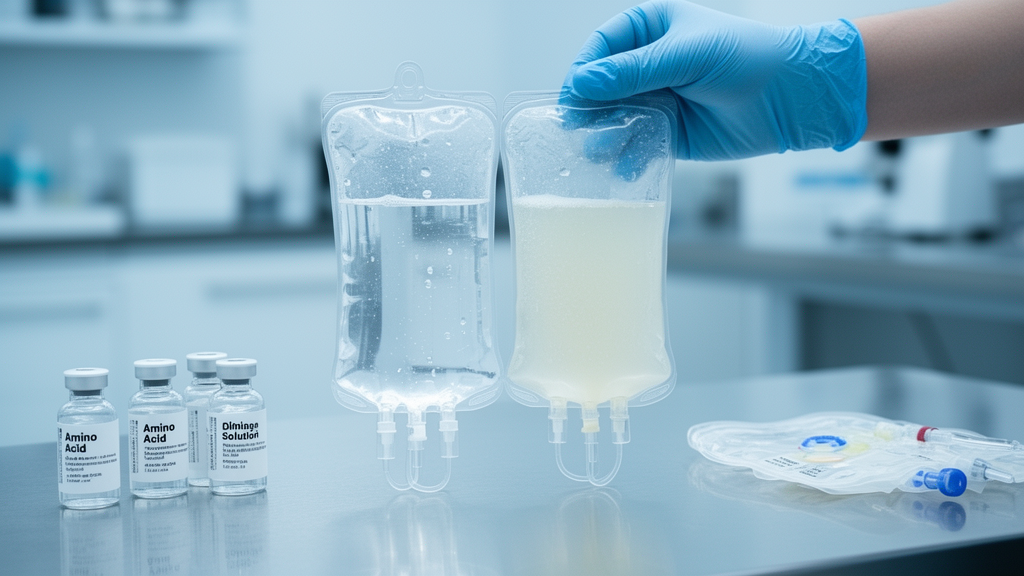
Doctors in China have described a puzzling case in which a kidney patient’s dialysis fluid repeatedly turned cloudy, mimicking a serious abdominal infection, only for the true cause to turn out to be an amino acid-containing dialysis solution the patient had obtained outside his prescribed regimen. The report, published in Frontiers in Nephrology by Dongmei Liu, Hongmei Mou, and colleagues, documents how the patient’s peritoneal dialysate became turbid on three separate occasions, each time shortly after he used the amino acid solution, and how the cloudiness resolved completely once the solution was withdrawn and antibiotics were stopped. The case highlights a rare but important diagnostic trap in peritoneal dialysis care, where sterile inflammation of the peritoneal membrane can look almost identical to bacterial peritonitis on routine testing.
The patient, a man in his fifties receiving peritoneal dialysis for end-stage kidney disease, presented with dialysis effluent that had become visibly cloudy. Laboratory analysis of the fluid revealed a markedly elevated nucleated cell count, a finding that ordinarily triggers urgent treatment for bacterial peritonitis, a potentially life-threatening complication of peritoneal dialysis. Yet several features of the case did not fit the usual infectious picture. The patient had no abdominal pain or tenderness, his blood inflammatory markers were unremarkable, and the cells dominating the dialysis fluid were predominantly mononuclear rather than the neutrophils typical of bacterial infection. Cultures of the fluid, moreover, yielded no bacterial growth.
Despite these atypical features, the clinical team initially treated the episode as probable culture-negative peritonitis and started antibiotics. The dialysis fluid cleared, but then became cloudy again on two further occasions, each time prompting renewed analysis and continued antimicrobial therapy. It was only after careful questioning about the patient’s dialysis supplies that the pattern emerged: the patient had obtained an amino acid-containing dialysis solution, a product sometimes used in peritoneal dialysis to improve nutrition, and had used it shortly before each episode of cloudiness. When the solution was discontinued, the turbidity resolved and did not return, even after antibiotics were stopped.
Amino acid-containing dialysis solutions are formulated to deliver protein building blocks directly across the peritoneal membrane, offering a nutritional benefit for dialysis patients who often lose substantial protein into the dialysis fluid with every exchange. The solutions have been studied as a way to counteract the protein-energy wasting that affects many people on dialysis and contributes to weakness, poor outcomes, and increased mortality. But as the Chinese case and earlier reports from the Netherlands and other centers make clear, these products can occasionally provoke a sterile inflammatory reaction in the peritoneum, producing cloudy fluid and elevated cell counts in the absence of any infection.
The mechanism behind this reaction remains incompletely understood. Researchers have proposed that amino acid solutions may alter the chemical environment of the peritoneal cavity, affecting the pH or osmolality of the fluid and irritating the membrane. Some investigators have also suggested that the solutions may interact with the cells lining the peritoneum, prompting the release of inflammatory signaling molecules. Whatever the precise pathway, the clinical result is an inflamed peritoneum that generates cloudy dialysis effluent and elevated cell counts, closely reproducing the laboratory signature of bacterial peritonitis.
Distinguishing sterile chemical inflammation from true bacterial peritonitis matters enormously, because the treatments differ fundamentally. Bacterial peritonitis requires prompt antibiotics to prevent membrane damage, catheter loss, and life-threatening spread of infection. Sterile chemical peritonitis, by contrast, calls for removal of the offending agent, and antibiotics provide no benefit while exposing the patient to risks of allergic reaction, disruption of gut bacteria, and promotion of antibiotic resistance. In the Chinese case, the antibiotics were ultimately stopped once the amino acid solution was identified as the trigger, and the patient recovered fully without antimicrobial therapy.
The report’s authors emphasize that clinicians caring for peritoneal dialysis patients should ask specifically about non-prescribed dialysis solutions when confronted with cloudy fluid that lacks the typical features of bacterial infection. The absence of abdominal pain, the predominance of mononuclear cells, negative cultures, and unremarkable blood inflammatory markers should all raise suspicion of a non-infectious cause. A careful timeline correlating symptom onset with changes in dialysis supplies can be decisive, as it was in this case, where the temporal link between solution use and fluid cloudiness became apparent only after the supplies were reviewed in detail.
The case also carries a broader lesson about patient-obtained medical products. Dialysis patients sometimes seek out alternative solutions or supplies through channels outside their dialysis center, motivated by cost, convenience, or the hope of nutritional benefit. The Chinese team noted that the amino acid solution the patient used had been obtained outside the prescribed dialysis regimen, and that this history emerged only after repeated episodes of cloudiness had already prompted extensive testing and treatment. The authors suggest that dialysis centers should routinely review all products a patient uses, including those obtained independently, as part of the evaluation of any unexplained change in dialysis fluid.
Earlier reports have described similar episodes of sterile peritonitis linked to amino acid solutions. A team in the Netherlands documented sterile inflammatory reactions in peritoneal dialysis patients using such solutions, and other centers have reported comparable findings. The consistency of these observations across geographic settings strengthens the conclusion that amino acid solutions can genuinely provoke peritoneal inflammation, rather than the association being an artifact of a single center’s experience. The frequency of the reaction appears low, but as the Chinese case demonstrates, the consequences of misdiagnosis can be substantial, including unnecessary antibiotic exposure and prolonged evaluation.
The report ultimately offers reassurance as well as caution. Once the amino acid solution was identified and withdrawn, the patient’s dialysis fluid cleared completely, his cell counts normalized, and he required no further treatment. The episode resolved without lasting harm to the peritoneal membrane or the dialysis catheter. For clinicians, the case reinforces the value of pattern recognition in dialysis care: cloudy fluid with atypical laboratory features, negative cultures, and a temporal link to a specific product should prompt consideration of sterile chemical peritonitis before escalating antimicrobial therapy. For patients, the message is equally clear that any dialysis product obtained outside the prescribed regimen should be discussed with the dialysis team, since even well-intentioned nutritional supplements can carry unexpected consequences when they come into contact with the delicate membrane that makes peritoneal dialysis possible.
Subject of Research: sterile chemical peritonitis from amino acid dialysate
Article Title: Case Report: A rare complication easily misdiagnosed as bacterial peritonitis: a case of sterile peritoneal dialysis-chemical peritonitis induced by amino-acid-based dialysate and literature review
Article References: Liu, D., Mou, J., & Dai, H. (2026). Case Report: A rare complication easily misdiagnosed as bacterial peritonitis: a case of sterile peritoneal dialysis-chemical peritonitis induced by amino-acid-based dialysate and literature review. Frontiers in Nephrology, 6, Article 1917133. https://doi.org/10.3389/fneph.2026.1917133
Image Credits: AI Generated
DOI: 10.3389/fneph.2026.1917133
Keywords: Case, Report, rare, complication, easily, misdiagnosed, bacterial, peritonitis, sterile, peritoneal, dialysis-chemical, induced
Cite Scienmag News
Jerry Hayes. (October 17, 2026). Cloudy Dialysis Fluid Traced to Amino Acid Solution in Rare Inflammation Mimicking Infection. Scienmag. https://scienmag.com/cloudy-dialysis-fluid-traced-to-amino-acid-solution-in-rare-inflammation-mimicking-infection/
Jerry Hayes. "Cloudy Dialysis Fluid Traced to Amino Acid Solution in Rare Inflammation Mimicking Infection." Scienmag, 17 October 2026, https://scienmag.com/cloudy-dialysis-fluid-traced-to-amino-acid-solution-in-rare-inflammation-mimicking-infection/. Accessed 17 October 2026.
Jerry Hayes. "Cloudy Dialysis Fluid Traced to Amino Acid Solution in Rare Inflammation Mimicking Infection." Scienmag. October 17, 2026. https://scienmag.com/cloudy-dialysis-fluid-traced-to-amino-acid-solution-in-rare-inflammation-mimicking-infection/


