

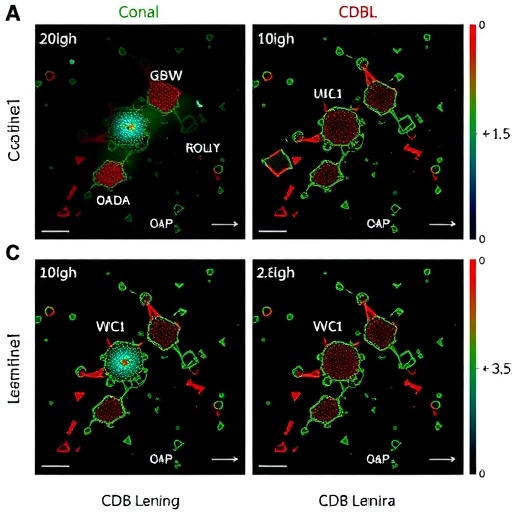
A groundbreaking study recently published in Nature Communications sheds new light on the immunological underpinnings of ARIA (Amyloid-Related Imaging Abnormalities) associated with lecanemab, a promising therapeutic antibody developed for the treatment of Alzheimer’s disease. This investigation offers unprecedented insight into the clonal expansion of cytotoxic CD8⁺ T cells, unveiling critical mechanisms that may explain adverse immune responses encountered in some patients undergoing amyloid-targeting therapies.
Lecanemab, a monoclonal antibody designed to target and clear amyloid-beta plaques in the brain, has been one of the most eagerly anticipated drugs in Alzheimer’s research. While clinical trials demonstrated its efficacy in reducing amyloid burden and slowing cognitive decline, a subset of treated patients experienced ARIA, an enigmatic side effect marked by cerebral edema and microhemorrhages visible on MRI scans. Until now, the cellular drivers of ARIA remained largely speculative.
The team led by Johnson, Saito, and Pallerla approached this problem by interrogating the brain and peripheral immune compartments of patients who developed ARIA during lecanemab treatment. Using state-of-the-art single-cell sequencing alongside advanced flow cytometry and imaging mass cytometry, they uncovered a striking expansion of a very specific subset of cytotoxic CD8⁺ T cells, indicating a targeted immune activation rather than a generalized inflammatory response.
These CD8⁺ T cells were shown to clonally expand, suggesting that they recognize specific antigens, most likely related to altered brain proteins or amyloid-beta complexes modulated by lecanemab activity. The presence of these T cells correlates spatially and temporally with ARIA lesions, pointing toward a direct contribution to the endothelial damage and blood-brain barrier disruption observed in patients.
At the molecular level, these clonally expanded CD8⁺ T cells exhibited a gene expression profile consistent with highly cytotoxic and tissue-invasive phenotypes. Key effector molecules such as granzyme B, perforin, and IFN-γ were markedly upregulated, indicating that these cells are actively engaged in effector functions that could compromise the delicate neurovascular environment and exacerbate ARIA manifestations.
The discovery invites a paradigm shift in how ARIA is conceptualized. Previously, ARIA was primarily thought to be a result of amyloid clearance leading to mechanical or vascular stress. This study proposes that immune-mediated cytotoxicity, driven by orchestrated T cell responses, plays a pivotal role in the pathogenesis of these imaging abnormalities. This insight could transform clinical monitoring and management strategies for patients receiving lecanemab or similar amyloid-targeting therapies.
Immunological analysis revealed that these CD8⁺ T cells express homing receptors enabling their migration across the blood-brain barrier. Additionally, these cells’ expansion followed the temporal trajectory of amyloid clearance, suggesting a close link between the antigenic landscape shaped by lecanemab and the subsequent immune activation. This temporal association strengthens the hypothesis that the antibody-mediated modulation of amyloid unmasked novel epitopes, triggering cytotoxic T cell responses.
Furthermore, comparative analysis with patients treated with alternative amyloid therapies that also report ARIA revealed similar signatures of T cell activation, underscoring that this immunopathology might be a common feature of anti-amyloid interventions. It raises critical questions about the immune safety profile of these drugs and the necessity to develop adjunctive therapies that could modulate T cell responses without compromising therapeutic efficacy.
The researchers also explored potential biomarkers detectable in peripheral blood that might predict the risk of ARIA development. Early signs of clonal T cell expansion or heightened cytotoxic activity in circulation could serve as invaluable tools for patient stratification and personalized risk assessment, enabling clinicians to tailor monitoring and dosing regimens more safely.
Importantly, this study leverages an interdisciplinary approach combining immunology, neurobiology, and clinical imaging, reflecting the complexity of neurodegenerative diseases and their multifaceted treatment challenges. By elucidating the cellular players involved in ARIA, it sets the stage for future research aimed at mitigating immune-mediated adverse events while preserving or enhancing the therapeutic benefit of amyloid clearance.
The findings also prompt a reevaluation of current clinical protocols involving amyloid-targeting monoclonal antibodies. Consideration of T cell-focused immunomodulatory strategies, whether through transient immune suppression or targeted checkpoint inhibition, might reduce the incidence or severity of ARIA and expand patient eligibility for disease-modifying treatments.
Moreover, understanding the antigenic drivers of CD8⁺ T cell expansion could open new avenues for vaccine design or antibody engineering that minimize the generation of potentially pathogenic immune responses while fostering effective amyloid clearance. This nuanced balance between efficacy and safety represents a critical frontier in neuroimmunology and Alzheimer’s therapeutics.
While this research centers on lecanemab, the implications resonate more broadly across the spectrum of neurodegenerative disorders where protein aggregation and immune responses intersect. The identification of cytotoxic T cells as key mediators highlights the immune system’s double-edged role in brain homeostasis and disease, influencing future therapeutic strategies that aim to harness rather than thwart immunity.
As the global burden of Alzheimer’s disease continues to rise, insights such as these provide hope that precision medicine approaches can be developed to maximize patient benefit. Tailoring immunotherapy based on in-depth cellular and molecular profiling will likely become a cornerstone of next-generation treatments combating this devastating disease.
In summary, the study illuminates a previously hidden immune dimension of lecanemab-associated ARIA, emphasizing the critical involvement of clonally expanded cytotoxic CD8⁺ T cells in driving brain inflammation and vascular pathology. This revelation offers a new framework for understanding amyloid-targeting therapies’ complex immunological landscape, paving the way for safer, more effective interventions.
As clinicians and researchers digest these findings, the challenge ahead lies in translating this knowledge into actionable clinical tools, whether through improved imaging protocols, immune monitoring, or novel combination therapies. The evolving picture of immune involvement in Alzheimer’s not only enriches scientific discourse but also holds transformative potential for patient outcomes.
Ultimately, this breakthrough underscores the importance of integrated, multidisciplinary research in unraveling the intricacies of neurodegeneration and immunotherapy, exemplifying how cutting-edge techniques can reveal hidden mechanisms with profound clinical relevance.
Subject of Research: Immune mechanisms underlying Amyloid-Related Imaging Abnormalities (ARIA) associated with lecanemab treatment in Alzheimer’s disease, focusing on clonal expansion of cytotoxic CD8⁺ T cells.
Article Title: Clonal expansion of cytotoxic CD8⁺ T cells in lecanemab-associated ARIA.
Article References:
Johnson, L.A., Saito, K., Pallerla, A.V. et al. Clonal expansion of cytotoxic CD8⁺ T cells in lecanemab-associated ARIA. Nat Commun (2026). https://doi.org/10.1038/s41467-026-68921-3
Image Credits: AI Generated


