


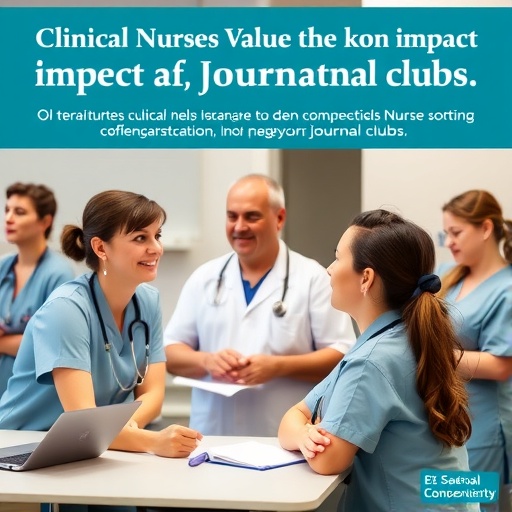
In a groundbreaking study, researchers analyzed the educational value perceived by clinical nurses participating in nursing journal clubs. This investigation highlights the impact and potential benefits of these clubs in promoting professional development, enhancing clinical practice, and fostering a culture of evidence-based nursing.
Nursing journal clubs have emerged as a vital component of nursing education and practice, providing a platform for clinicians to engage with the latest research and share insights with peers. By facilitating discussions on current literature, these clubs support continuous learning and professional growth, which are critical in a rapidly evolving healthcare landscape. The current study sought to explore specifically how nurses perceive the educational benefits of participating in these collaborative reading sessions, thereby aiming to establish a more profound understanding of their role in nursing education.
One primary aspect addressed in the research is the structure and dynamics of nursing journal clubs. Typically, these clubs bring together nursing professionals who meet regularly to review and discuss recent scientific articles relevant to their practice. The collective engagement and exchange of ideas are believed to enrich the learning experience, allowing participants to critically assess studies and translate findings into practical applications in their daily work. This immersive approach to learning represents a departure from traditional didactic methods, aligning more closely with contemporary educational theories that champion active participation.
The researchers focused on a cohort of clinical nurses engaged in journal clubs in various healthcare settings. The participants were asked to provide insights into their experiences and the perceived value of the journal clubs. Responses revealed consistent themes around the perceived benefits of enhanced knowledge acquisition, improved critical thinking skills, and a strengthened sense of community among nurses. This collective insight serves to bolster the argument for the formal integration of journal clubs into nursing curricula and ongoing professional development programs.
Moreover, the study also examined the specific learning outcomes associated with participation in journal clubs. Many clinicians reported an increase in their confidence to interpret research findings, apply evidence-based practices, and contribute meaningfully to discussions on clinical guidelines and patient care protocols. This heightened competence not only benefits individual nurses but also contributes to improved patient outcomes across the healthcare spectrum.
Interestingly, participants highlighted the role of journal clubs in cultivating a supportive environment for learning and discussion. The absence of hierarchical barriers in these clubs fosters open dialogue, allowing nurses of varying experience levels and expertise to share their perspectives freely. This inclusivity encourages diverse viewpoints and ultimately leads to a richer understanding of the material discussed. Such dynamics are particularly essential in a field where collaboration and teamwork are paramount to delivering high-quality patient care.
Another vital finding from the study is the way journal clubs facilitate the dissemination of research findings among nurses who might not otherwise have access to the latest literature due to time constraints and heavy workloads. By providing a designated time and space for discussion, nursing journal clubs enable participants to stay current with advancements in healthcare while promoting a culture of lifelong learning. This aspect is essential, as the medical field continuously evolves with new interventions, treatments, and technologies that nurses must be familiar with to provide optimal care.
The research also highlights potential barriers to participation in journal clubs, such as scheduling conflicts and
Cite Scienmag News
Ophelia Keating. (October 20, 2025). Clinical Nurses Value Educational Impact of Journal Clubs. Scienmag. https://scienmag.com/clinical-nurses-value-educational-impact-of-journal-clubs/
Ophelia Keating. "Clinical Nurses Value Educational Impact of Journal Clubs." Scienmag, 20 October 2025, https://scienmag.com/clinical-nurses-value-educational-impact-of-journal-clubs/. Accessed 4 September 2026.
Ophelia Keating. "Clinical Nurses Value Educational Impact of Journal Clubs." Scienmag. October 20, 2025. https://scienmag.com/clinical-nurses-value-educational-impact-of-journal-clubs/


