


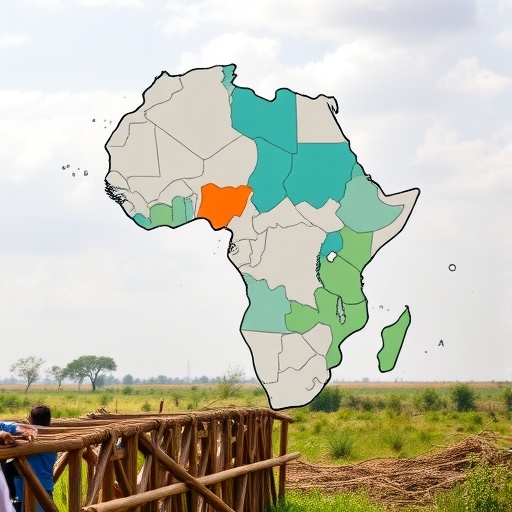
Climate change is reshaping the conditions in which infectious diseases spread, and a new analysis suggests that diarrheal illnesses may not respond uniformly to a warming and increasingly unstable climate. Instead, vulnerability appears to depend on the specific pathogen responsible, the environmental conditions it encounters, and the communities exposed to it. The study, published in Nature Communications, combines data from two major international investigations of childhood diarrhea to examine how climate-related hazards may alter the burden of pathogen-specific disease.
The research draws on the Global Enteric Multicenter Study, known as GEMS, and the Vaccine Impact on Diarrhea in Africa follow-up study, or VIDA. Together, these projects generated detailed information on severe diarrheal disease among young children in multiple low- and middle-income settings, including laboratory identification of the organisms involved. By linking those clinical and microbiological observations with climate variables, the researchers conducted a secondary analysis designed to explore whether temperature and precipitation patterns are associated with different risks for different pathogens.
Diarrheal disease is not a single infection but a clinical outcome caused by a wide range of organisms. Viruses such as rotavirus and norovirus can damage intestinal cells or disrupt absorption, while bacteria including Shigella, Campylobacter and certain strains of Escherichia coli can invade tissue or release toxins. Protozoan parasites such as Cryptosporidium use yet another set of transmission strategies. These biological differences matter because climate conditions can influence pathogens through distinct pathways, including replication rates, survival outside the body, water contamination and changes in human behavior.
Higher temperatures, for example, can accelerate the growth of some bacteria in food and water, while also affecting the persistence of viruses and parasites in the environment. Heavy rainfall may overwhelm sanitation systems, wash fecal material into rivers and wells, and increase exposure to contaminated drinking water. Drought can create a different hazard by concentrating pathogens in scarce water sources and forcing households to rely on unsafe supplies. The study’s pathogen-specific approach is therefore important: a climate exposure that increases one infection may have a weaker, or even different, relationship with another.
The analysis also addresses a central challenge in infectious-disease surveillance. Many health systems record diarrhea as a broad syndrome without identifying the causative organism. That approach is useful for measuring overall disease burden but can conceal contrasting ecological patterns. A rise in diarrhea cases during a hot or wet period may reflect a shift in the mix of pathogens rather than a uniform increase across all infections. Laboratory-based datasets such as GEMS and VIDA make it possible to separate those signals and investigate how climate sensitivity varies within the larger category of enteric disease.
The findings are particularly relevant to viral enteric infections, which can spread efficiently through person-to-person contact as well as through contaminated surfaces, food and water. Viruses do not multiply in the environment in the same way as bacteria, but their transmission can still be shaped by climate-driven changes in crowding, water access, sanitation and hygiene. In settings where health services are limited, a climate event can also disrupt vaccination, treatment and disease reporting at the same time that exposure risk is increasing. These interacting pressures may be especially consequential for infants and young children, who are more vulnerable to dehydration and severe complications.
Vaccination is one of the tools that could reduce climate-related vulnerability, but its protective effect may vary according to the pathogens circulating in a region. The VIDA study was established in part to assess diarrhea after the introduction of rotavirus vaccination in several African countries. By incorporating data from vaccine-impact research, the new analysis can help distinguish changes in disease patterns associated with immunization from those associated with environmental conditions. This distinction is essential for public-health planning because a decline in vaccine-preventable viral diarrhea does not eliminate the risks posed by bacterial or parasitic infections that may respond differently to climate variability.
The study’s broader message is that climate adaptation cannot rely solely on seasonal averages or total diarrhea counts. Public-health agencies may need pathogen-resolved surveillance that combines clinical testing with local measurements of temperature, rainfall, flooding, water quality and sanitation conditions. Such systems could support earlier warnings when specific climate patterns are likely to favor particular infections. They could also guide targeted interventions, including water treatment, hygiene campaigns, vaccination strategies, food-safety measures and the pre-positioning of oral rehydration supplies.
The work does not suggest that climate is the only driver of diarrheal disease. Poverty, malnutrition, sanitation infrastructure, access to safe water, healthcare availability and existing immunity remain fundamental determinants of risk. Climate change may amplify these underlying vulnerabilities, however, making the same environmental event more dangerous in one community than in another. By using two large multinational pediatric datasets to examine pathogens separately, Kowalcyk and colleagues provide a framework for understanding that complexity and for anticipating how infectious disease patterns may evolve as the climate changes. The approach could ultimately help move enteric-disease control from broad reaction to more precise, climate-informed prevention.
Cite Scienmag News
Kristina Jarvis. (August 6, 2026). Climate Vulnerability to Pathogen-Specific Diarrheal Diseases Revealed by Global African Follow-Up Studies. Scienmag. https://scienmag.com/climate-vulnerability-to-pathogen-specific-diarrheal-diseases-revealed-by-global-african-follow-up-studies/
Kristina Jarvis. "Climate Vulnerability to Pathogen-Specific Diarrheal Diseases Revealed by Global African Follow-Up Studies." Scienmag, 6 August 2026, https://scienmag.com/climate-vulnerability-to-pathogen-specific-diarrheal-diseases-revealed-by-global-african-follow-up-studies/. Accessed 3 September 2026.
Kristina Jarvis. "Climate Vulnerability to Pathogen-Specific Diarrheal Diseases Revealed by Global African Follow-Up Studies." Scienmag. August 6, 2026. https://scienmag.com/climate-vulnerability-to-pathogen-specific-diarrheal-diseases-revealed-by-global-african-follow-up-studies/


