


In a paper now published in Science, researchers from leading institutions worldwide propose a comprehensive strategy that connects the latest scientific insights to action on the high seas. The team developed a policy pathway for engaging all relevant stakeholders in managing the Southern Ocean. This novel approach ensures a wide range of interests are integrated in a climate-smart marine spatial planning (MSP) process.

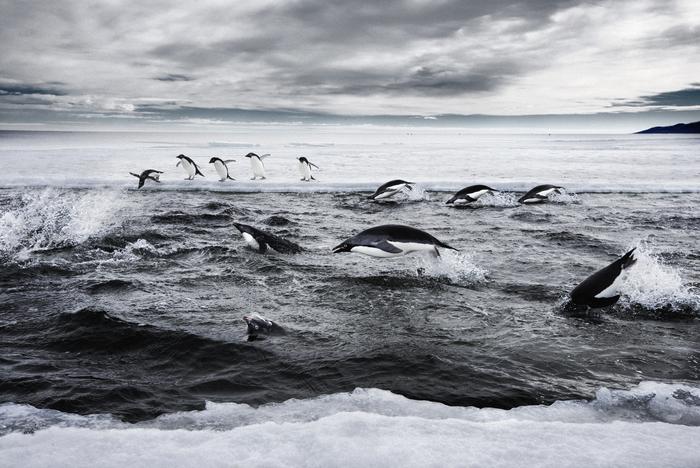
Credit: John B. Weller
In a paper now published in Science, researchers from leading institutions worldwide propose a comprehensive strategy that connects the latest scientific insights to action on the high seas. The team developed a policy pathway for engaging all relevant stakeholders in managing the Southern Ocean. This novel approach ensures a wide range of interests are integrated in a climate-smart marine spatial planning (MSP) process.
The Southern Ocean is critical to the functioning of our planet, influencing sea level, regulating climate, and driving global ocean circulation. What happens in Antarctica affects coastal regions worldwide. Increased human activities and climate change threaten Antarctic ecosystems and the billions of people affected by these altered functions. The current conservation efforts must be expanded to deliver long-term resilience in the face of a changing climate.
Climate-smart MSP is an idea whose time has come. While nations are increasingly adapting this approach in their national waters, it has never been applied on the high seas. Although protected areas can help to conserve marine biodiversity, only a climate-smart approach to ocean planning can tackle a suite of climate stressors at a wider, regional scale in an adaptable manner to deliver the long-term resilience we need.
This paper is intended to inform discussions under the upcoming May Antarctic Treaty Consultative Meeting that is currently taking place in Kochi, India. “Our purpose is to highlight that Parties to the Antarctic Treaty have a historic opportunity to develop an MSP strategy and pioneer the first climate-smart approach on the high seas,” says lead author Catarina Frazão Santos, invited assistant professor at the Faculty of Sciences of the University of Lisbon (CIÊNCIAS) and honorary research associate at the University of Oxford. “Moreover, MSP in the Southern Ocean can serve as a testbed for the wider application of climate-smart MSP in international and national waters everywhere”, adds the researcher.
Researchers recommend four points to be considered by Parties, whose implementation could be ensured through the establishment of dedicated discussion groups: (i) diversify data and knowledge types, (ii) be forward-looking, (iii) be dynamic, and (iv) centralize ocean health. At the upcoming May meeting, Parties to the Antarctic Treaty can agree to pioneer climate-smart MSP. “There is no better place to trial climate-smart MSP and related management in international waters than the Southern Ocean” said Larry Crowder, co-author and professor at Stanford University. The Southern Ocean is ground zero for climate change impacts and has a unique governance structure that is strong enough to pioneer climate-smart MSP building on decades of scientific research.
Experience in the Southern Ocean can also inform implementation of the 2023 UN Agreement on marine biodiversity beyond national jurisdiction (BBNJ Agreement). “The BBNJ Agreement, once it enters into force, offers for the first time a legal framework for enhanced cooperation and a mandate to adopt area-based management tools (such as MSP) and strategic environmental assessments throughout all marine areas beyond national jurisdiction”, said Kristina Gjerde, a co-author and Senior High Seas advisor to IUCN, and adjunct professor at the Middlebury Institute of International Studies in Monterey. “At the same time, the BBNJ Agreement’s focus on the need to protect and restore biodiversity and strengthen resilience to climate change will require MSP that fully integrates climate change”, says Cymie Payne, co-author and associate professor at Rutgers University, and Ocean Law chair at IUCN-WCEL (World Commission on Environmental Law).
Although it will not be easy, bringing climate-smart governance to the high seas is an opportunity not to be missed. “MSP goes beyond marine protected area planning and integrates all human uses, offering a vehicle for a more structured consideration of long-term sustainable use at scale”, says Lisa Wedding, co-author and associate professor at the University of Oxford, thereby bringing benefits to the region and the planet. Climate-smart MSP in the Southern Ocean can guide decisions on how marine resources can be used sustainably even as the world changes, providing a model for international waters everywhere.
Journal
Science
Article Title
Taking climate-smart governance to the high seas
Article Publication Date
16-May-2024
Cite Scienmag News
Violet Maxwell. (May 22, 2024). Climate-smart marine spatial planning in Antarctica can be a model for the global ocean. Scienmag. https://scienmag.com/climate-smart-marine-spatial-planning-in-antarctica-can-be-a-model-for-the-global-ocean/
Violet Maxwell. "Climate-smart marine spatial planning in Antarctica can be a model for the global ocean." Scienmag, 22 May 2024, https://scienmag.com/climate-smart-marine-spatial-planning-in-antarctica-can-be-a-model-for-the-global-ocean/. Accessed 4 September 2026.
Violet Maxwell. "Climate-smart marine spatial planning in Antarctica can be a model for the global ocean." Scienmag. May 22, 2024. https://scienmag.com/climate-smart-marine-spatial-planning-in-antarctica-can-be-a-model-for-the-global-ocean/

