


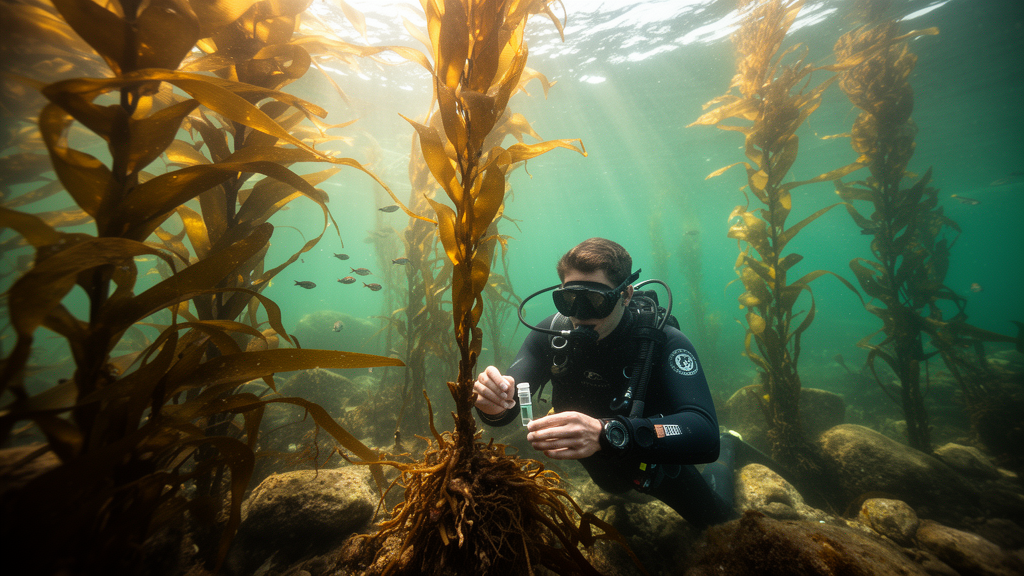
Kelp forests…{
The transition from single-reference genomes to multi-accession assemblies represents a fundamental shift in how marine biologists conceptualize genetic diversity in macroalgae. Traditional reference genomes, while invaluable for initial annotation and basic comparative studies, inherently capture only the haplotype of a single individual. This limitation becomes particularly pronounced in species with high levels of structural variation, where presence-absence differences, copy-number changes, and large inversions are common. In crop science, it is well established that such structural variants often carry a significant portion of the adaptive and agronomic signal, influencing traits like yield, disease resistance, and environmental tolerance. However, the extent to which this holds true for seaweeds remains an open question, treated in current literature as a hypothesis requiring rigorous empirical testing rather than a settled fact. The development of graph pangenomes offers a solution to this limitation by integrating multiple accessions into a unified data structure that preserves the full spectrum of genomic variation. This approach allows researchers to distinguish between core genes, which are present in all individuals of a species, and accessory genes, which are present in only some. The accessory genome is particularly important for climate resilience, as it often contains genes involved in stress response, nutrient acquisition, and symbiotic interactions. By resolving these differences, pangenomics provides a more accurate map of the genetic landscape, enabling the identification of specific alleles that may confer advantages under changing environmental conditions.
Seascape genomics complements pangenomics by providing the spatial context necessary to interpret genetic variation. This field integrates genomic data with environmental variables to identify locally adapted populations and connectivity pathways across marine landscapes. By analyzing the distribution of adaptive alleles across different geographic locations, researchers can pinpoint populations that have evolved specific traits in response to local stressors, such as temperature fluctuations or salinity changes. This spatial resolution is crucial for understanding how climate change is reshaping the genetic structure of seaweed populations. Temporal genomics further extends this analysis by examining how these genetic patterns have changed over time. By comparing genomic data from different time points, scientists can measure the rate of contemporary evolution and identify recent evolutionary responses to climate change. This longitudinal perspective is essential for predicting future adaptation potential and identifying populations that may be particularly vulnerable to rapid environmental shifts. The combination of seascape and temporal genomics allows for a dynamic view of population genetics, moving beyond static snapshots to capture the ongoing process of adaptation.
While genomic data provides the blueprint for potential adaptation, the actual physiological response to stress is mediated by complex regulatory networks that extend beyond the DNA sequence. Transcriptomics, the study of gene expression, has been widely used to identify stress-responsive genes in seaweeds. However, differential expression data alone rarely resolves which specific alleles confer resilience or how that resilience varies across different environments. To address this, complementary omics layers are being integrated into the analysis. Epigenomics examines chemical modifications to DNA and histones that regulate gene expression without altering the underlying sequence. These epigenetic changes can provide a mechanism for rapid adaptation to stress, allowing organisms to adjust their phenotype in response to environmental cues. Metabolomics and proteomics offer insights into the biochemical and protein-level responses to stress, respectively. These layers can reveal the functional consequences of genetic variation, such as the production of antioxidant compounds, the remodeling of cell walls, or the activation of heat-shock proteins. Despite their potential, proteomic and metabolomic coverage of macroalgae remains significantly thinner than transcriptomic coverage, representing a major gap in the current evidence base. Closing this gap is a priority for future research, as it will provide a more complete picture of the physiological mechanisms underlying climate resilience.
The translation of molecular insights into practical applications for breeding and restoration requires rigorous validation through multiple experimental approaches. High-throughput gametophyte screening allows for the rapid assessment of genetic variation in early life stages, identifying individuals with desirable traits before they reach maturity. Chlorophyll fluorescence phenotyping provides a non-invasive method for measuring photosynthetic efficiency and stress tolerance, offering a direct link between genetic variation and physiological performance. Functional genomics techniques, such as gene editing and overexpression, enable the direct testing of the role of specific genes in stress response. Common-garden studies, where individuals from different populations are grown under controlled conditions, help to disentangle genetic from environmental effects on trait expression. Heatwave mesocosms simulate acute thermal stress in a controlled environment, allowing researchers to observe the short-term responses of seaweeds to extreme conditions. Finally, field trials are essential for validating the performance of candidate genotypes in real-world environments, where multiple stressors interact in complex ways. Only through this multi-tiered validation process can researchers confidently identify traits that are both adaptive and deployable in breeding or restoration programs.
The application of validated traits to genomic selection and climate-resilient cultivars represents a significant advance in seaweed aquaculture. Genomic selection uses genetic markers to predict the breeding value of individuals, allowing for the selection of superior genotypes without the need for extensive phenotyping. This approach can accelerate the development of cultivars with enhanced tolerance to heat, salinity, and other stressors. Provenance-based restoration involves the use of locally adapted genotypes in restoration efforts, ensuring that the restored populations are well-suited to the local environment. Assisted gene flow, the deliberate movement of genetic material between populations, can be used to introduce adaptive alleles into vulnerable populations, enhancing their resilience to climate change. However, these interventions must be implemented with careful consideration of genetic diversity, biosecurity, and long-term genomic monitoring. The introduction of non-native genotypes can pose risks to local ecosystems, and the loss of genetic diversity can reduce the long-term adaptive potential of populations. Adaptive management, which involves continuous monitoring and adjustment of interventions based on observed outcomes, is crucial for ensuring the success and sustainability of these efforts.
The integration of pangenomics, seascape genomics, and multi-omics approaches provides a comprehensive framework for advancing seaweed genomics from resource development to a predictive, translational pipeline. This framework emphasizes the importance of considering the full spectrum of genetic variation, the spatial and temporal context of adaptation, and the functional consequences of genetic differences. By addressing the current gaps in proteomic and metabolomic data and by rigorously validating candidate traits through multiple experimental approaches, researchers can develop a more robust understanding of the mechanisms underlying climate resilience. This understanding can then be applied to the development of climate-ready seaweeds, supporting resilient aquaculture and marine forest restoration. The challenges are significant, but the potential benefits are immense. As ocean temperatures continue to rise and marine heatwaves become more frequent and intense, the need for climate-resilient seaweeds will only grow. The integrated approach outlined here offers a path forward, combining the power of genomics with the rigor of experimental validation to create a new generation of seaweeds capable of thriving in a changing ocean.
Subject of Research: Integrated genomic and multi-omics approaches for developing climate-resilient seaweeds for breeding and restoration
Article Title: Climate-ready seaweeds: pangenomics, seascape genomics, and multi-omics for breeding and restoration
Article References: Subbiah, S. K., & Thaliyakkattil, S. C. (2026). Climate-ready seaweeds: pangenomics, seascape genomics, and multi-omics for breeding and restoration. Discover Oceans, 3(1), 68. https://doi.org/10.1007/s44289-026-00183-9
Image Credits: AI Generated
DOI: 10.1007/s44289-026-00183-9
Keywords: seaweeds, kelp, pangenomics, seascape genomics, multi-omics, climate resilience, genomic selection, marine forest restoration, structural variation, aquaculture, epigenetics, phenotyping
Cite Scienmag News
Juliet Wilcox. (October 18, 2026). Climate-Ready Seaweeds: Pangenomics and Multi-Omics Could Rescue Kelp Forests. Scienmag. https://scienmag.com/climate-ready-seaweeds-pangenomics-and-multi-omics-could-rescue-kelp-forests/
Juliet Wilcox. "Climate-Ready Seaweeds: Pangenomics and Multi-Omics Could Rescue Kelp Forests." Scienmag, 18 October 2026, https://scienmag.com/climate-ready-seaweeds-pangenomics-and-multi-omics-could-rescue-kelp-forests/. Accessed 18 October 2026.
Juliet Wilcox. "Climate-Ready Seaweeds: Pangenomics and Multi-Omics Could Rescue Kelp Forests." Scienmag. October 18, 2026. https://scienmag.com/climate-ready-seaweeds-pangenomics-and-multi-omics-could-rescue-kelp-forests/


