

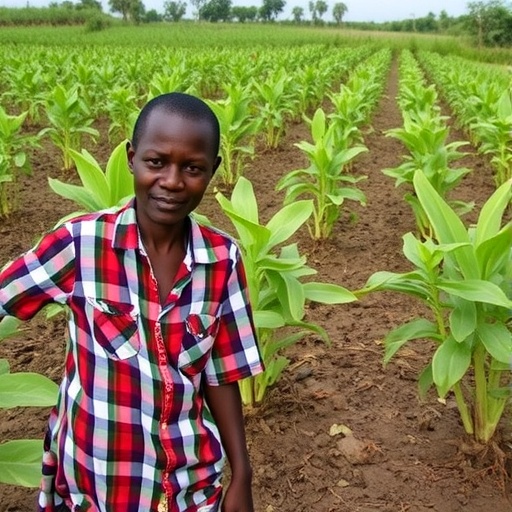
Recent research has unveiled a pressing issue regarding the vulnerability of agrosystems in the surrounding areas of Pendjari National Park in Benin to climate change. This extensive study, conducted by Kouhouenou, Hounsou-Dindin, Teka, and their colleagues, illustrates the intricate relationship between agriculture and environmental shifts, bringing critical attention to the challenges faced by local farmers and the ecological balance of the region. With climate change accelerating, the implications for both farming communities and biodiversity are profound.
Climate change poses a myriad of threats to agriculture, particularly in vulnerable regions such as Benin. The study indicates that rising temperatures, erratic rainfall patterns, and increased frequency of extreme weather events are significantly impacting crop yields. This research underscores the need for urgent measures to mitigate these impacts and adapt agricultural practices to the changing climate. The farmers in the Pendjari area are at the mercy of these environmental changes, which jeopardizes their livelihoods and food security.
The findings of this research are alarming, revealing that several traditional farming practices are no longer viable under the current climate conditions. As temperatures rise and precipitation becomes more unpredictable, staple crops such as maize and sorghum are increasingly at risk of failure. The researchers highlight that unless adaptive strategies are implemented, these changes could lead to devastating consequences for local communities reliant on agriculture for their survival.
One of the key observations made in the study is the alteration of seasonal patterns that farmers have relied upon for generations. Historical data suggests that farmers have long anticipated certain weather patterns to time their planting and harvesting activities. However, with climate change disrupting these cycles, farmers are struggling to adjust. This uncertainty not only affects crop production but also leads to increased anxiety and stress among farmers, exacerbating the challenges they face.
In addressing these vulnerabilities, the research emphasizes the importance of implementing climate-smart agricultural practices. These innovative approaches can help farmers reduce risks and enhance resilience to climate variability. Techniques such as crop rotation, intercropping, and improved water management systems are highlighted as effective methods to safeguard agricultural production. By adopting these strategies, farmers can better adapt to the changing environment and secure their crops against extreme weather events.
Moreover, the study points out the significant role of local knowledge in developing adaptive strategies. Farmers possess valuable insights and experience regarding their land and its conditions. Incorporating this local knowledge into broader agricultural policies is essential for designing effective interventions. Collaboration between scientists, agricultural extension services, and farming communities is crucial for fostering innovative solutions that address the unique challenges faced by the Pendjari region.
The research also stresses the importance of policy frameworks that support sustainable agricultural practices. Policymakers need to recognize the integral relationship between agriculture and climate resilience. Implementing policies that encourage sustainable land use, promote agroecological practices, and provide financial assistance to vulnerable farmers can contribute to building a more resilient agricultural sector. Such measures are vital not only for enhancing food security but also for preserving the biodiversity of the Pendjari National Park.
Sustainable practices are not only essential for farmers but also play a pivotal role in protecting the surrounding ecosystems. The study highlights the interconnectedness of agriculture and biodiversity, revealing that unsustainable farming can lead to habitat destruction and loss of species. By prioritizing sustainable agricultural practices, farmers can contribute to the conservation of local flora and fauna, ensuring that the environment remains conducive for wildlife and agricultural activities.
Education and capacity-building initiatives are also pivotal for fostering resilience among farming communities. By providing training and resources on sustainable farming techniques, farmers can be better equipped to navigate the challenges posed by climate change. This empowerment can lead to increased productivity, improved livelihoods, and a more sustainable approach to agriculture.
Some specific recommendations put forward by the research include promoting drought-resistant crop varieties and enhancing soil health through organic farming practices. These strategies can help mitigate the effects of climate change while ensuring that agricultural practices remain economically viable for farmers. Engaging local farmers in research and decision-making processes can also facilitate the development of tailored solutions that specifically address the challenges they face.
Overall, the research on the vulnerability of agrosystems in the Pendjari National Park area serves as a wake-up call to the urgent need for action. The challenges posed by climate change are not only environmental but also social and economic. By prioritizing adaptive strategies, sustainable agricultural practices, and inclusive policies, we can create a resilient agricultural landscape that supports both local communities and the rich biodiversity of the region.
By fostering collaboration between various stakeholders, including governmental bodies, non-governmental organizations, and local communities, we can work towards building a robust system that not only protects agriculture but also enhances the resilience of ecosystems. The implications of this research extend beyond Benin, highlighting the global need for integrated approaches to tackle the ever-growing challenge of climate change in agriculture.
Through concerted efforts and innovative solutions, we can shape a future where agriculture thrives alongside nature, ensuring food security and environmental sustainability for generations to come. The road ahead may be challenging, but with determination and collaboration, we can transform the vulnerabilities identified in this study into opportunities for resilience and growth.
Subject of Research: Vulnerability of agrosystems to climate change in Benin
Article Title: Vulnerability of agrosystems to climate change in the surrounding areas of Pendjari National Park of Benin
Article References: Kou


