


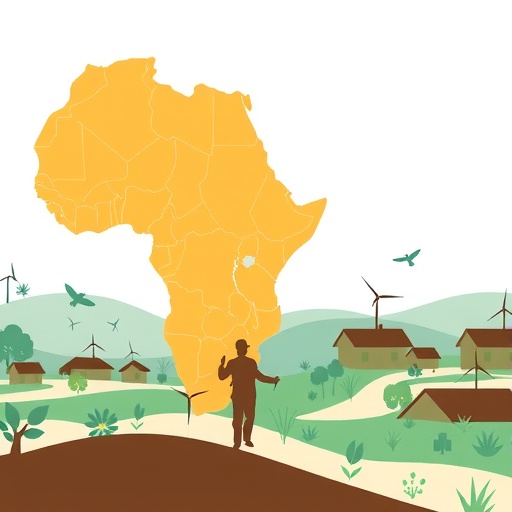
In recent years, the urgency of climate action has taken center stage in global discourse, with particular focus on vulnerable regions that are disproportionately affected by the dual challenges of energy poverty and environmental degradation. Sub-Saharan Africa, a region marked by rapid urbanization yet persistently low levels of energy access, emerges as a critical battleground in this struggle. A groundbreaking new study published in npj Urban Sustainability sheds light on how signatories of the Covenant of Mayors— an international initiative that unites cities in their drive toward sustainable energy policies and climate resilience—are navigating this complex interplay of energy access and climate commitments. The research offers unprecedented insight into urban climate strategies across Sub-Saharan Africa, illuminating pathways that may well define the continent’s future sustainability landscape.
The study begins by contextualizing the unique challenges faced by cities across Sub-Saharan Africa. Unlike developed regions with long-established energy infrastructure, many urban areas here confront stark deficits in electricity accessibility, which directly impedes socioeconomic development. With a large percentage of the population relying on informal settlements without reliable energy connections, the consequences extend beyond inconvenience, affecting health, education, and economic productivity. The report underscores that improving energy access must be inseparable from climate action goals to foster truly sustainable urban futures. This dual imperative is further complicated by the region’s climatic vulnerability, including rising temperatures, erratic rainfall, and increased occurrence of extreme weather events.
At the heart of the analysis is a meticulous exploration of the energy and climate action plans submitted by a diverse array of Covenant of Mayors signatory cities across Sub-Saharan Africa. The study employs sophisticated comparative techniques to evaluate how these urban centers strategize around decarbonization while simultaneously expanding energy access. It finds distinct patterns emerging: smaller cities tend to prioritize immediate energy delivery and infrastructural development, whereas larger metropolitan areas show more advanced frameworks that integrate renewable energy technologies with urban resilience initiatives. Such differentiation reflects the heterogeneity of urbanization processes and resource availability within the region.
A particularly striking revelation of the report is the innovative ways in which sub-Saharan cities leverage renewable energy sources to tackle off-grid and under-electrified communities. Solar photovoltaic systems, mini-grids, and bioenergy solutions feature prominently within municipal agendas, often intertwined with social equity considerations. The study highlights cases where local governments have cultivated synergies between community-based renewable projects and international climate finance mechanisms. This integration not only accelerates technical deployment but also fosters inclusive governance, enhancing the legitimacy and durability of climate interventions at the local level.
The interplay between urban climate action and energy access is further complicated by infrastructural and institutional constraints that persist across the region. Many cities face outdated regulatory frameworks that were primarily designed without sustainability as a core tenet. The research details how this legal legacy hampers rapid transitions to low-carbon energy systems, pointing to an urgent need for policy reforms that embrace flexibility and forward-looking innovations. It also discusses the capacity gaps among municipal staff, which can slow down the implementation of climate measures despite ambitious strategic targets.
Data quality and availability remain critical impediments to effective urban climate planning, as underscored by the authors. In many cases, baseline emissions inventories are incomplete or inconsistent, obscuring the true impacts of both energy use and mitigation efforts. This lack of precise data compromises the ability of cities to monitor progress and adjust policies in real-time. The study advocates for robust investments in digital and geospatial technologies that can underpin data-driven decision-making processes. These tools are envisioned as pivotal for accurate emissions tracking, resource allocation, and measuring socio-environmental outcomes.
The authors also examine the role of international collaboration in advancing climate and energy goals in Sub-Saharan African cities. The Covenant of Mayors serves as a vital platform for knowledge exchange and technical assistance, connecting local policymakers with global expertise and funding streams. The paper illustrates how participation in such networks enhances local capacity, encourages peer learning, and amplifies the voice of African cities in global climate dialogues. However, the research cautions that external support should complement, not replace, indigenous priorities and locally tailored solutions.
Economic considerations are central to the study’s evaluation of climate and energy policies. The affordability of renewable energy technologies, alongside available fiscal incentives, significantly influences municipal investment decisions. The review points to promising trends in cost reductions for solar power installations and electrification equipment, which open new avenues for scaling sustainable energy access. Nevertheless, persistent financial barriers at the city level, such as limited creditworthiness and constrained municipal budgets, often restrict project implementation, underscoring the importance of innovative financing models and public-private partnerships.
Health co-benefits emerge as a crucial theme in the conversation about energy access and climate action in Sub-Saharan Africa. The report elucidates how improved energy infrastructure can reduce indoor air pollution by replacing traditional biomass fuels with cleaner alternatives. This shift not only mitigates greenhouse gas emissions but also curtails respiratory illnesses and other health risks, delivering compounded social gains. The multidimensional nature of these benefits reinforces the necessity for integrated policies that bridge health, environment, and urban planning domains.
Furthermore, the paper addresses gender and social equity dimensions that intersect with energy and climate challenges. Women in many Sub-Saharan African urban settings bear disproportionate burdens associated with energy poverty, including time-consuming fuel collection and vulnerability to unsafe cooking conditions. Urban climate actions that enhance access to affordable, clean energy contribute to empowering women and marginalized groups, fostering more inclusive urban societies. The authors contend that gender-sensitive approaches must be embedded within municipal climate strategies to ensure equitable outcomes.
Another critical avenue explored involves urban infrastructure resilience in the face of climate change. Cities in the region are increasingly incorporating adaptive measures alongside mitigation efforts, recognizing that vulnerability to climate impacts undermines progress in energy and sustainability domains. Infrastructure investments aimed at flood control, water management, and heat resilience are integral components of comprehensive climate action plans. The convergence of adaptation and mitigation priorities signals a maturing approach to urban sustainability that balances immediate risk reduction with long-term decarbonization.
The research also delves into technological innovation as a catalyst for achieving energy access and climate objectives. Emerging digital platforms for energy management, smart grids, and demand-side response are gaining traction among forward-looking municipalities. These technologies optimize energy distribution, reduce wastage, and enable real-time monitoring of emissions footprints. Combined with advances in battery storage and microgrid architecture, technology acts as a powerful enabler for transitioning Sub-Saharan African cities toward low-carbon, energy-secure futures.
Despite these encouraging trends, the authors caution against underestimating the complexity and scale of the task ahead. The multifaceted interactions between urban growth, socioeconomic development, and climate dynamics require integrated governance and multi-level stakeholder engagement. Effective climate action in Sub-Saharan Africa’s cities demands sustained political will, adaptive policymaking, and coordinated investment strategies that transcend traditional sectoral silos. Only through such holistic frameworks can cities become engines of sustainable growth that reconcile prosperity with planetary stewardship.
In conclusion, this extensive study presents a comprehensive panorama of how Sub-Saharan African cities affiliated with the Covenant of Mayors are approaching the intertwined challenges of climate action and energy access. By documenting successes, identifying persistent barriers, and proposing strategic recommendations, the research contributes vital knowledge to the global urban sustainability agenda. It underscores that the future of climate resilience and energy equity in the region hinges on inclusive, data-driven, and context-sensitive policies supported by innovation and collaboration. As the countdown to international climate targets accelerates, these insights hold transformative potential to reshape Sub-Saharan Africa’s urban landscapes for generations to come.
Cite Scienmag News
Courtney Benton. (August 2, 2025). Climate Action and Energy Access in Sub-Saharan Africa. Scienmag. https://scienmag.com/climate-action-and-energy-access-in-sub-saharan-africa/
Courtney Benton. "Climate Action and Energy Access in Sub-Saharan Africa." Scienmag, 2 August 2025, https://scienmag.com/climate-action-and-energy-access-in-sub-saharan-africa/. Accessed 3 September 2026.
Courtney Benton. "Climate Action and Energy Access in Sub-Saharan Africa." Scienmag. August 2, 2025. https://scienmag.com/climate-action-and-energy-access-in-sub-saharan-africa/


